
Salt cod with turnip tops
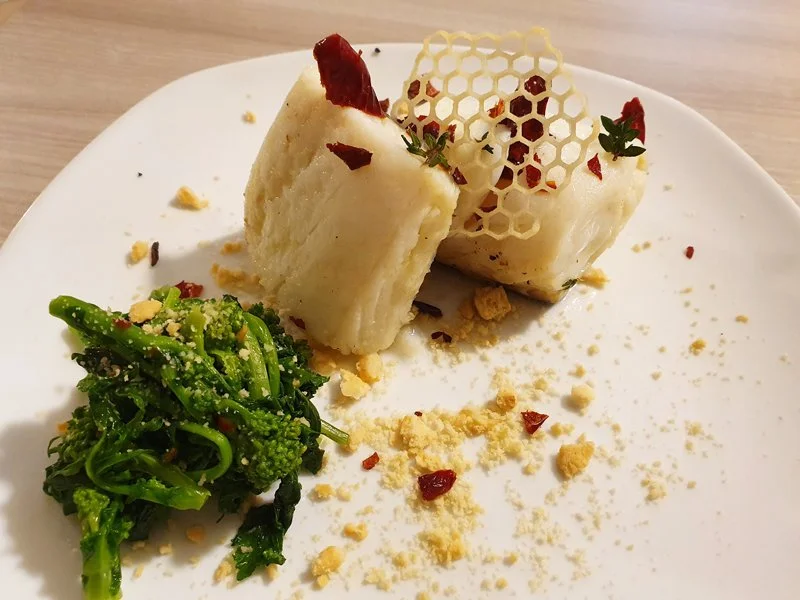
Salt cod is gently poached in herb-scented olive oil, then served with sautéed turnip tops, crunchy taralli and crisp coral tuile. It makes a polished Italian main course, with contrasting tender, bitter and crisp textures.
Ingredients
- 1 fillet, about 800 gsoaked and desalted salt cod
- 2bay leaves
- 2 clovesgarlic, unpeeled
- 2sage leaves
- to tastejuniper berries
- 1 sprigrosemary
- to tasteblack peppercorns
- 600 gfresh turnip tops
- 3 clovesgarlic, unpeeled
- 2 tablespoonsanchovy colatura
- 3pre-fried cruschi peppers
- 6taralli, reduced to crumbs
- 50 mlextra-virgin olive oil
- to tastesalt
- 1hot chilli
- 40 gplain flour
- 40 gsoft butter
- 40 gegg whites
Instructions
- 1
Remove the skin
Pull the skin away from the cod, starting at the tail. Run a finger along the fillet to find any pin bones and remove them with tweezers.
- 2
Prepare the cod
Rinse the fillet carefully and pat it dry with kitchen paper. Cut it into evenly sized pieces, rinse these and pat them dry too. The cod will be cooked using the oil-poaching method.
- 3
Add the aromatics
Arrange the cod pieces in a single layer in a wide, heavy-based pan. Add the bay leaves, 2 whole garlic cloves, rosemary, sage, juniper berries and black peppercorns.
- 4
Warm the oil
Pour in enough oil to cover the cod. Set the pan over a low heat and bring the oil to 60°C, checking with a kitchen thermometer. Keep the oil at a steady temperature as it cooks.
- 5
Poach the cod
Cook the cod in the oil for about 15–20 minutes, or until the flesh is tender, then drain it. Prepare the turnip tops by removing the largest, toughest leaves.
- 6
Cook the greens
Discard any yellow or damaged leaves and the toughest stems. Make a small cross-shaped cut in the base of the more tender stems, then rinse the greens thoroughly. Boil them in plenty of salted water for 5 minutes; drain while still al dente, reserving the cooking water.
- 7
Season the greens
Sauté the turnip tops in a pan with a little oil and 1 unpeeled garlic clove, then remove the garlic. Stir in the anchovy colatura and let the greens take on its flavour, then take the pan off the heat and set them aside. Make the coral tuiles.
- 8
Mix the tuile batter
Put the flour, soft butter cut into pieces and beaten egg white in a bowl. Whisk until smooth, then spread the mixture over a suitable baking mat with a spatula.
- 9
Bake the tuiles
Level the mixture and bake in an oven preheated to 170°C for about 10–15 minutes, watching closely towards the end. Leave to cool, then release the tuile and gently break it into pieces. Arrange the cod on plates with the sautéed turnip tops.
- 10
Finish and serve
Scatter over the finely chopped cruschi peppers and crumbled taralli. Finish by placing a coral tuile on each portion of cod and serve.
What is salt cod with turnip tops?
Baccalà, or salt cod, is a familiar ingredient in Italian cooking, traditionally preserved with salt and soaked before use. This version pairs it with turnip tops, a leafy vegetable especially associated with southern Italian cooking.
Gentle oil-poaching keeps the fish tender, while anchovy colatura seasons the greens and gives them savoury depth. Cruschi peppers, taralli and a delicate tuile provide the finishing crunch.
Nutrition and macros by portion
The nutrition label shows one serving as written: 490 calories, 39g protein, 27g carbs, 25g fat.
| Portion | Adjustment | kcal | Protein | Carbs | Fat |
|---|---|---|---|---|---|
| Lighter | Use less poaching oil | 343 kcal | 27g | 19g | 18g |
| This serving | As written | 490 kcal | 39g | 27g | 25g |
| Hungry | Add a potato side | 735 kcal | 59g | 41g | 38g |
The cod supplies most of the protein, while the taralli and flour contribute carbohydrates. Olive oil, butter and the oil used for poaching are the main sources of fat; serving with an extra portion of greens or potatoes can make the plate more balanced and satisfying.
The cod and its aromatics
Desalted cod: Check the fish before cooking and remove any remaining skin and pin bones. Cutting it into even pieces helps them cook at a similar rate.
Aromatics: Bay, garlic, sage, rosemary, juniper and peppercorns infuse the oil as it warms. Their flavour should support the fish rather than overpower it.
Keeping the oil at 60°C
Steady heat: Use a kitchen thermometer and keep the pan over low heat so the oil stays at 60°C. The recipe relies on this gentle temperature rather than a fast, hot fry.
Tenderness: Start checking after 15 minutes; the fish is ready when its flesh is soft. Drain it carefully so the pieces stay intact for serving.
Preparing the turnip tops
Trim well: Remove tough stems and large, hard leaves, but keep the more tender greens. A small cross-cut at the base of the stems helps them cook through.
Brief boil: Five minutes in salted water leaves the greens al dente. Drain them while still slightly firm, then finish them in the pan with garlic and colatura.
Building savoury flavour
Anchovy colatura: Add it to the greens after sautéing and let it coat them briefly off the heat. It is salty and concentrated, so taste before adding any extra salt.
Cruschi peppers: These pre-fried peppers are used as a crisp garnish, finely chopped over the plated fish. Add them at the end to preserve their texture.
Making the coral tuile
Smooth batter: Whisk the flour, soft butter and beaten egg white until no lumps remain, then spread the mixture into an even layer on a suitable baking mat.
Watch the oven: Bake at 170°C for 10–15 minutes, keeping an eye on it near the end. Cool the tuile before lifting and breaking it, as it is delicate.
Serving the dish
Plating: Set the fish beside the sautéed greens, then add the taralli crumbs and chopped peppers. Place the tuile on the cod just before serving so it stays crisp.
For a fuller plate, serve with boiled or roasted potatoes. Their mild flavour works well with the salty, bitter and peppery elements.
Recipe notes & tips
- Use a thermometer to keep the poaching oil close to 60°C.
- Cut the fish into pieces of similar size for more even cooking.
- Dry the cod thoroughly after rinsing so excess water does not enter the oil.
- Reserve the greens' cooking water before draining them.
- Add the tuile and crunchy toppings just before serving.
- Taste the greens before adding salt, as colatura is already salty.
Variations
- Add lemon: Finish the fish with a little finely grated lemon zest.
- Swap the greens: Use broccoli rabe or another pleasantly bitter leafy green.
- Change the crunch: Replace the taralli crumbs with toasted breadcrumbs.
- Adjust the heat: Serve the chilli on the side for diners who prefer a milder dish.
- Skip the tuile: Leave it out for a simpler plate while keeping the other garnishes.
Common mistakes to avoid
- Oil too hot: The cod can cook too quickly; lower the heat and monitor it with a thermometer.
- Uneven pieces: Different sizes may finish at different times; cut the fillet into similarly sized portions.
- Tough stems left in: They can stay fibrous; trim them and cross-cut the tender stem bases.
- Overcooked greens: They lose their al dente texture; drain them after 5 minutes.
- Tuile spread too thickly: It may not bake evenly; use a spatula to make a level layer.
- Garnishing too early: The tuile and taralli can soften; add them immediately before serving.
How to store
Store the cooked cod and greens separately in airtight containers in the fridge and use within 2 days. Reheat the cod gently and the greens briefly in a pan; keep the tuile and crunchy toppings at room temperature in an airtight container and add them at serving.
Frequently asked questions
Can I use fresh cod instead of salt cod?
The recipe is designed for soaked, desalted salt cod, which has a more concentrated flavour. Fresh cod can be used, but it will taste milder and should be seasoned to suit.
How can I tell when the cod is cooked?
After about 15 minutes, check whether the flesh is tender. Continue cooking within the stated 15–20 minute range if needed.
Do I need a thermometer for the oil?
Yes, the method specifies holding the oil at 60°C. A kitchen thermometer makes it easier to keep the temperature steady.
Can I prepare the tuile ahead?
Yes. Once completely cool, keep it in an airtight container at room temperature and add it to the plate just before serving.
What can I use instead of anchovy colatura?
A little anchovy-based fish sauce can provide a similar savoury note. Add it sparingly and taste before seasoning with salt.
What should I serve alongside it?
The turnip tops are already part of the dish, and potatoes make a simple extra side. Their mild flavour complements the salty fish and bitter greens.
Cook it from the original
This recipe comes from fragolosi.it. Their page has the author’s own photos, notes and tips — the best place to cook it from.
Open the recipe on fragolosi.it