
Salmon carbonara
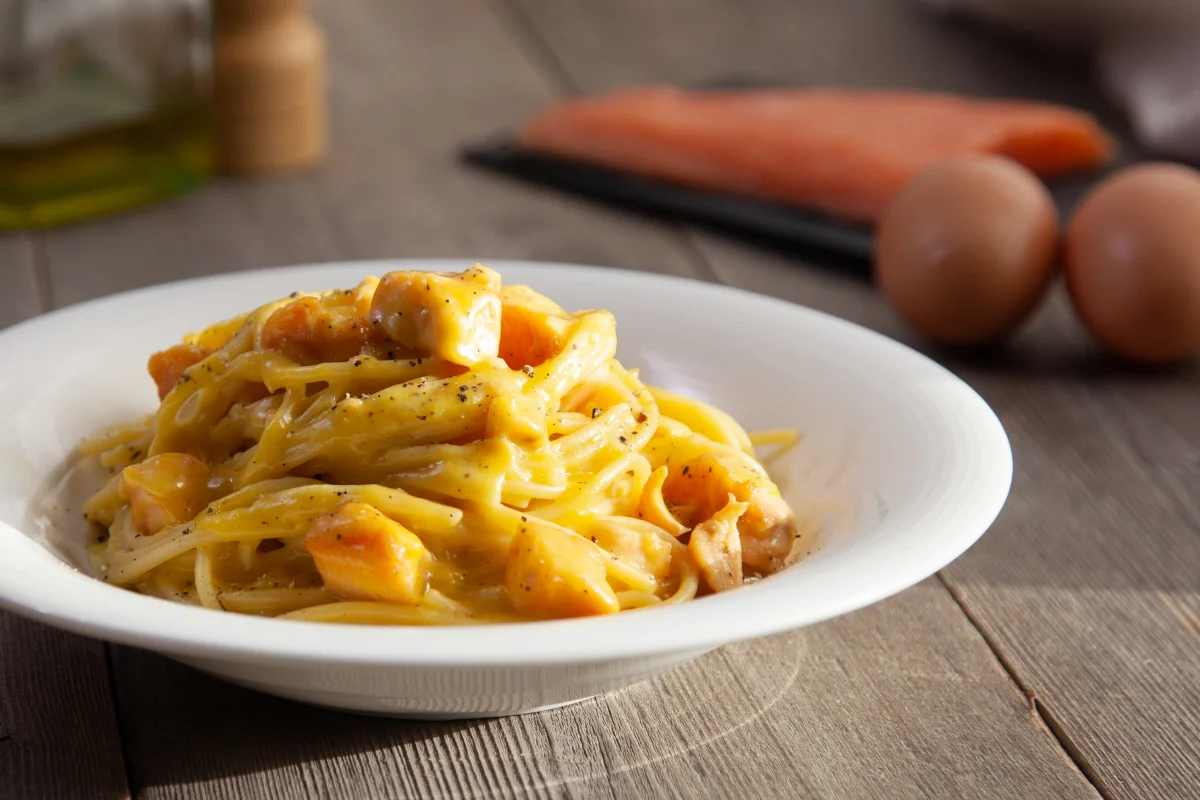
This seafood take on carbonara pairs spaghetti with quickly cooked salmon and a creamy egg-and-Pecorino sauce. It comes together in about 25 minutes, making it a satisfying pasta dish for a weeknight or a relaxed dinner.
Ingredients
- 320 gspaghetti
- 300 gsalmon fillet
- 1 mediumegg
- 3 mediumegg yolks
- 60 gPecorino Romano, for grating
- 1 clovegarlic
- as neededextra-virgin olive oil
- as neededfine salt
- to tasteblack pepper
Instructions
- 1
Cook the salmon
Bring a large pan of water to the boil for the pasta. Remove the skin from the salmon and cut the fillet into cubes about 2 cm across. Heat the olive oil in a frying pan with the garlic clove, then add the salmon and fry over a high heat for 2–3 minutes.
- 2
Boil the spaghetti
Season the salmon with salt, remove the garlic from the pan and set the pan aside. Once the water is boiling, add salt and cook the spaghetti. While it cooks, beat the whole egg and yolks together in a bowl with a fork.
- 3
Mix the sauce
Add the grated Pecorino and ground black pepper to the eggs, then mix until combined.
- 4
Finish the carbonara
Drain the spaghetti when al dente and add it to the pan with the salmon. Set the pan over a moderate heat, toss briefly and add a ladleful of pasta water. Take the pan off the heat, pour in the egg and Pecorino mixture, and mix quickly and thoroughly, adding more pasta water if needed. Finish with another pinch of pepper and serve straight away.
What is salmon carbonara?
Carbonara is an Italian pasta dish traditionally made with eggs, cheese and black pepper. This seafood version brings salmon into the mix, pairing it with spaghetti and a Pecorino-based sauce.
The method keeps the fish and pasta simple, then uses the heat of the drained spaghetti to turn the egg mixture into a coating sauce.
Nutrition and macros by portion
The nutrition label shows one serving as written: 600 calories, 0g protein, 67g carbs, 23g fat.
| Portion | Adjustment | kcal | Protein | Carbs | Fat |
|---|---|---|---|---|---|
| Lighter | Use less Pecorino | 420 kcal | 0g | 47g | 16g |
| This serving | As written | 600 kcal | 0g | 67g | 23g |
| Hungry | Add extra spaghetti | 900 kcal | 0g | 101g | 34g |
The spaghetti supplies most of the carbohydrates, while olive oil, egg yolks and Pecorino contribute much of the fat. Salmon, egg and cheese provide protein. For a more balanced plate, serve a portion with a side of vegetables or salad.
Choosing and preparing the salmon
Cut the salmon into cubes about 2 cm across so the pieces cook quickly and are easy to toss through the pasta.
Skin off: remove the skin before cutting, as directed, so the salmon can be browned on all sides in the pan.
Building the egg sauce
Egg and yolks: beat them together before adding the cheese, so the mixture is ready to go as soon as the pasta is drained.
Pecorino and pepper: finely grated cheese blends more readily into the eggs, while black pepper gives the sauce its familiar carbonara seasoning.
Getting the texture right
Pasta water: add a ladleful while tossing the spaghetti with the salmon; its starchy quality helps the sauce coat the strands.
Off the heat: add the egg mixture only after removing the pan from the hob. Mix quickly, adding a little more pasta water if the sauce needs loosening.
Timing the components
Start the water first, then cook the salmon while it heats. The fish needs only 2–3 minutes over a high heat.
Prepare the egg, cheese and pepper mixture while the spaghetti cooks, so you can combine everything promptly once the pasta is al dente.
Serving the pasta
Serve the carbonara immediately, while the sauce is glossy and the spaghetti is hot. A simple green salad or steamed vegetables make a fresh accompaniment without competing with the rich sauce.
Recipe notes & tips
- Remove the garlic before adding the pasta so its flavour stays subtle.
- Keep the salmon pieces close to 2 cm so they cook in the stated 2–3 minutes.
- Reserve some pasta water before draining in case the sauce needs loosening.
- Grate the Pecorino finely so it mixes more easily with the eggs.
- Have the egg mixture ready before draining the spaghetti, as the final mixing happens quickly.
Variations
- Fresh herbs: add chopped parsley at the end for a fresh finish.
- More pepper: grind extra black pepper over each serving just before eating.
- Different pasta: use another long pasta shape if spaghetti is unavailable.
- Extra greens: serve with spinach or peas on the side for a vegetable accompaniment.
Common mistakes to avoid
- Overcooking the salmon: it can become dry; fry it over a high heat for just 2–3 minutes.
- Adding eggs over the heat: they may scramble; take the pan off the hob before adding the egg mixture.
- Skipping pasta water: the sauce may be too thick; add a ladleful, then more as needed.
- Draining too late: soft pasta will not hold its texture; drain it al dente.
- Waiting to serve: the sauce can thicken as it stands; mix and serve the pasta straight away.
How to store
For the best texture, serve this dish as soon as it is made. If needed, refrigerate leftovers in a covered container and eat within 1–2 days; reheat gently in a pan with a splash of water, taking care not to overheat the egg sauce.
Frequently asked questions
Can I use frozen salmon?
Yes, thaw it fully and pat it dry before cutting and cooking. Excess moisture can make it harder to brown.
How do I know the spaghetti is al dente?
Taste a strand near the end of its cooking time; it should be cooked through but still have a slight firmness in the centre.
Why take the pan off the heat before adding the eggs?
The residual heat helps the egg and cheese coat the pasta without cooking too quickly. Toss rapidly and loosen with pasta water if needed.
Can I make the sauce ahead?
It is best to mix the eggs, cheese and pepper shortly before serving. The sauce is designed to be combined with hot pasta and served immediately.
Can I reheat salmon carbonara?
You can reheat leftovers gently in a pan with a splash of water, but the sauce may not be as smooth as when freshly made.
Cook it from the original
This recipe comes from giallozafferano.es. Their page has the author’s own photos, notes and tips — the best place to cook it from.
Open the recipe on giallozafferano.es