
Savoury pastry horns with goat’s cheese and bacon
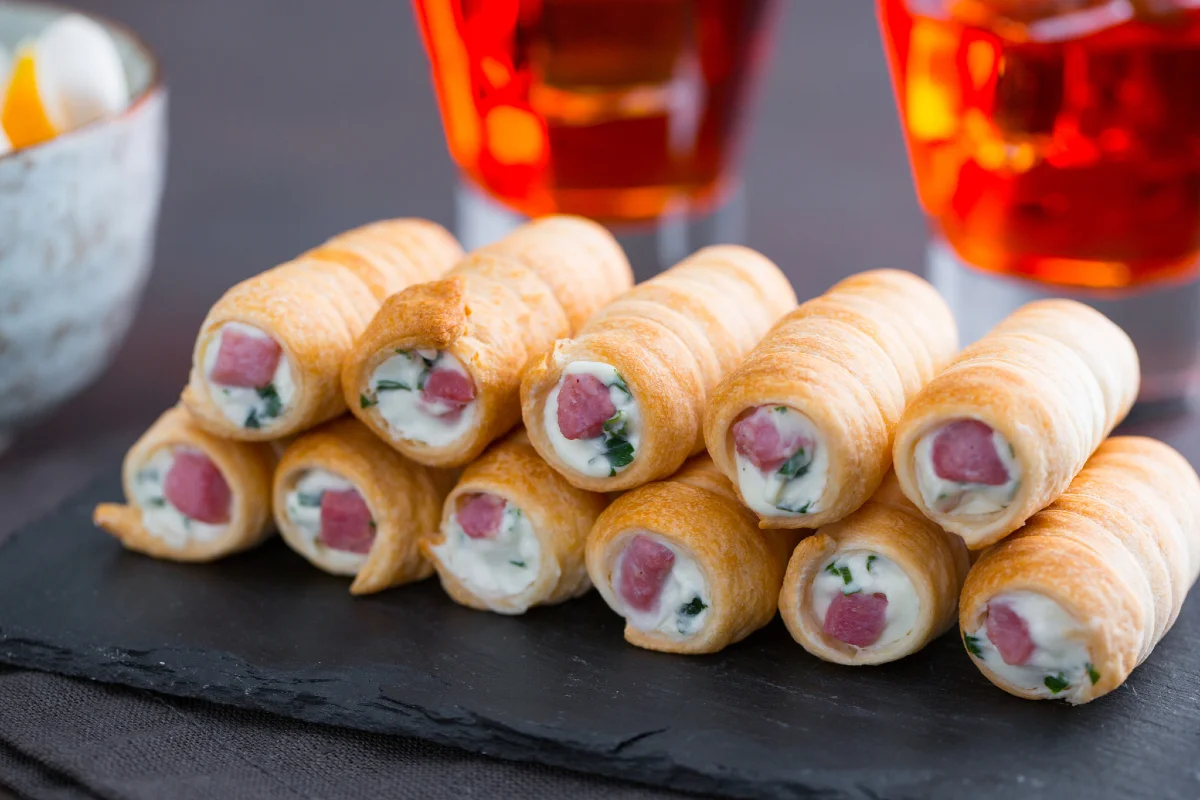
These crisp puff pastry horns are filled with a creamy mixture of fresh goat’s cheese, cream, parsley and crunchy bacon. They make an appealing appetiser for a gathering, and the shells can be baked ahead and filled once cool.
Ingredients
- 230 gpuff pastry
- 150 gsweet pancetta
- 160 gfresh goat’s cheese
- 120 gsingle cream
- as neededparsley
- to tasteoil
- to tastesalt
- to tasteblack pepper
Instructions
- 1
Shape the pastry
Unroll the puff pastry and use a pastry wheel to cut 24 strips, each 1 cm wide, along its longer side. Fix one strip to the end of a pastry horn mould, then wind it around the mould, gently pressing the pastry as you go. Pinch the final end lightly to secure it. The moulds used are 1.5 cm thick and 15 cm long.
- 2
Bake the horns
If your moulds are long enough, you can make another horn at the other end of a strip. Arrange the moulds on a baking tray, leaving a little space between them. Bake on the middle shelf of a preheated conventional oven at 200°C for 15 minutes, until well browned. Remove from the oven and leave until just warm, then gently slide off the pastry horns, twisting them slightly if they stick. Leave to cool completely.
- 3
Cook the pancetta
Heat a frying pan, add the pancetta cubes and cook for a few minutes, stirring frequently. Once crisp, drain them and transfer to a plate or tray lined with kitchen paper. Set aside.
- 4
Mix the cheese
Put the goat’s cheese in a bowl with a little oil, chopped parsley, a pinch of salt and black pepper. Whisk until well combined.
- 5
Make the filling
Add the cream to soften the cheese mixture and mix again. Fold in the crisp pancetta cubes with a spatula, then transfer the filling to a piping bag.
- 6
Fill and serve
Pipe the mixture into the cooled pastry horns, filling them as fully as possible. Repeat until you have used the filling, then serve.
What are savoury pastry horns?
Pastry horns are crisp, tube-shaped pastries made by winding strips of puff pastry around tapered moulds and baking them. This version takes the familiar filled pastry format in a savoury direction, with goat’s cheese, cream, parsley and pancetta.
The contrast is what makes them work: flaky pastry surrounds a soft, tangy filling, while the fried pancetta adds salty crunch.
Nutrition and macros by portion
The nutrition label shows one serving as written: 121 calories, 0g protein, 5g carbs, 11g fat.
| Portion | Adjustment | kcal | Protein | Carbs | Fat |
|---|---|---|---|---|---|
| Lighter | Less cream, more parsley | 85 kcal | 0g | 3g | 7g |
| This serving | As written | 121 kcal | 0g | 5g | 11g |
| Hungry | Larger portion | 182 kcal | 0g | 7g | 16g |
The puff pastry supplies most of the carbohydrate and some of the fat, while the pancetta, goat’s cheese and cream contribute much of the fat and protein. For a more balanced appetiser plate, serve a couple of horns alongside a generous portion of salad or raw vegetables.
Making the pastry shells
Even strips: Cut the pastry to a consistent 1 cm width so the horns bake at a similar rate. Wind each strip around its mould with a gentle overlap and secure the end with a light pinch.
Cool completely: Let the baked shells cool before removing them and filling them. Warm pastry can crumble more easily and soften the filling.
Getting the filling right
Cream the cheese: Whisk the goat’s cheese with parsley, oil, salt and pepper before adding the cream. Mix in the cream gradually enough to soften the mixture while keeping it suitable for piping.
Crisp pancetta: Cook the cubes until crisp, then drain them on kitchen paper. Let them cool briefly before folding them into the cheese mixture.
Filling without breaking the horns
Piping bag: A piping bag helps distribute the filling through the narrow shells. Pipe from both ends if needed to fill each horn as fully as possible.
Gentle handling: Hold the pastry lightly while filling; the baked layers are delicate and can crack if squeezed.
Timing and serving
Bake cues: The stated oven time is 15 minutes at 200°C, but use the colour as your guide too: the shells should be well browned before coming out. Allow extra time for them to cool completely before filling.
To serve: Arrange the horns on a platter as an appetiser. Their creamy, salty filling pairs well with crisp salad leaves or a plate of raw vegetables.
Preparing ahead
Shells first: Bake the pastry horns in advance and keep them unfilled until they are completely cool. Fill them closer to serving so the pastry stays crisp.
Filling later: The cheese mixture can be prepared ahead and chilled, then transferred to a piping bag when you are ready to assemble. If it firms up, let it stand briefly and stir before piping.
Recipe notes & tips
- Cut the pastry into evenly sized strips so the horns cook consistently.
- Keep the pastry cold while shaping it if it becomes soft or difficult to handle.
- Leave the shells to cool fully before taking them off the moulds.
- Drain the cooked pancetta well to keep excess fat out of the filling.
- Use a piping bag to fill the horns neatly from end to end.
- Fill the shells shortly before serving for the best crisp texture.
Variations
- Add chives: Stir finely chopped chives into the cheese mixture with the parsley.
- Use smoked bacon: Swap the pancetta for smoked bacon cubes and cook until crisp.
- Add lemon zest: Mix a little finely grated lemon zest into the cheese for a fresher flavour.
- Use a different cheese: Replace the goat’s cheese with a soft, spreadable cheese and adjust the cream until pipeable.
- Add chilli: Stir a small pinch of chilli flakes into the filling for gentle heat.
Common mistakes to avoid
- Uneven pastry strips: Cut them to the same 1 cm width so they bake at a similar pace.
- Loose pastry ends: Pinch the final end lightly against the wrapped pastry to help it stay in place.
- Removing shells while hot: Let them cool until just warm before gently twisting them off the moulds.
- Soft pancetta: Keep cooking and stirring until the cubes are crisp, then drain them on kitchen paper.
- Filling warm shells: Cool the pastry completely first to help it retain its crispness.
- Overfilling with loose mixture: Add the cream to soften the cheese but keep the filling thick enough to pipe.
How to store
Keep unfilled pastry shells in an airtight container at room temperature and fill them shortly before serving. Refrigerate any leftover filling in a covered container and use within 2 days; filled horns are best eaten soon after assembly, as the pastry softens.
Frequently asked questions
Can I make the pastry horns ahead?
Yes. Bake the shells ahead and let them cool completely, then store them airtight and unfilled until you are ready to serve.
Do I need special moulds?
Tapered pastry horn moulds are used for this recipe. The moulds described are 1.5 cm thick and 15 cm long.
How do I know when the shells are baked?
Bake them for 15 minutes at 200°C in a preheated conventional oven, until they are well browned.
How can I stop the pastry sticking to the moulds?
Let the horns cool until just warm, then ease them off with a gentle twisting motion if they do not slide away easily.
Can I prepare the filling in advance?
Yes. Chill the prepared filling in a covered container and transfer it to a piping bag when ready to assemble. Stir it first if it has firmed up.
Can I serve the horns warm?
The recipe fills the shells after they have cooled completely. They are best served once assembled, while the pastry is still crisp.
Cook it from the original
This recipe comes from giallozafferano.es. Their page has the author’s own photos, notes and tips — the best place to cook it from.
Open the recipe on giallozafferano.es