
Rösti
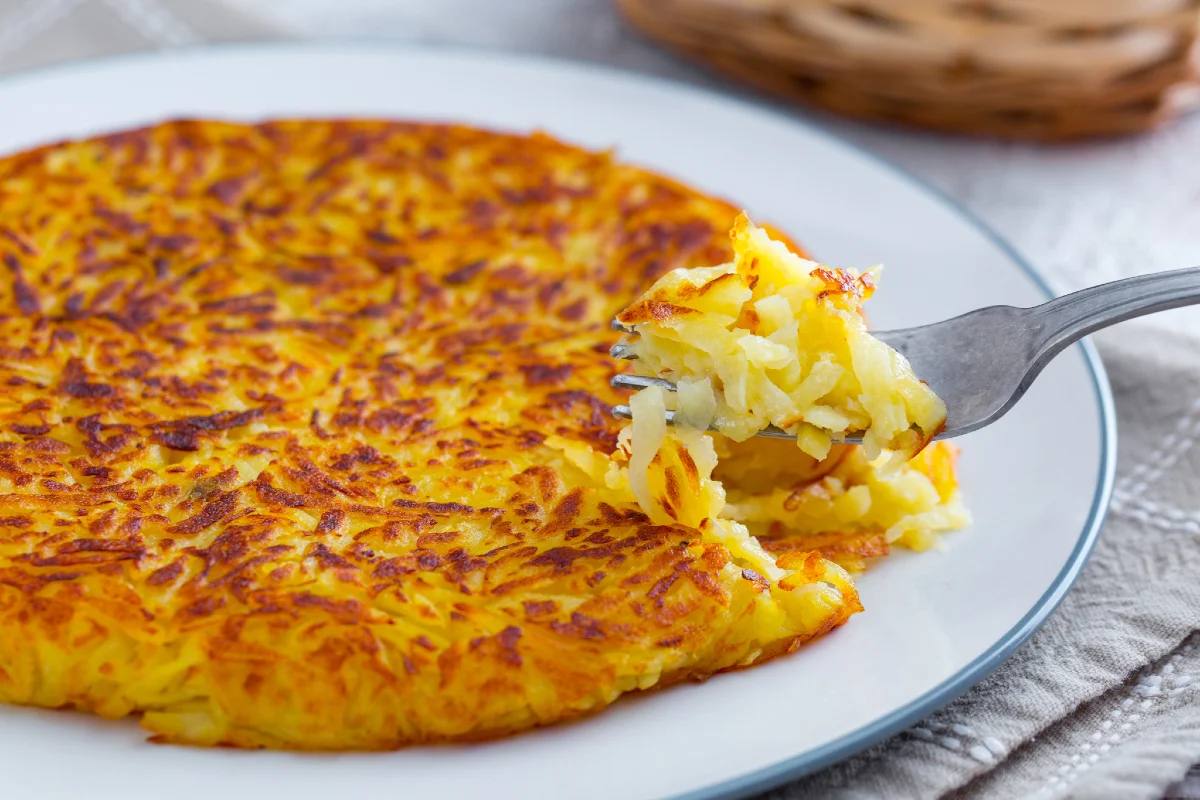
Rösti is a Swiss potato cake made from grated potatoes, shaped and fried until golden and crisp outside while remaining soft inside. This version uses partly cooked red potatoes and butter for a straightforward pan-cooked side dish.
Ingredients
- 750 gred potatoes
- 55 gbutter
- to tastefine salt
- to tasteblack pepper
Instructions
- 1
Parboil potatoes
Put the potatoes in a large pan of cold water, bring to the boil and cook for about 10–15 minutes. The timing depends on their size: they should be very firm and only partly cooked. Drain, peel, then grate into a large bowl using the coarse side of a grater while they are cold or lukewarm.
- 2
Season potatoes
Season the grated potatoes with salt and pepper and mix well. Melt some of the butter in a 22 cm non-stick frying pan.
- 3
Shape the rösti
Add the grated potatoes to the pan and stir over medium-high heat for about 5 minutes, beginning to shape them into a cake with a spatula.
- 4
Cook the first side
Add small pieces of butter around the edges of the rösti and cook without stirring for 6–7 minutes. Butter a wide, flat lid and place it over the pan to help turn the rösti.
- 5
Cook the second side
Melt another piece of butter in the pan, then slide the rösti back in. Add more small pieces of butter around the edges and cook the other side over medium-high heat for another 6–7 minutes. It is ready when crisp outside and soft inside.
What is rösti?
Rösti is a Swiss potato dish, traditionally associated with the German-speaking part of the country. It is made by cooking grated potato in a pan and turning it into a crisp-edged cake.
Part-cooking the potatoes before grating helps them hold together as they cook. Here, butter adds flavour and helps the surface brown.
Nutrition and macros by portion
The nutrition label shows one serving as written: 274 calories, 0g protein, 34g carbs, 13g fat.
| Portion | Adjustment | kcal | Protein | Carbs | Fat |
|---|---|---|---|---|---|
| Lighter | Use less butter | 192 kcal | 0g | 24g | 9g |
| This serving | As written | 274 kcal | 0g | 34g | 13g |
| Hungry | Serve a larger portion | 411 kcal | 0g | 52g | 20g |
The potatoes provide most of the carbohydrate, while the butter supplies most of the fat; this is a low-protein side dish. Balance the plate with a protein-rich main and vegetables or salad.
Why parboil the potatoes?
Firm potatoes: cook them only until very al dente, as directed, so they can be grated without becoming mushy.
Cool enough to handle: grate the drained, peeled potatoes when cold or lukewarm. A coarse grater gives strands that keep some texture in the finished rösti.
Building the potato cake
Initial stirring: the first 5 minutes in the pan let the grated potatoes warm and begin to take shape. Use the spatula to form an even cake.
Then leave it alone: once the first side is shaped, cook without mixing for 6–7 minutes. This gives the underside time to brown and form a crust.
Turning it safely
Butter the lid: use a wide, flat lid to cover the pan before turning the rösti. Keep a steady grip on both the pan and lid as you invert them.
Slide it back: melt more butter in the pan before returning the rösti, so the second side can cook in the remaining fat.
Getting the texture right
Crisp outside: look for a well-browned surface before turning; if it still feels loose, give it a little more time.
Soft inside: the potatoes should remain tender beneath the crust. Keep the heat at medium-high as specified and watch the edges so they do not scorch.
Serving rösti
Serve it hot from the pan, while the crust is at its crispest. It works as a side with eggs, vegetables or a simple green salad.
For an easy plate, pair a portion with a source of protein and fresh vegetables; the rösti itself is mainly potato and butter.
Recipe notes & tips
- Choose potatoes of similar size so they parboil at roughly the same rate.
- Use the coarse side of the grater for distinct potato strands.
- Season the grated potatoes evenly before adding them to the pan.
- A 22 cm non-stick pan helps the rösti keep its shape.
- Add the butter in small pieces around the edges as directed.
- Let the rösti cook undisturbed while each side forms a crust.
Variations
- Add onion: mix finely grated onion through the potatoes before frying.
- Add herbs: stir chopped parsley or chives into the seasoned potatoes.
- Add cheese: scatter a little grated cheese through the potato mixture.
- Serve with an egg: top each portion with a fried or poached egg.
- Add smoked salmon: serve slices alongside the hot rösti.
Common mistakes to avoid
- Overcooking the potatoes: stop when they are very al dente so they remain firm enough to grate.
- Grating them while hot: let them cool until cold or lukewarm to make handling easier.
- Stirring too long: shape the cake during the first 5 minutes, then leave it undisturbed for the crust to form.
- Turning without support: use a wide, flat lid to help flip the rösti in one piece.
- Skipping butter on the second side: melt another piece in the pan before sliding the rösti back in.
How to store
Cool leftovers, cover and refrigerate for up to 3 days. Reheat in a frying pan over medium heat until hot, turning once to restore some crispness.
Frequently asked questions
Can I prepare the potatoes ahead?
You can parboil and peel them in advance, then refrigerate them until ready to grate. Grate them cold or lukewarm, as in the method.
How do I know when the potatoes are parboiled enough?
They should be very al dente rather than fully tender. The exact time varies with their size, so check them after about 10 minutes.
How do I stop the rösti breaking when I turn it?
Shape it evenly in the pan and let the first side cook undisturbed for 6–7 minutes. Use a wide, flat lid to support it as you turn.
Can I use another type of potato?
The recipe specifies red potatoes. If using another variety, choose potatoes that stay firm enough to grate after parboiling.
Can I make rösti without a non-stick pan?
A non-stick 22 cm pan is specified and makes shaping and turning easier. With another pan, use the recipe's butter and take extra care when sliding the rösti.
Cook it from the original
This recipe comes from giallozafferano.es. Their page has the author’s own photos, notes and tips — the best place to cook it from.
Open the recipe on giallozafferano.es