
Asparagus carbonara
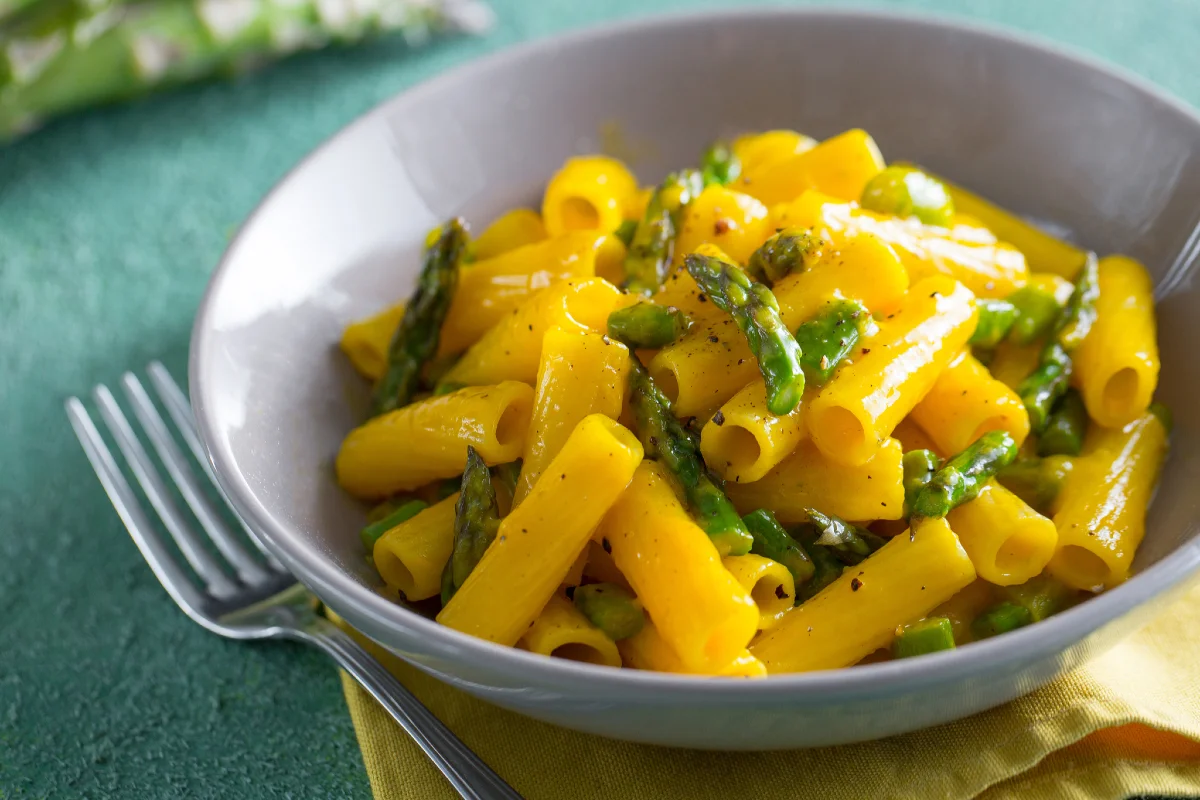
This vegetarian asparagus carbonara pairs tortiglioni with a creamy sauce of egg yolks and Pecorino. It makes a satisfying first course, with asparagus taking the place of the usual diced pancetta.
Ingredients
- 320 gtortiglioni
- 5egg yolks
- 500 gasparagus
- 100 gPecorino
- to tastefine salt
- to tasteblack pepper
Instructions
- 1
Prepare the asparagus
Wash the asparagus and remove the woody ends. To find where each stalk becomes tender, press it gently with a finger until it snaps; discard the tougher end. Put water for cooking the pasta in a saucepan, add the asparagus trimmings and bring to the boil.
- 2
Slice the stalks
Cut the asparagus stalks into slices about 1 cm thick, leaving the tips whole. Add a drizzle of oil to a frying pan and warm it gently, then add the sliced asparagus.
- 3
Cook the asparagus
Season with salt and pepper, stir occasionally and let the asparagus take on the flavours. Add a ladleful of the cooking water from the asparagus trimmings and cook over a moderate heat for about 5 minutes.
- 4
Cook the pasta
Remove the asparagus trimmings from the saucepan, salt the water to taste and add the tortiglioni. While the pasta cooks, mix the egg yolks in a bowl with a ladleful of cooking water and the grated Pecorino. Stir well and set aside.
- 5
Combine the pasta
Drain the tortiglioni when al dente and transfer them straight to the pan with the asparagus. Toss together, then take the pan off the heat and add the egg-yolk and Pecorino mixture.
- 6
Finish and serve
Mix well and quickly. Add black pepper to taste, toss once more and serve.
What is asparagus carbonara?
Carbonara is a pasta dish associated with Rome, traditionally made with eggs, hard cheese, black pepper and cured pork. This vegetarian take swaps the usual diced pancetta for asparagus.
The egg yolks and Pecorino make a rich, savoury coating, while the asparagus brings a fresh flavour and a little bite. Cooking the pasta in water steeped with the asparagus trimmings carries that flavour through the dish.
Nutrition and macros by portion
The nutrition label shows one serving as written: 513 calories, 0g protein, 70g carbs, 16g fat.
| Portion | Adjustment | kcal | Protein | Carbs | Fat |
|---|---|---|---|---|---|
| Lighter | More asparagus, less pasta | 359 kcal | 0g | 49g | 11g |
| This serving | As written | 513 kcal | 0g | 70g | 16g |
| Hungry | Larger pasta portion | 770 kcal | 0g | 105g | 24g |
The tortiglioni provide most of the carbohydrates, while the egg yolks and Pecorino contribute much of the fat and protein. Balance the plate with a side of vegetables or salad; the supplied nutrition figures list 0 g protein, which may not reflect the protein in these ingredients.
Make the most of the asparagus
Woody ends: snap each stalk where it naturally breaks, then add the trimmings to the pasta water. This uses the tougher pieces to flavour the water without leaving them in the finished dish.
Stalks and tips: cut the stalks into roughly 1 cm slices but keep the tips whole. They cook in the pan with a little of the infused water, so the tips retain their shape.
Mix a smooth egg sauce
Egg yolks: combine them with grated Pecorino and a ladleful of pasta water while the pasta cooks. Stir until the mixture is well blended before adding it to the pan.
Off the heat: take the pan away from the hob before mixing in the egg mixture. Toss promptly so the residual warmth coats the pasta without scrambling the yolks.
Check the pasta and asparagus
Pasta: drain the tortiglioni when they are al dente, as they will be tossed briefly with the asparagus and sauce. The ridges and hollow centres help catch the creamy coating.
Asparagus: after about 5 minutes over a moderate heat, the slices should be cooked but still hold their shape. Keep the tips whole through the cooking and tossing.
Season with restraint
Pecorino: this sheep’s-milk cheese contributes a salty, savoury flavour, so taste the dish before adding more salt. The recipe seasons both the asparagus and the pasta water, but leaves the amounts to taste.
Black pepper: add it to the asparagus and finish with more at the end if you like. Its sharpness balances the richness of the yolk and cheese.
Serve it straight away
The sauce is at its creamiest just after the pasta is tossed, so bring the pan to the table or serve promptly. A simple green salad or cooked vegetables make an easy accompaniment.
Keep any side dish lightly seasoned so it does not compete with the Pecorino. The pasta itself is filling enough to serve as a first course.
Recipe notes & tips
- Snap the asparagus ends rather than cutting off the same length from every stalk.
- Keep the asparagus trimmings in the water until it reaches a boil to flavour the pasta water.
- Grate the Pecorino finely so it mixes readily with the yolks.
- Save the ladleful of cooking water for the yolk and cheese mixture before draining the pasta.
- Take the pan off the heat before adding the egg mixture.
- Toss the pasta and sauce quickly, then serve while the coating is creamy.
Variations
- Add garlic: briefly warm a crushed clove in the pan oil before adding the asparagus.
- Use another pasta shape: choose a ridged or tubular shape that catches the sauce.
- Add lemon zest: stir a little into the finished pasta for a fresh note.
- Use Grana Padano: replace the Pecorino with an equally measured amount for a milder cheese flavour.
- Add chilli: season the asparagus with a pinch of chilli flakes for gentle heat.
Common mistakes to avoid
- Leaving woody ends on: snap each stalk at its natural breaking point and discard the tough part.
- Overcooking the asparagus: cook it for about 5 minutes over moderate heat, then check that it still holds its shape.
- Scrambling the yolks: remove the pan from the heat before adding the egg and cheese mixture.
- Skipping the cooking water: reserve a ladleful to loosen and combine the yolk mixture.
- Over-salting: Pecorino is savoury, so season gradually and taste before adding extra salt.
- Letting the dish stand: serve as soon as the sauce has coated the pasta for the creamiest result.
How to store
Refrigerate leftovers in a covered container and eat within 2 days. Reheat gently in a pan with a splash of water, stirring until warmed through; the egg sauce may become less creamy after chilling.
Frequently asked questions
Can I use another pasta shape?
Yes. Choose a pasta shape that holds sauce well, such as rigatoni or penne, and cook it until al dente.
How do I know where to trim the asparagus?
Bend or press each stalk gently until it snaps. The tender part breaks away from the tougher, woody end.
Why does the pan need to come off the heat?
The pan should be off the heat before the yolks go in so they coat the pasta rather than cooking into scrambled egg.
Can I prepare the sauce ahead?
Mix the yolks and grated Pecorino shortly before the pasta is ready. The sauce is best added and served straight away.
What can I serve with asparagus carbonara?
Serve it with a simply dressed green salad or a side of vegetables. The pasta works well as a first course.
Is the recipe vegetarian?
It replaces pancetta with asparagus, making it a meat-free version. Check that the Pecorino you use suits your vegetarian requirements.
Cook it from the original
This recipe comes from giallozafferano.es. Their page has the author’s own photos, notes and tips — the best place to cook it from.
Open the recipe on giallozafferano.es