
Upside-down orange cake
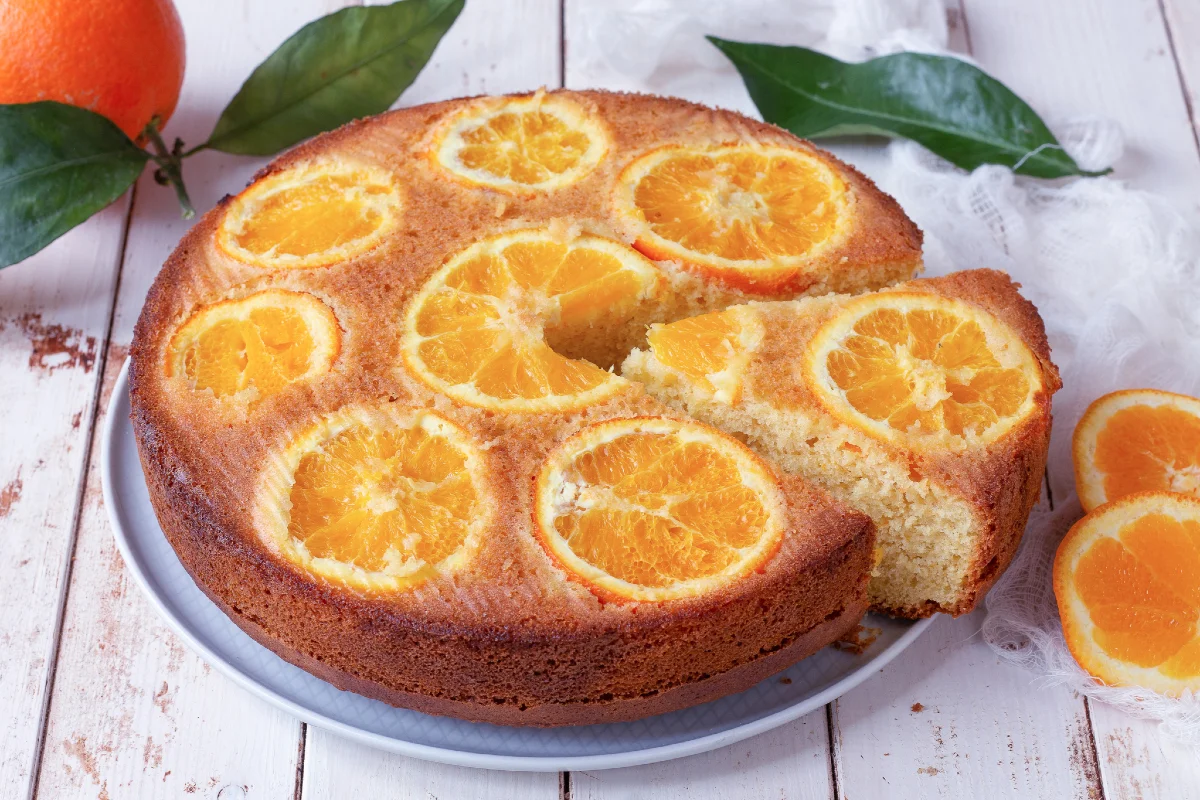
This upside-down orange cake bakes sliced oranges beneath a light, citrus-scented sponge, then reveals them as a glossy decoration when turned out. It makes an eye-catching dessert from straightforward ingredients and a simple method.
Ingredients
- 230 g00 flour
- 135 g (about 3 small)eggs
- 180 gsugar
- 60 gpeanut oil
- 90 g (from about 2 oranges)orange juice
- 16 gbaking powder
- 2oranges, for decorating
Instructions
- 1
Prepare the oranges
Finely grate the zest of one orange and set it aside for the batter. Squeeze the oranges to obtain 90 g of juice. Wash the oranges for decorating and cut them into slices about 1 cm thick, discarding the ends.
- 2
Line the tin
Line the base of a 24 cm springform tin with baking parchment and grease it lightly with butter. Arrange whole orange slices across the base so that it is completely covered. For the batter, put the room-temperature eggs and sugar in a bowl and beat with electric beaters for at least 5 minutes, until very foamy.
- 3
Mix in liquids
Add the orange juice and seed oil, then continue beating with the electric mixer.
- 4
Add dry ingredients
Sift in the flour and baking powder, then add the grated orange zest. Beat briefly with the electric beaters until the mixture is smooth.
- 5
Bake the cake
Pour the batter into the tin and gently turn the tin to level the mixture without tapping it. Bake in a preheated conventional oven at 180°C for about 45 minutes.
- 6
Cool and turn
Remove the cake from the oven and leave it to cool completely before taking it out of the tin. Carefully peel away the baking parchment and turn the cake onto a serving plate. Remove the parchment from the top to reveal the orange slices.
What is upside-down orange cake?
An upside-down cake is assembled with fruit at the bottom of the tin and sponge batter poured over it. Once baked and turned out, the fruit becomes the decorated top.
This version pairs orange slices with a simple sponge flavoured with fresh juice and zest. The method relies on arranging the fruit in a single, close layer so it covers the base when the cake is turned.
Nutrition and macros by portion
The nutrition label shows one serving as written: 284 calories, 0g protein, 46g carbs, 9g fat.
| Portion | Adjustment | kcal | Protein | Carbs | Fat |
|---|---|---|---|---|---|
| Lighter | Smaller cake slice | 199 kcal | 0g | 32g | 6g |
| This serving | As written | 284 kcal | 0g | 46g | 9g |
| Hungry | Larger cake slice | 426 kcal | 0g | 69g | 13g |
The flour and sugar provide most of the carbohydrates, while the peanut oil supplies most of the fat; eggs contribute some protein. Pair a slice with plain yoghurt or serve it after a meal with fruit for a more balanced plate.
Choosing the oranges
For the base: cut the decorating oranges into slices about 1 cm thick and remove their ends. Slices of similar thickness make it easier to cover the tin evenly.
For the batter: grate the zest before squeezing the oranges, then measure out 90 g of juice. The recipe uses the juice and zest to give the sponge its citrus flavour.
Build volume into the batter
Eggs and sugar: beat them for at least 5 minutes, until the mixture looks very foamy. This is the first step in giving the cake a light sponge texture.
Dry ingredients: sift the flour and baking powder before adding them, then beat only briefly once everything is in. Stop when the batter looks smooth and combined.
Arrange the fruit carefully
Even coverage: place whole slices across the parchment-lined base, filling the bottom of the 24 cm tin. A covered base gives the turned-out cake its distinctive pattern.
Gentle handling: after adding the batter, turn the tin carefully to level it. The method specifies not to bang the tin, so avoid tapping it on the worktop.
Check the bake and cool fully
Oven setting: bake in a preheated conventional oven at 180°C for about 45 minutes. The recipe gives an approximate time, so check the cake as it approaches the end of baking.
Before turning: let the cake cool completely in the tin. Removing the parchment only after turning helps keep the orange decoration in place.
Serving the cake
Serve the cake on a plate that is wide enough to support it when turned. The orange slices make it presentable without extra decoration.
It works well as a simple dessert after a meal, or with tea or coffee. Cut it into eight portions as specified by the recipe.
Recipe notes & tips
- Bring the eggs to room temperature before beating them with the sugar.
- Grate the orange zest before cutting and juicing the fruit.
- Measure the juice to 90 g so the batter has the intended amount of liquid.
- Arrange the orange slices closely to cover the tin's base.
- Use a gentle turning motion to level the batter rather than tapping the tin.
- Wait until the cake is completely cool before turning it out.
Variations
- Lemon zest: replace the orange zest with lemon zest for a sharper citrus note.
- Mixed citrus: use a mixture of orange and lemon slices for the decoration.
- Vanilla: add a little vanilla to the batter for a different aroma.
- Almond pairing: serve each slice with a few toasted flaked almonds.
- Dairy accompaniment: add a spoonful of plain yoghurt alongside each slice.
Common mistakes to avoid
- Uneven slices: cut them to roughly 1 cm thick so they sit more evenly in the tin.
- Gaps in the base: arrange the orange slices to cover the entire bottom before adding batter.
- Under-beaten eggs: beat the eggs and sugar for at least 5 minutes, until very foamy.
- Overmixing after the flour: beat only briefly once the dry ingredients are added, stopping when the batter is smooth.
- Turning too soon: cool the cake completely before removing it from the tin and flipping it.
- Rushing the parchment: peel it away carefully after turning so the orange topping stays intact.
How to store
Once completely cool, store the cake in an airtight container in the fridge and eat within 3 days. Bring a slice to room temperature before serving, or warm it briefly in the microwave.
Frequently asked questions
Can I make the cake ahead?
Yes. Bake it and let it cool completely, then store it covered in the fridge and serve within 3 days.
Why do I need to cool the cake before turning it out?
The recipe calls for complete cooling before removing the tin and turning the cake. This gives the sponge time to settle before you handle it.
Can I use a different tin size?
The method is written for a 24 cm springform tin. A different size may change the cake's depth and baking time.
What does conventional oven mean?
It means the static, non-fan oven setting. Preheat it to 180°C before baking.
How do I know when the cake is ready?
The recipe gives about 45 minutes at 180°C. Check it towards the end of that time, as oven performance can vary.
Can I use another oil?
The recipe specifies peanut oil. Another neutral-tasting oil can be used, though it will no longer follow the ingredient list exactly.
Cook it from the original
This recipe comes from giallozafferano.es. Their page has the author’s own photos, notes and tips — the best place to cook it from.
Open the recipe on giallozafferano.es