
Paccheri with aubergines and ricotta
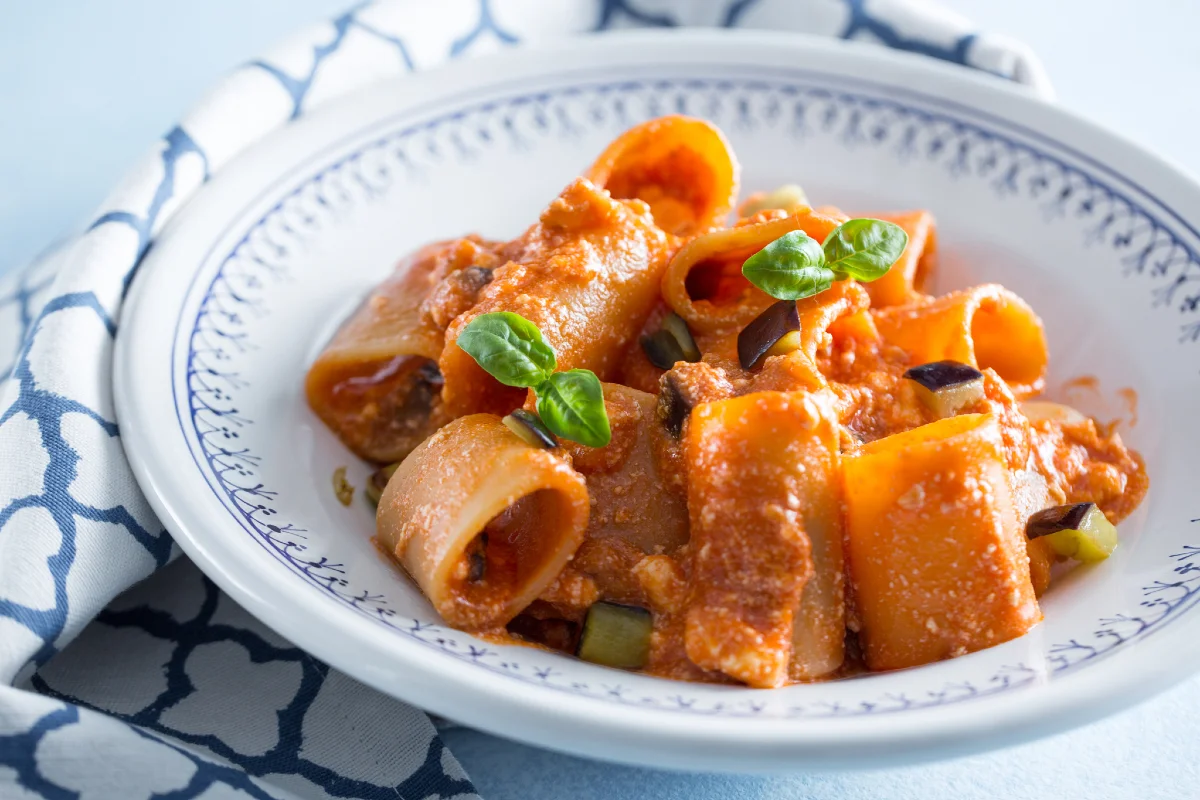
Paccheri with aubergines and ricotta combines large pasta tubes with a slow-cooked tomato sauce, golden aubergine and creamy ricotta. It makes a satisfying Mediterranean-inspired first course for a relaxed meal.
Ingredients
- 320 gpaccheri
- 250 gaubergines
- 150 gcow’s milk ricotta
- 200 gtomato passata
- 1/2onion
- as neededextra-virgin olive oil
- as neededfine salt
- as neededblack pepper
- as neededbasil
Instructions
- 1
Start the sauce
Bring a pan of water to the boil for the pasta, adding salt once it boils. Finely chop the onion, warm olive oil in a wide frying pan, then add the onion and cook, stirring occasionally, until lightly golden and soft.
- 2
Add the passata
Pour the tomato passata into the pan, add a ladleful of hot water and season with salt.
- 3
Simmer and prepare
Season with black pepper and cook the sauce, covered, for 30 minutes. Meanwhile, wash and trim the aubergines, then cut them into cubes about 0.5 cm across.
- 4
Cook pasta and aubergine
Warm a little oil in a frying pan and fry the aubergine until golden. Bring a pan of salted water to the boil and cook the paccheri for two minutes less than the time stated on the packet.
- 5
Combine with sauce
Drain the paccheri straight into the tomato sauce. Add the aubergine and toss; if needed, add pasta cooking water a little at a time to finish cooking the pasta.
- 6
Stir in ricotta
Once the paccheri are cooked, take the pan off the heat and mix in the ricotta. Finish with basil leaves and serve.
What is paccheri with aubergines and ricotta?
Paccheri are broad, tube-shaped pasta associated with southern Italy, and their roomy shape catches plenty of sauce. This dish brings them together with tomato, aubergine and ricotta for a comforting first course with Mediterranean flavours.
The method builds flavour in stages: the tomato sauce simmers while the aubergine is browned separately, then both meet the pasta. Ricotta is stirred in off the heat to give the finished dish a creamy texture.
Nutrition and macros by portion
The nutrition label shows one serving as written: 428 calories, 0g protein, 72g carbs, 10g fat.
| Portion | Adjustment | kcal | Protein | Carbs | Fat |
|---|---|---|---|---|---|
| Lighter | Use less olive oil | 300 kcal | 0g | 50g | 7g |
| This serving | As written | 428 kcal | 0g | 72g | 10g |
| Hungry | Add extra paccheri | 642 kcal | 0g | 108g | 14g |
The paccheri provide most of the carbohydrates, while olive oil and ricotta contribute much of the fat; ricotta also adds some protein. Pair a serving with a generous salad or greens for a more balanced plate.
The key ingredients
Paccheri: their wide tubes stand up well to a substantial sauce, so drain them directly into the pan rather than rinsing them.
Aubergine: small cubes cook quickly and are easy to mix through the pasta. Browning them in a separate pan gives them colour before they join the sauce.
Ricotta: cow’s milk ricotta softens the tomato sauce without needing to be cooked for long. Add it after turning off the heat and stir until evenly distributed.
Building the tomato sauce
Onion: cook it gently in olive oil until soft and lightly golden before adding the passata. Stir now and then so it softens evenly rather than catching.
Simmering: the sauce cooks covered for 30 minutes, with a ladleful of hot water added at the start. Keep it at a gentle simmer and check that it is not drying out.
Getting the aubergine right
Even cubes: cut the aubergine into pieces about 0.5 cm across so they cook at a similar pace. A little oil in a hot pan helps the pieces brown.
Colour: fry until the cubes are golden, then take them off the heat while you finish the pasta. Avoid packing the pan too tightly, as the aubergine may soften without browning.
Finishing the pasta
Undercooking: boil the paccheri for two minutes less than the packet timing, then let them finish in the sauce. This gives the pasta time to take on the tomato flavour.
Pasta water: add it a little at a time if the sauce needs loosening as the pasta finishes cooking. The sauce should coat the tubes rather than pool thinly at the bottom of the pan.
Serving ideas
Serve the paccheri straight away, while the ricotta is soft and the sauce clings to the pasta. Tear or add basil leaves at the end for a fresh, fragrant finish.
A simple green salad or cooked greens make an easy accompaniment. Keep sides uncomplicated so the pasta, aubergine and tomato remain the focus.
Recipe notes & tips
- Salt the pasta water once it has come to the boil.
- Use a wide frying pan so the onion and sauce have room to cook evenly.
- Cut the aubergine into similarly sized cubes for consistent cooking.
- Reserve some pasta cooking water before draining in case the sauce needs loosening.
- Take the pan off the heat before stirring in the ricotta.
- Add the basil just before serving for its fresh aroma.
Variations
- Add chilli: season the tomato sauce with a little chilli for gentle heat.
- Use smoked ricotta: stir it in off the heat for a more pronounced flavour.
- Add courgette: fry diced courgette with the aubergine until golden.
- Finish with hard cheese: grate a little cheese over each serving at the table.
- Use another pasta shape: choose a large tube or short shape that holds the sauce.
Common mistakes to avoid
- Adding ricotta too early: it can lose its creamy texture; stir it in after turning off the heat.
- Overcrowding the aubergine pan: the cubes may steam instead of browning; cook them in batches if needed.
- Cooking the pasta fully in water: it can become too soft during finishing; stop two minutes short.
- Adding too much pasta water: the sauce can turn thin; pour it in gradually.
- Skipping the sauce simmer: the onion and tomato have less time to meld; allow the covered 30-minute cook.
How to store
Refrigerate leftovers in an airtight container and use within 2 days. Reheat gently in a pan with a splash of water, stirring until hot; the pasta may soften and the ricotta may no longer be as creamy.
Frequently asked questions
Can I prepare the tomato sauce ahead?
Yes. Make the sauce in advance, cool it and refrigerate it, then warm it while you cook the pasta and aubergine.
How do I know when the aubergine is ready?
The small cubes should be golden on the outside and tender when pierced. Fry them in batches if the pan is crowded.
Why cook the paccheri for two minutes less?
They finish cooking in the tomato sauce, where they absorb some of its flavour. This also helps prevent them from becoming overcooked.
Can I use a different pasta shape?
Yes. Choose another substantial short pasta shape that can hold the sauce, and follow its packet timing, stopping two minutes early.
When should I add the ricotta?
Add it after the pasta is cooked and the heat is off. Stir it through gently so it blends into the sauce.
Cook it from the original
This recipe comes from giallozafferano.es. Their page has the author’s own photos, notes and tips — the best place to cook it from.
Open the recipe on giallozafferano.es