
Kefir
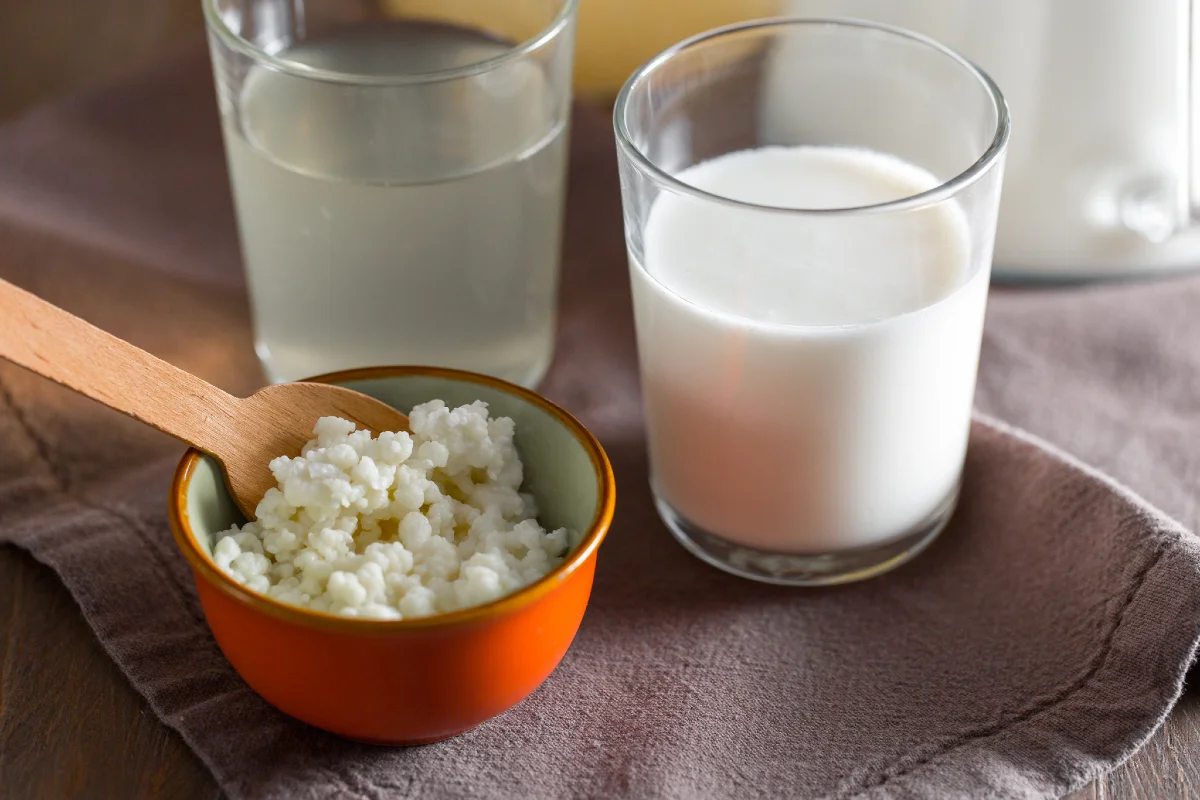
Kefir is a cultured drink made here in two ways: with milk or with water, fruit and sugar. Both versions need little hands-on work, though fermentation takes longer than the listed preparation time.
Ingredients
- 40 gmilk kefir grains
- 1 litrewhole milk, at room temperature
- 100 gwater kefir grains
- 1 litremineral water, at room temperature
- 2dates
- 1 slicelemon
- 40 gbrown sugar
- 1 pinchfine salt
Instructions
- 1
Start milk kefir
To make milk kefir, open the packet and drain the grains in a plastic sieve. Pour the room-temperature milk into a jug and add the grains.
- 2
Ferment the milk
Stir with a wooden spoon, then cover the jug with a tea towel and secure it with an elastic band. Leave it away from direct sunlight at 18–30°C; an oven switched off with only its light on can be used. Fermentation time depends on the temperature: the warmer it is, the sooner the kefir will be ready. Check the consistency after 18 hours; if the temperature has stayed steady, it may already be ready. Strain the mixture into a bowl to separate the grains.
- 3
Chill the kefir
Stir the strained kefir well and keep the grains to make another batch using the same method. There is no need to wash them, though you can rinse them with cold water once a week if you prefer. Transfer the milk kefir to a jug, cover it and refrigerate for a couple of hours before serving.
- 4
Dissolve the sugar
To make water kefir, pour the room-temperature water into a bowl. Add the brown sugar and salt, then whisk with a rubber whisk until they have dissolved completely.
- 5
Add fruit and grains
Add the water kefir grains, lemon slice and dates. Transfer the mixture to a jug.
- 6
Ferment the water
Cover the jug with a tea towel and secure it with an elastic band. Leave it away from direct sunlight at 18–30°C for 24 hours; warmer conditions shorten the fermentation time. Taste the fermented water until it reaches the level of fermentation you like, then strain it. The fruit can be eaten, and the strained grains can be used to make another batch. The water kefir is ready to serve.
What is kefir?
Kefir is a fermented drink made by leaving milk or sweetened water with live kefir grains. Milk kefir is commonly associated with the Caucasus, while water kefir offers a dairy-free style of the same cultured drink.
This recipe sets out both options, so you can choose between a tangy, creamy milk drink and a lighter, fruit-infused water version. The grains are strained out after fermentation and kept for another batch.
Nutrition and macros by portion
The nutrition label shows one serving as written: 111 calories, 0g protein, 13g carbs, 3g fat.
| Portion | Adjustment | kcal | Protein | Carbs | Fat |
|---|---|---|---|---|---|
| Lighter | Smaller glass of kefir | 78 kcal | 0g | 9g | 2g |
| This serving | As written | 111 kcal | 0g | 13g | 3g |
| Hungry | Larger glass of kefir | 167 kcal | 0g | 20g | 4g |
In the milk version, milk contributes most of the protein and fat, while its natural lactose provides carbohydrates. In the water version, the brown sugar and dates are the main sources of carbohydrates, with little protein or fat. Pair a glass with a meal containing a source of protein and fibre, such as eggs and wholegrain toast.
Choosing the ingredients
Milk kefir grains: use grains intended for milk, with whole milk at room temperature as specified. The recipe gives a separate set of grains for the water version; the two types are not interchangeable in these instructions.
Water kefir additions: mineral water, brown sugar, a pinch of salt, dates and lemon make up the other version. The dates and lemon flavour the ferment as it rests.
Keeping fermentation steady
Temperature: both versions ferment at 18–30°C, away from sunlight. A warmer spot speeds the process, so use the stated times as guides rather than guarantees.
Covering: a tea towel held in place with an elastic band keeps the jug covered while allowing the method’s fermentation setup. An oven switched off with its light on is suggested for the milk version only.
How to judge doneness
Milk kefir: check its consistency after 18 hours, then strain when it seems ready. The recipe notes that it may be ready at that point if the temperature has remained consistent.
Water kefir: ferment for 24 hours, then taste it to find the level of fermentation you prefer. If it needs more time to suit your taste, continue checking it rather than relying on the clock alone.
Straining and reusing the grains
Separate the grains from the finished drink with a sieve or strainer, keeping them for your next batch. The recipe says they do not need washing, although you can rinse them with cold water once a week if you prefer.
The water kefir fruit can be eaten after straining. Chill the milk kefir for a couple of hours before drinking; the water version can be served once strained.
Serving ideas
Serve either kefir well chilled in a glass. Milk kefir works as a drink alongside breakfast or a light snack, while water kefir can be served on its own as a lightly fruit-flavoured alternative.
If serving the water version with its fruit, keep in mind that the recipe strains the mixture before serving and treats the fruit as something to eat separately.
Recipe notes & tips
- Use grains suited to the version you are making: milk grains for milk and water grains for water.
- Start with ingredients at room temperature, as the method specifies.
- Keep the ferment away from direct sunlight.
- Check the milk kefir after 18 hours, since warmth can bring it along sooner.
- Taste the water kefir after its 24-hour ferment to see whether you like its flavour.
- Save the strained grains so you can make another batch.
Variations
- Choose milk: use whole milk and milk kefir grains for a creamy, tangy drink.
- Choose water: use mineral water and water kefir grains for the dairy-free version.
- Adjust fermentation: taste the water kefir and stop when its fermented flavour suits you.
- Serve the fruit: eat the dates after straining the water kefir.
- Rinse the grains: give them a cold-water rinse once a week if you prefer.
Common mistakes to avoid
- Mixing grain types: use milk grains with milk and water grains with water.
- Using cold ingredients: begin with the milk or water at room temperature.
- Leaving the jug in sunlight: ferment it somewhere away from direct sun.
- Following the clock blindly: temperature affects fermentation, so check the milk after 18 hours and taste the water version.
- Discarding the grains: strain them out and keep them for your next batch.
- Skipping the milk kefir chill: refrigerate it for a couple of hours before serving.
How to store
Once strained, keep the milk kefir covered in the fridge and chill it for a couple of hours before serving. The recipe does not specify a storage life, so make only what you can use promptly and keep it refrigerated. It does not give separate storage instructions for the finished water kefir.
Frequently asked questions
How long does kefir take to ferment?
The milk version may be ready after 18 hours, depending on the temperature. The water version is left for 24 hours, then tasted to check whether its fermentation suits you.
Can I make this without dairy?
Yes. Follow the water kefir method with water kefir grains, mineral water, sugar, salt, dates and lemon.
Can I use the same grains for both versions?
This recipe lists separate milk and water kefir grains. Use the type intended for the version you are making.
Do I need to wash the kefir grains?
The recipe says washing is not necessary. If you prefer, rinse them with cold water once a week.
How do I know when water kefir is ready?
After 24 hours, taste it and decide whether the level of fermentation is to your liking. The process can go faster in warmer conditions.
Can I eat the fruit from water kefir?
Yes. The method says the dates and lemon can be eaten after the mixture is strained.
Cook it from the original
This recipe comes from giallozafferano.es. Their page has the author’s own photos, notes and tips — the best place to cook it from.
Open the recipe on giallozafferano.es