
Yoghurt gâteau
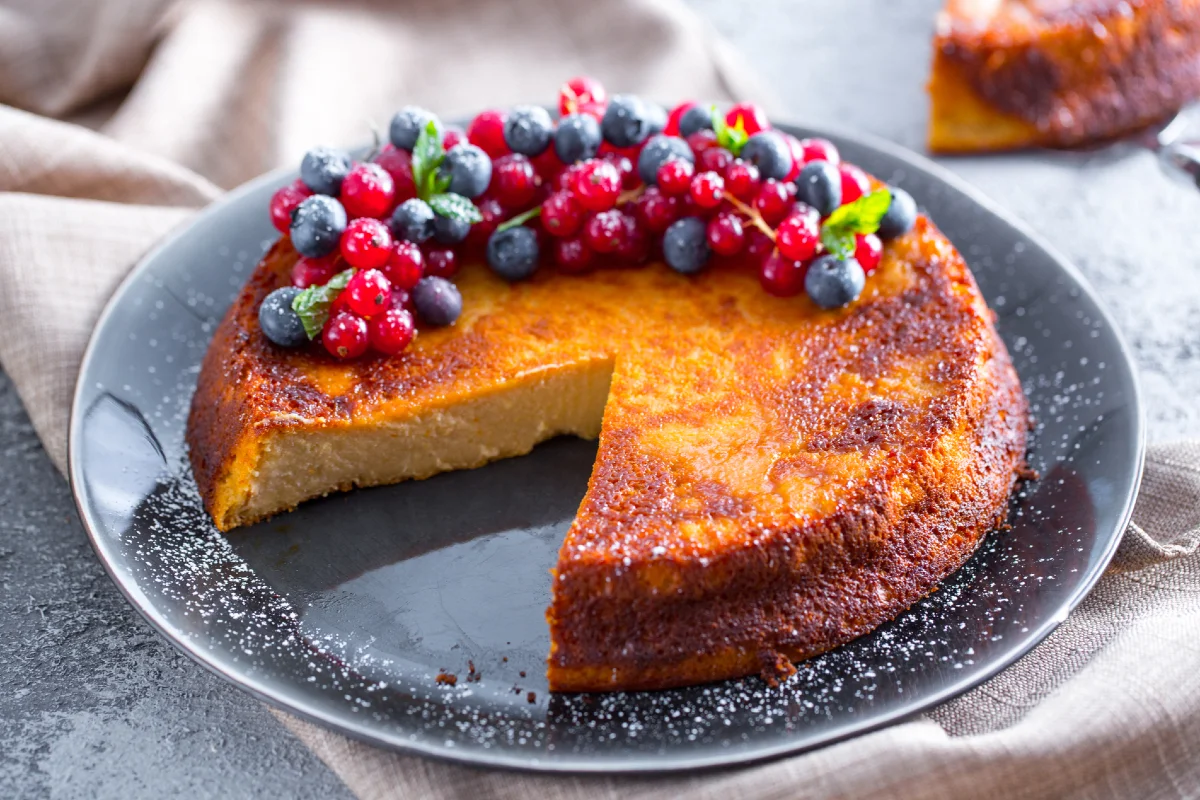
This compact yoghurt gâteau sets into a tender, softly tangy cake, with no flour, butter or baking powder in the batter. Serve it chilled with berries, honey or jam for an easy make-ahead dessert.
Ingredients
- 500 gnatural plain yoghurt
- 165 g (about 3 medium)eggs
- 145 gsoft brown cane sugar
- 75 gcornflour
- 30 glemon juice
- 1lemon, zest for grating
- as neededbutter
- as neededsoft brown cane sugar
- to tasteberries
- to tastemint
- to tasteicing sugar
Instructions
- 1
Whisk eggs and sugar
Put the eggs and soft brown sugar in a bowl. Add the lemon zest and juice, then whisk vigorously until combined.
- 2
Mix the batter
Add the cornflour and keep mixing to prevent lumps. Stir in the yoghurt until the mixture is smooth and even.
- 3
Bake the gâteau
Grease a tin measuring 20 cm across the base, 22 cm across the top and 5 cm high, then dust it with soft brown sugar. Pour in the mixture and bake in a preheated conventional oven at 200°C for 50 minutes on the lower shelf.
- 4
Cool and decorate
Take the gâteau out of the oven and leave it to cool before turning it out on to a plate. Chill it in the fridge for at least 2 hours, then decorate to taste, for example with berries, icing sugar and a few mint leaves.
What is yoghurt gâteau?
This is a simple yoghurt-based cake, set with eggs and cornflour rather than flour or a raising agent. The supplied recipe does not specify a regional origin, but its straightforward ingredients make it an easy dessert to prepare at home.
Lemon zest and juice brighten the mild yoghurt flavour, while brown sugar gives the cake sweetness and a lightly caramel-like note. Chilling it after baking helps it firm up for serving.
Nutrition and macros by portion
The nutrition label shows one serving as written: 236 calories, 7g protein, 39g carbs, 5g fat.
| Portion | Adjustment | kcal | Protein | Carbs | Fat |
|---|---|---|---|---|---|
| Lighter | Smaller slice, more berries | 165 kcal | 5g | 28g | 4g |
| This serving | As written | 236 kcal | 7g | 39g | 5g |
| Hungry | Larger slice with yoghurt | 354 kcal | 10g | 59g | 8g |
The eggs and yoghurt contribute most of the protein and fat, while the brown sugar and cornflour provide most of the carbohydrates. These are approximate figures because the yoghurt’s fat content and the amounts of butter and toppings are not specified. Serve a slice with fresh berries for fruit alongside.
The yoghurt and eggs
Yoghurt: Use natural, plain yoghurt so its mild tang complements the lemon without adding extra sweetness or flavouring.
Eggs: Whisk them well with the sugar at the start, then combine thoroughly with the yoghurt mixture so the cake sets evenly.
Mixing a smooth batter
Cornflour: Add it before the yoghurt and keep stirring as it goes in; this helps avoid dry pockets and lumps.
Lemon: Grate the zest finely and mix it with the juice at the beginning so both are distributed through the batter.
Preparing the tin
Greasing: Coat the tin with butter, including around the sides, to help the gâteau release after cooling.
Sugar coating: Dust the greased tin with brown sugar as directed. The recipe specifies a tin with a 20 cm base, a 22 cm top and a height of 5 cm.
Baking and setting
Oven: Bake in a preheated conventional oven at 200°C for 50 minutes, using the lower shelf as specified.
Doneness: The recipe gives a fixed baking time rather than a visual test. Let the cake cool before turning it out, then chill it for at least 2 hours so it can firm up.
Serving it chilled
Toppings: Finish with berries, icing sugar and mint, or choose honey or jam as suggested in the recipe description.
Pairing: Serve the gâteau on its own or with extra fresh fruit. Add the toppings just before serving for a neat finish.
Recipe notes & tips
- Bring the yoghurt and eggs towards room temperature before mixing for an easier-to-combine batter.
- Whisk the cornflour in gradually to help prevent lumps.
- Use the specified tin dimensions so the cake bakes to a similar depth.
- Allow the gâteau to cool before turning it out to reduce the chance of breaking.
- Chill for at least 2 hours before slicing so the texture has time to firm up.
- Add icing sugar shortly before serving so it stays visible on top.
Variations
- Use orange: Replace the lemon zest and juice with orange for a softer citrus note.
- Add honey: Drizzle a little honey over each slice just before serving.
- Choose seasonal fruit: Top with sliced fruit in place of the berries.
- Add vanilla: Stir vanilla into the batter for a mellow flavour.
- Serve with jam: Add a spoonful of your preferred jam alongside each slice.
Common mistakes to avoid
- Lumpy batter: Mix the cornflour in thoroughly before adding the yoghurt.
- Skipping the tin preparation: Grease and dust the tin with brown sugar to help the cake release.
- Turning it out while hot: Let it cool first so it is less fragile.
- Skipping the chill: Refrigerate for at least 2 hours to give the gâteau time to firm up.
- Adding toppings too early: Decorate after chilling, just before serving.
How to store
Keep the gâteau covered in the fridge and eat it within 3 days. Serve it chilled; the recipe does not specify reheating, and it is best enjoyed cold.
Frequently asked questions
Can I make the gâteau ahead?
Yes. It needs at least 2 hours in the fridge after cooling, so you can prepare it in advance and decorate it shortly before serving.
How do I know when it is baked?
The method specifies 50 minutes at 200°C on the lower shelf. As ovens can vary, check towards the end of the stated time and avoid extending the bake unnecessarily.
Why does the gâteau need chilling?
Chilling helps the yoghurt-and-egg cake firm up after baking, making it easier to serve.
Can I use a different-sized tin?
The recipe specifies a tin with a 20 cm base, a 22 cm top and a height of 5 cm. A different size may change the cake’s depth and baking time.
What can I use instead of berries?
The description suggests fruit, honey or jam. You can also keep the berries and mint as optional decorations.
Cook it from the original
This recipe comes from giallozafferano.es. Their page has the author’s own photos, notes and tips — the best place to cook it from.
Open the recipe on giallozafferano.es