
Burger buns
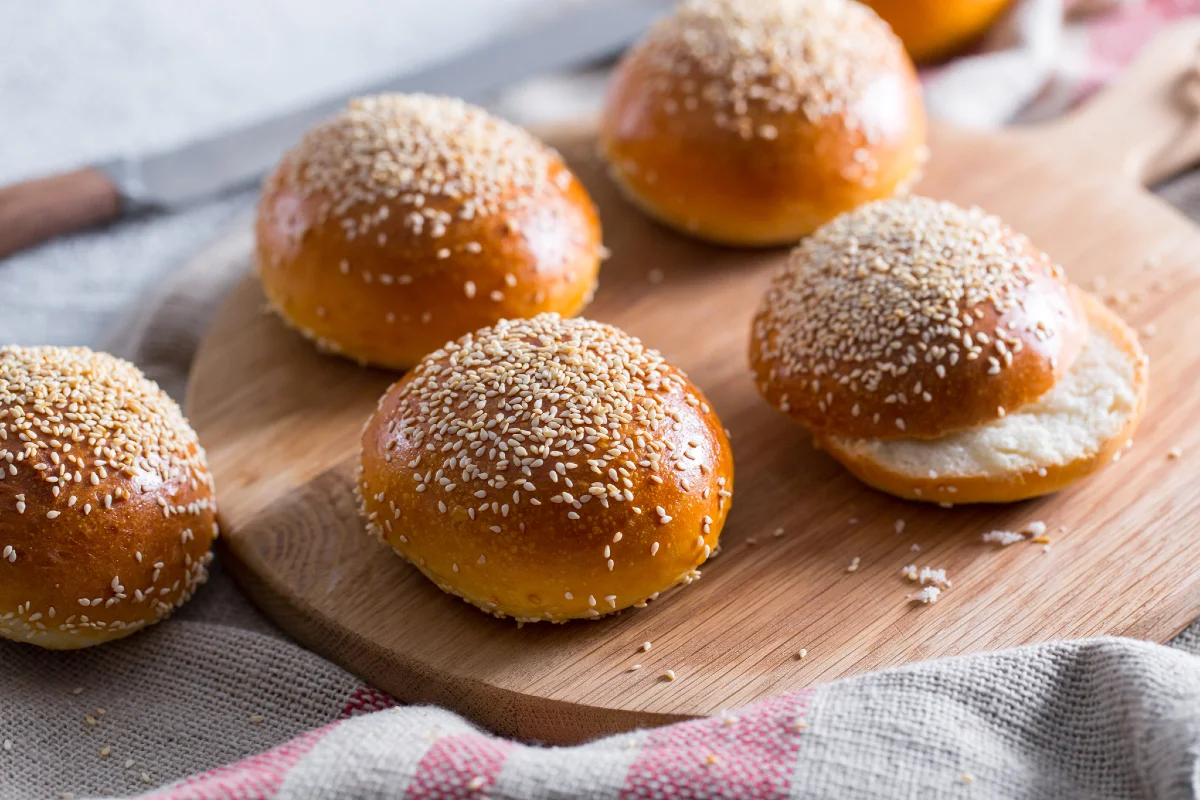
These homemade burger buns are soft, lightly sweet rolls made with a biga, an Italian-style pre-ferment. Their rich dough and sesame topping make them a satisfying base for burgers or sandwiches.
Ingredients
- 100 gManitoba flour
- 50 gWater, at room temperature
- 5 gFresh baker’s yeast
- 200 gManitoba flour
- 200 g00 flour
- 200 gWhole milk, at room temperature
- 15 gAcacia honey
- 15 gFine salt
- 25 gSoft butter
- 55 g (1 medium)Egg
- 15 g (approximately 1)Egg yolk
- 25 gExtra-virgin olive oil
- 1Egg yolk
- 30 gWhole milk
- As neededSesame seeds
Instructions
- 1
Mix the biga
To make the biga, pour the water into a bowl, add the yeast and stir to dissolve. Put the flour in a separate bowl, pour in the yeast mixture and mix briefly, first with a fork and then by hand.
- 2
Rest the biga
The mixture should be crumbly rather than fully combined. Cover it with cling film and leave at room temperature for 2 hours, or until doubled in volume.
- 3
Combine the flours
Put both flours in the stand mixer bowl. Add the mature biga and the honey.
- 4
Add the milk
Pour in the milk, fit the dough hook and begin mixing the ingredients.
- 5
Work in the eggs
Add the egg and, once it has been absorbed, add the egg yolk. Continue mixing with the dough hook until the dough is smooth and well combined.
- 6
Add fat and salt
Slowly pour in the oil and add the salt. Wait until both are absorbed before adding the butter, a small piece at a time.
- 7
Knead the dough
Continue kneading until the butter is fully absorbed and the dough is smooth, supple and well combined. Transfer it to a work surface and shape it into a ball.
- 8
Let the dough rise
Place the dough in a bowl, cover with a plate or cling film and leave at room temperature for 2 hours, or until doubled in volume.
- 9
Divide the dough
Transfer the risen dough to the work surface and divide it into 110 g pieces to make 8 portions.
- 10
Shape each bun
Take one piece and flatten it on the work surface. Fold the two side edges towards the centre, then fold in the other edges as well.
- 11
Form the balls
Turn the dough over and use your hand to shape it into a firm ball. Repeat with the remaining pieces, placing the buns well spaced apart on a baking tray lined with baking paper.
- 12
Proof and glaze
Cover the buns with a second baking tray and leave them to rise for another 30 minutes. Beat the egg yolk with the milk, then brush it over the buns.
- 13
Bake the buns
Sprinkle with white sesame seeds and bake in a preheated conventional oven at 190°C for 25–30 minutes. Remove from the oven and leave to cool a little before serving.
What are burger buns?
Burger buns are soft, slightly sweet rolls made to hold a burger and its fillings. This version uses a biga, a firm Italian pre-ferment, before the main dough is mixed.
The biga gives the dough time to develop before the milk, eggs, oil and butter are added. The result is a tender, enriched roll finished with a sesame topping.
Nutrition and macros by portion
The nutrition label shows one serving as written: 330 calories, 0g protein, 51g carbs, 10g fat.
| Portion | Adjustment | kcal | Protein | Carbs | Fat |
|---|---|---|---|---|---|
| Lighter | Use a smaller bun | 231 kcal | 0g | 36g | 7g |
| This serving | As written | 330 kcal | 0g | 51g | 10g |
| Hungry | Serve a larger portion | 495 kcal | 0g | 77g | 14g |
The carbohydrates come mainly from the flour, while the butter, olive oil, egg and whole milk contribute most of the fat. The flour, eggs and milk also provide some protein. Pair a bun with a protein-rich filling and plenty of vegetables for a more balanced plate.
Why use a biga?
Biga: this small mixture of Manitoba flour, water and fresh yeast rests for 2 hours at room temperature, or until it doubles. It should remain crumbly rather than turn into a smooth dough.
Flour blend: Manitoba flour is used in both the biga and the main dough, alongside 00 flour. Follow the listed quantities and mix the flours thoroughly before adding the other ingredients.
Building the dough
Eggs and milk: add the milk and mix before incorporating the egg and yolk. Let each addition absorb before moving on, so the dough can come together evenly.
Fats: pour in the oil gradually, then add the butter in small pieces once the oil and salt have been absorbed. The dough is ready for its first rise when it looks smooth, supple and well combined.
Shaping evenly
Portions: divide the dough into 110 g pieces to make 8 buns. Weighing the pieces helps them bake at a similar rate.
Seams: fold the edges towards the centre, turn each piece over and shape it into a firm ball. Keep the buns spaced apart on the tray so they have room to rise.
Proofing and baking
First rise: cover the shaped dough ball in its bowl and leave it at room temperature for 2 hours, or until doubled. The recipe also calls for a further 30-minute rise after shaping.
Oven: bake in a preheated conventional oven at 190°C for 25–30 minutes. The egg-yolk-and-milk glaze and sesame seeds go on just before baking.
Serving ideas
Burgers: let the buns cool a little before slicing and filling. Their soft crumb suits classic burgers as well as grilled vegetables or other sandwich fillings.
On the side: serve with a crisp salad, sliced tomatoes or other fresh vegetables. If toasting the cut sides, use a hot pan briefly so they colour without drying out.
Recipe notes & tips
- Use room-temperature water and milk as listed to help the ingredients combine smoothly.
- Wait for the biga to double before mixing the main dough.
- Add the egg and yolk one at a time, allowing each to absorb into the dough.
- Work the oil and salt in before adding the butter piece by piece.
- Keep the shaped buns well spaced on the baking tray.
- Let the buns cool a little before slicing so they hold their shape.
Variations
- Seed topping: use a mix of sesame and poppy seeds in place of sesame alone.
- Plain tops: leave off the sesame seeds for unseeded buns.
- Smaller rolls: divide the dough into smaller portions and check them earlier in the bake.
- Sandwich buns: shape the dough into slightly flatter rounds for wider fillings.
Common mistakes to avoid
- Smooth biga: do not knead it into a finished dough; it should remain crumbly before its 2-hour rest.
- Adding butter too soon: wait until the oil and salt are absorbed, then add the butter a little at a time.
- Uneven portions: weigh the pieces at 110 g each so the 8 buns bake more evenly.
- Crowded tray: leave space between the buns so they can rise without merging.
- Skipping the second rise: allow the shaped buns their full 30 minutes before glazing and baking.
How to store
Once completely cool, store the buns in an airtight container at room temperature and use within 2 days. Rewarm briefly in a low oven, or split and toast them before serving. They can also be frozen in a sealed bag and thawed before use.
Frequently asked questions
Can I make the biga ahead?
The method specifies a 2-hour rest at room temperature, or until the biga has doubled. For a different resting schedule, use a recipe designed for that timing.
How do I know when the dough has risen enough?
For the two bowl rises, the recipe's cue is that the dough has doubled in volume. After shaping, leave the buns for the specified 30 minutes.
Can I knead the dough by hand?
The method uses a stand mixer with a dough hook. If kneading by hand, work patiently until the dough is smooth and well combined, taking care to add the oil and butter gradually.
Why is the dough sticky?
This is an enriched dough containing milk, eggs, oil and butter. Knead it until smooth and well combined rather than adding extra flour without guidance from the recipe.
Can I skip the sesame seeds?
Yes. The buns can be baked without them; the sesame seeds are a topping rather than part of the dough.
How should I tell when the buns are baked?
Bake them at 190°C for 25–30 minutes as directed. The recipe does not give a separate doneness test, so check them towards the end of that baking window.
Cook it from the original
This recipe comes from giallozafferano.es. Their page has the author’s own photos, notes and tips — the best place to cook it from.
Open the recipe on giallozafferano.es