
Couscous with seafood
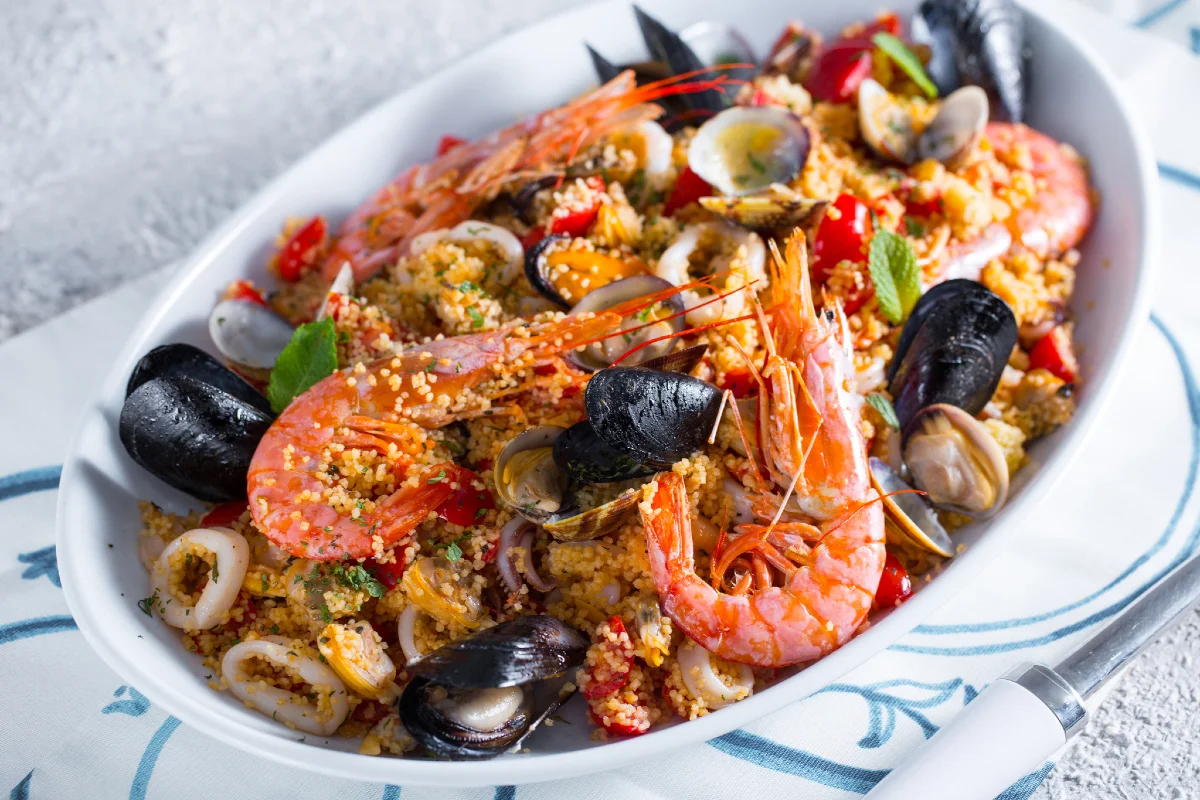
This seafood couscous pairs fluffy grains with mussels, clams, squid, prawns and cherry tomatoes. Steaming the couscous with the filtered shellfish cooking liquid gives it a savoury base, while mint adds a fresh finish.
Ingredients
- 300 gprecooked couscous
- 1 kgmussels
- 1 kgclams
- 500 gsquid
- 400 gprawns
- 50 gextra-virgin olive oil
- 40 gdry white wine
- 3 clovesgarlic
- 2fresh chillies
- to tastefine salt
- to tasteblack pepper
- to tastefresh mint, chopped by hand
- 450 gcherry tomatoes
Instructions
- 1
Clean the seafood
Start by cleaning the shellfish and crustaceans. Soak the clams in a large bowl of plenty of water with coarse salt for 2 hours, changing the water from time to time. Tap each clam, opening-side down against a chopping board, to dislodge any remaining sand. Scrape the mussel shells with the back of a knife, remove the beards and scrub them clean. Clean the squid by removing its innards and fin.
- 2
Cut the squid
Slice the squid into rounds about 1 cm thick. Heat the olive oil in a large saucepan with 2 peeled garlic cloves and 1 whole chilli. Once hot, add the mussels and clams.
- 3
Open the shellfish
Cook over a high heat for a couple of minutes, then pour in the white wine. Once the alcohol has evaporated, cover the pan and cook until the shellfish have opened completely. Lift them into a bowl with a slotted spoon, remove the garlic and chilli, and keep the cooking liquid.
- 4
Strain the liquid
Set a sieve over a bowl and pour in the shellfish cooking liquid to catch any grit or shell fragments. Remove most of the mussels and clams from their shells, keeping a few whole for decoration.
- 5
Soak the couscous
Warm the strained shellfish liquid. Put the couscous in a bowl, add a drizzle of oil and 320 g of the hot liquid.
- 6
Fluff the grains
Cover the bowl with cling film and leave the couscous to stand for 5 minutes. Once it has absorbed the liquid and swollen, fluff it with a fork and set aside. Quarter the cherry tomatoes.
- 7
Cook the squid
Heat the oil with the remaining garlic clove and chilli, and let them sizzle for a few minutes. Add the squid and briefly toss over a high heat. Season with salt and pepper, then remove the garlic and chilli.
- 8
Add the seafood
Cook the squid for 5 minutes, then add the cherry tomatoes and cook for a further 4 minutes. Add the prawns and cook for 1 minute, then stir in the shelled mussels and clams just long enough to warm them through.
- 9
Finish the couscous
Turn off the heat and add the couscous. Mix everything together, then finish with the chopped mint.
What is seafood couscous?
Couscous is a North African staple, and seafood versions are especially associated with coastal cooking around the Mediterranean. This preparation brings together couscous, shellfish, squid and prawns in a dish built around the flavour of the sea.
Here, the couscous is steeped in strained shellfish cooking liquid before it meets the tomato and seafood mixture. That gives the grains a savoury base without losing their light, separate texture.
Nutrition and macros by portion
The nutrition label shows one serving as written: 442 calories, 0g protein, 29g carbs, 19g fat.
| Portion | Adjustment | kcal | Protein | Carbs | Fat |
|---|---|---|---|---|---|
| Lighter | More tomatoes, less oil | 309 kcal | 0g | 20g | 13g |
| This serving | As written | 442 kcal | 0g | 29g | 19g |
| Hungry | Larger couscous portion | 663 kcal | 0g | 43g | 28g |
The couscous supplies most of the carbohydrates, while olive oil contributes much of the fat. The seafood provides protein, although the supplied nutrition figures list protein as 0 g per serving. Balance the plate with a green salad or extra non-starchy vegetables.
The shellfish base
Clams: soaking them and changing their water helps release sand. Tap any that remain gritty against a board before cooking.
Mussels: scrub the shells and remove the beards so they are ready to open cleanly in the pan.
Cooking liquid: strain it carefully and measure out 320 g for the couscous. Keep the rest for another use or add it gradually if the grains need more moisture.
Getting the couscous right
Use hot, strained shellfish liquid and let the couscous stand, covered, for 5 minutes. Fluff it gently with a fork once it has absorbed the liquid; breaking up clumps helps it mix evenly with the seafood.
The method calls for a drizzle of oil with the couscous as well as oil for cooking. The ingredient list gives 50 g in total, so divide that amount between these uses.
Watch the seafood timing
Mussels and clams are ready when their shells open; transfer them out of the pan then, rather than leaving them to cook longer than needed. Discard any that remain closed after cooking.
Add the prawns near the end for just 1 minute, then warm the shelled shellfish briefly. This staged timing helps avoid overcooking the more delicate seafood.
Texture and seasoning
Squid: cut it into rounds about 1 cm thick and sear it briefly over high heat before the longer cooking stage. Season with salt and pepper as directed.
Tomatoes: quarter them and cook for 4 minutes after the squid's first 5 minutes of cooking. They should soften and release some juice without disappearing into the sauce.
Serve it fresh
Fold the couscous through the seafood while the pan is off the heat, then scatter over the chopped mint. Set aside a few shellfish in their shells for the serving platter.
Serve as a substantial first course, or pair it with a crisp green salad and simply dressed vegetables for a fuller meal.
Recipe notes & tips
- Change the clam-soaking water from time to time during the 2-hour soak.
- Strain the shellfish liquid carefully to keep grit and shell fragments out of the couscous.
- Keep a few mussels and clams in their shells to decorate the finished dish.
- Use a fork to fluff the couscous gently after its 5-minute rest.
- Add the prawns only for their specified 1-minute cook, then warm the shelled shellfish briefly.
- Divide the listed olive oil between soaking the couscous and cooking the seafood.
Variations
- More herbs: Add a little extra chopped mint at the end for a fresher finish.
- Milder heat: Use one chilli instead of two, or remove the seeds before cooking.
- Extra vegetables: Add sliced courgette with the cherry tomatoes and cook until tender.
- Citrus finish: Serve with lemon wedges for a bright contrast to the shellfish.
- Shellfish choice: Use a different mix of mussels and clams while keeping the total shellfish quantity similar.
Common mistakes to avoid
- Skipping the clam soak: Soak for the full 2 hours and change the water periodically to help remove sand.
- Using unstrained cooking liquid: Pass it through a sieve before adding it to the couscous.
- Overcooking the shellfish: Transfer mussels and clams out once they open, then warm the shelled meat briefly at the end.
- Leaving the couscous covered too long: Rest it for 5 minutes, then fluff it with a fork.
- Adding the prawns too early: Cook them for just 1 minute near the end so they do not become tough.
How to store
Refrigerate leftovers promptly in an airtight container and use within 1–2 days. Reheat gently in a covered pan until hot throughout, adding a splash of water if the couscous seems dry; avoid prolonged heating, as the seafood can toughen.
Frequently asked questions
Can I prepare the shellfish in advance?
You can clean the shellfish ahead and keep it chilled until cooking. For the best texture, cook and combine the seafood close to serving time.
What should I do if a clam stays closed?
Discard any clam that remains closed after cooking. Do not try to force it open and use it.
Can I use frozen prawns?
Yes. Thaw them safely and drain them well before adding them to the pan for the final 1-minute cook.
Can I make this without wine?
The recipe uses dry white wine to cook the shellfish. You can omit it, though the finished shellfish liquid will have a different flavour.
How do I know when the couscous is ready?
After 5 minutes covered with the hot liquid, it should have absorbed the liquid and swollen. Fluff it with a fork before mixing it with the seafood.
Cook it from the original
This recipe comes from giallozafferano.es. Their page has the author’s own photos, notes and tips — the best place to cook it from.
Open the recipe on giallozafferano.es