
Pisto
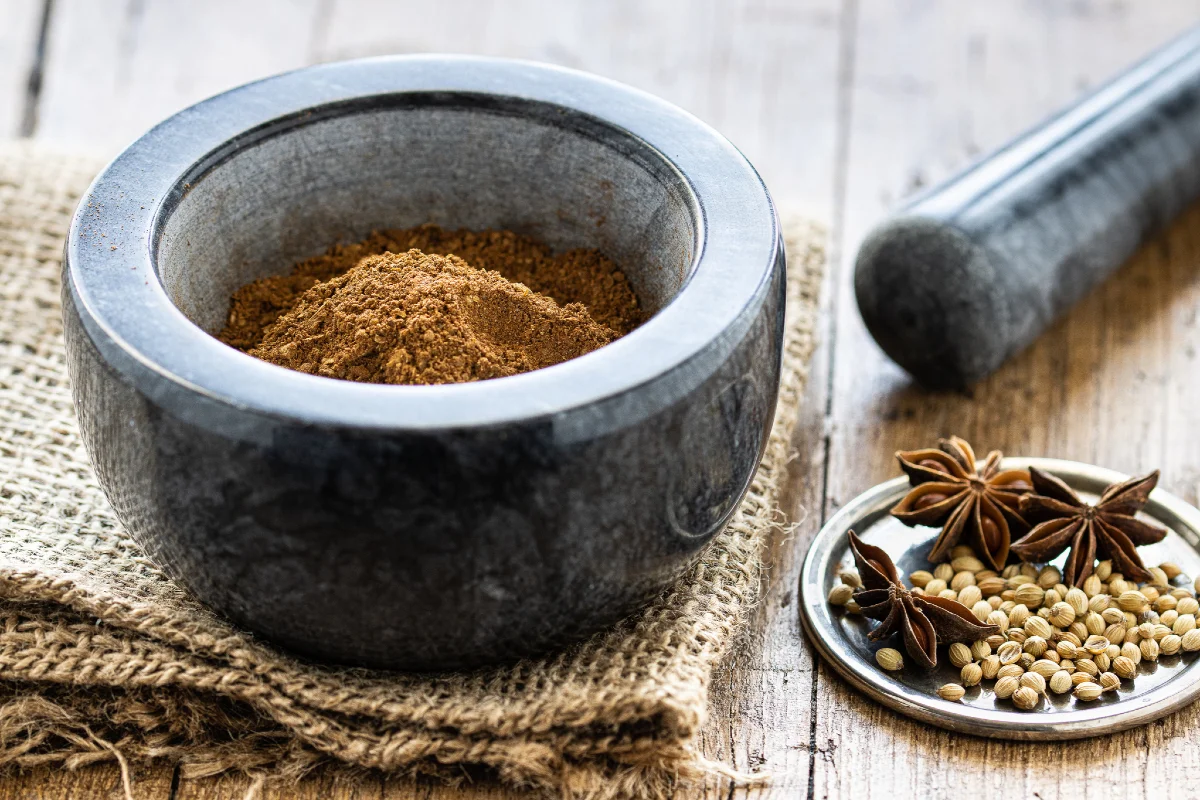
Pisto is a fragrant spice blend from Campania in southern Italy, used to flavour traditional sweets. Make it in minutes by grinding whole spices, mixing in nutmeg and cinnamon, then briefly toasting the blend.
Ingredients
- 15 gwhole white peppercorns
- 5 gcoriander seeds
- 5 gwhole nutmeg, for grating
- 2cloves
- 2star anise
- 13 gground cinnamon
Instructions
- 1
Grind whole spices
Put the peppercorns, coriander seeds, cloves and star anise in a mortar. Grind them with the pestle until they form a coarse powder.
- 2
Add remaining spices
Grate in the nutmeg and add the ground cinnamon.
- 3
Mix and toast
Grind again until the spices are evenly combined into a powder. Heat a non-stick frying pan and toast the pisto for a few seconds, taking care not to burn it. Transfer to a small jar and use as needed.
What is pisto?
Pisto is a traditional spice blend from Campania, a region in southern Italy, and is particularly associated with sweet recipes. It is not the Spanish vegetable dish with a similar name.
This version combines pepper, coriander, cloves and star anise with nutmeg and cinnamon. Grinding the whole spices just before use gives the blend a fresh, aromatic character.
Nutrition and macros by portion
The nutrition label shows one serving as written: 34 calories, 1g protein, 6g carbs, 1g fat.
| Portion | Adjustment | kcal | Protein | Carbs | Fat |
|---|---|---|---|---|---|
| Lighter | Use a smaller pinch | 24 kcal | 1g | 4g | 1g |
| This serving | As written | 34 kcal | 1g | 6g | 1g |
| Hungry | Use a larger pinch | 51 kcal | 2g | 9g | 2g |
Most of the energy and carbohydrates come from the spices, particularly the cinnamon, pepper and coriander; the recipe contains no substantial source of protein or fat. Use the blend as a seasoning alongside a meal or dessert, rather than treating a serving as a standalone dish.
Why grind the spices in stages?
Whole spices first: peppercorns, coriander, cloves and star anise need more grinding than the already-ground cinnamon. Work them to a coarse powder before adding the finer ingredients.
Nutmeg and cinnamon next: grate the nutmeg into the mortar, then add the cinnamon. A final grind distributes the flavours through the blend.
Getting the texture right
The first grind should leave no large pieces of peppercorn or star anise, but it does not need to be perfectly fine. Continue grinding after adding the remaining spices until the mixture looks evenly powdered.
A mortar gives you control over the texture. If you use another grinder, stop and check often so the blend does not become unevenly coarse.
Toast it briefly
Use a dry non-stick frying pan and keep the pisto moving as it warms. The method calls for only a few seconds, so stay by the pan and remove it as soon as the spices smell fragrant.
Spices can turn bitter if they scorch. If the pan is smoking or the mixture darkens quickly, take it off the heat straight away.
Using pisto in sweets
Pisto is intended as a seasoning for traditional sweet treats, where its warm spices can complement doughs and other baked preparations. The recipe makes a small jar, so add it according to the quantities in the dish you are preparing.
For a balanced flavour, start with a modest amount when adapting a recipe and taste the mixture before adding more, if it is suitable to taste uncooked.
How to store the blend
Let the toasted spices cool before sealing them in a small, dry, airtight jar. Keep it away from heat, moisture and direct light to help preserve its aroma.
For the fullest flavour, use the blend within a few months and avoid dipping a damp spoon into the jar.
Recipe notes & tips
- Grate the nutmeg fresh for a more pronounced aroma.
- Break the star anise into smaller pieces if it is difficult to crush.
- Grind the whole spices in batches if your mortar is small.
- Toast the mixture for only a few seconds and keep it moving.
- Cool the pisto before putting it into a sealed jar.
Variations
- Finer texture: continue grinding until no coarse pieces remain.
- More cinnamon: add a little extra cinnamon for a sweeter-smelling blend.
- Freshly grated nutmeg: grate it directly into the mortar just before mixing.
- Gentler flavour: use less pisto in the sweet recipe and adjust to taste.
- Small batch: halve each ingredient for a smaller quantity, keeping the same proportions.
Common mistakes to avoid
- Uneven grinding: crush the whole spices to a coarse powder before adding the finer ingredients.
- Large star anise pieces: break them up in the mortar so they grind evenly.
- Adding nutmeg too early: add it after the whole spices have been ground, as directed.
- Burning the blend: toast for only a few seconds and watch the pan closely.
- Sealing it while warm: let the pisto cool before transferring it to the jar.
How to store
Cool the pisto completely, then store it in a dry, airtight jar away from light and heat. Use within a few months for the best aroma.
Frequently asked questions
Is this pisto the same as Spanish pisto?
No. This recipe is an Italian spice blend from Campania, used particularly in sweets; Spanish pisto is a cooked vegetable dish.
Can I make pisto without a mortar?
Yes. Use a spice grinder, working in short bursts and checking the texture often. Avoid grinding so long that the mixture becomes warm.
How fine should the spices be?
The first grind should be coarse, and the final grind should make the blend evenly powdered. A few tiny flecks are fine.
How long should I toast it?
Only a few seconds, as the method specifies. Keep the spices moving and take the pan off the heat as soon as they smell fragrant.
What can I use pisto for?
It is used especially to flavour traditional sweet treats. Follow the quantity suggested in the recipe you are making, as this blend is strongly aromatic.
Can I prepare it in advance?
Yes. Once completely cool, store it in a small airtight jar in a cool, dry cupboard. Its aroma is best when used within a few months.
Cook it from the original
This recipe comes from giallozafferano.es. Their page has the author’s own photos, notes and tips — the best place to cook it from.
Open the recipe on giallozafferano.es