
Baked polenta
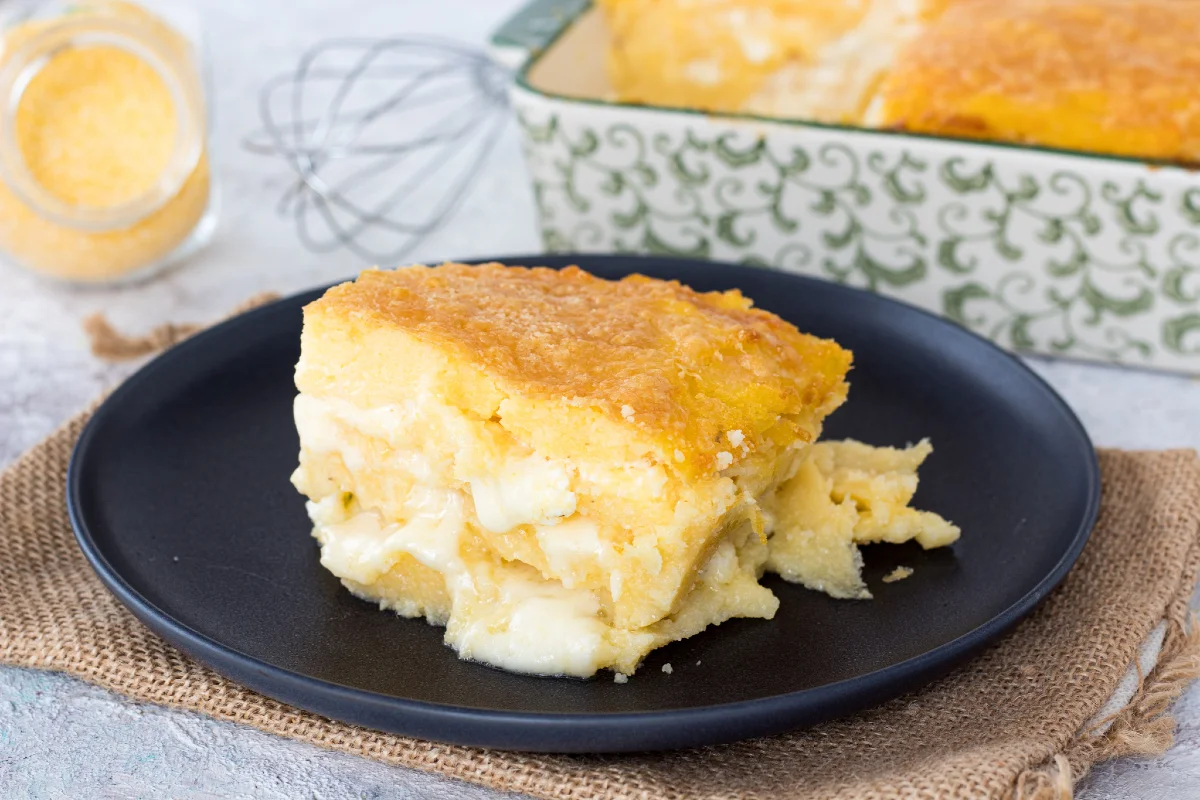
This baked polenta is layered with Asiago, Fontina and Gorgonzola, then topped with grated Grana Padano. It makes a warming main course with a golden top and a soft, cheese-filled centre.
Ingredients
- 1 lwater
- 250 gmaize flour
- 10 gfine salt
- 1 tablespoon (15 ml)extra-virgin olive oil
- 140 gAsiago
- 130 gFontina
- 120 gGorgonzola
- 55 gGrana Padano DOP, for grating
- 10 gbutter
Instructions
- 1
Cook the polenta
Bring 1 litre of water to the boil in a pan. Add the salt and olive oil, then gradually rain in the maize flour, whisking continuously to prevent lumps. Once the water returns to the boil, lower the heat and cook for about 50 minutes, stirring continuously if possible.
- 2
Prepare the cheese
Meanwhile, cut the Asiago, Fontina and Gorgonzola into cubes. Grate the Grana Padano.
- 3
Start layering
Butter a baking dish of about 23 x 17 cm. Spread some of the polenta over the base and scatter the Asiago cubes on top.
- 4
Add the cheeses
Make another layer of polenta and add the Fontina cubes. Cover with a third layer of polenta and the Gorgonzola, then finish with a final layer of polenta and the grated Grana Padano.
- 5
Bake until golden
Bake in a preheated conventional oven at 180°C for 20 minutes. When the top is well browned, remove the dish from the oven and serve the polenta hot, while the cheese is still melted.
What is baked polenta?
Polenta is a maize-based staple associated with northern Italian cooking, where it is served soft or allowed to set before being cut and cooked further. This version turns it into a layered main dish rather than serving it as a simple side.
Four cheeses give the bake its character: Asiago and Fontina are layered inside, Gorgonzola adds a stronger note, and Grana Padano forms the top. The contrast between the mild polenta and the melting cheeses makes each layer distinct.
Nutrition and macros by portion
The nutrition label shows one serving as written: 455 calories, 23g protein, 33g carbs, 23g fat.
| Portion | Adjustment | kcal | Protein | Carbs | Fat |
|---|---|---|---|---|---|
| Lighter | Smaller portion, extra salad | 319 kcal | 16g | 23g | 16g |
| This serving | As written | 455 kcal | 23g | 33g | 23g |
| Hungry | Larger portion | 683 kcal | 35g | 50g | 35g |
The maize flour supplies most of the carbohydrates, while the four cheeses and butter contribute much of the protein and fat. Serve a portion with a generous helping of vegetables or salad to balance the rich, filling bake.
Getting smooth polenta
Gradual addition: rain the maize flour into boiling water rather than tipping it in all at once. Whisk as you pour so the flour disperses before it can form lumps.
Steady cooking: once the mixture returns to the boil, reduce the heat and stir as continuously as you can during the 50-minute cook. Follow the recipe's timing and keep the polenta moving to help it cook evenly.
Choosing the cheeses
Layering cheeses: cut the Asiago, Fontina and Gorgonzola into cubes so they can be distributed between the polenta layers. Grate the Grana Padano finely for an even topping.
Distinct flavours: the recipe uses all four cheeses in specific layers, so keep them separate as you assemble the dish. The Gorgonzola has a more pronounced flavour than the other cheeses.
Building even layers
Buttered dish: coat the roughly 23 x 17 cm baking dish with butter before adding the polenta. This helps the finished bake release more easily.
Spread gently: divide the polenta across the base and successive layers, covering the cheese as you go. Aim for an even final layer so the grated Grana Padano can brown across the top.
When it is ready
Golden top: bake in a preheated conventional oven at 180°C for 20 minutes. The recipe's visual cue is a well-browned surface.
Melted centre: serve it hot after baking, when the cheeses are still soft and gooey. Let it settle only briefly if needed to make serving easier.
Serving the bake
As a main: cut the polenta into portions and serve it straight from the baking dish while warm. A crisp green salad or simply cooked vegetables make a fresh contrast to the rich, cheesy layers.
For a fuller meal, add a side of roasted or steamed vegetables. Keep accompaniments simply seasoned so they do not compete with the cheeses.
Recipe notes & tips
- Whisk the maize flour in gradually to help keep the polenta smooth.
- Keep the heat low once the polenta returns to the boil and stir frequently.
- Cut all three layered cheeses into similarly sized cubes for easier distribution.
- Butter the whole baking dish, including the corners.
- Use the golden surface as the cue to take the bake out after its 20 minutes in the oven.
- Serve promptly so the cheese layers stay soft and melted.
Variations
- Change the cheese mix: replace one of the layered cheeses with another good-melting cheese.
- Add herbs: scatter chopped fresh herbs between the layers for an aromatic note.
- Include vegetables: layer in cooked, well-drained mushrooms for an earthy variation.
- Make smaller portions: assemble the layers in individual ovenproof dishes and check for a golden top.
- Serve with greens: pair each portion with dressed salad leaves for a fresh contrast.
Common mistakes to avoid
- Adding the flour all at once: it can clump; rain it into the water while whisking.
- Cooking over high heat: the polenta can catch on the pan; lower the heat after it returns to the boil.
- Skipping the stirring: the mixture may cook unevenly; stir continuously if possible during the 50 minutes.
- Leaving the dish unbuttered: the polenta may stick; coat the baking dish before assembling.
- Overfilling a layer: uneven cheese distribution makes portions less consistent; spread the cubes across each layer.
- Waiting too long to serve: the filling firms as it cools; bring it to the table while hot.
How to store
Cool leftovers, cover and refrigerate for up to 3 days. Reheat in an ovenproof dish in the oven until heated through; the cheese may be less gooey than when freshly baked.
Frequently asked questions
Can I make the polenta ahead?
The polenta can be cooked ahead, but it firms as it cools and is harder to spread. For the easiest layering and a gooey result, assemble and bake it while the polenta is still warm.
Can I use instant polenta?
The method specifies maize flour cooked for about 50 minutes. Instant polenta has different cooking instructions, so follow its packet directions if substituting and expect the texture and timing to differ.
Can I use a different baking dish?
A similarly sized ovenproof dish should work, though the depth and layer thickness may change. Keep the layers even and use the golden top as the doneness cue.
How do I stop the polenta going lumpy?
Pour the maize flour into the boiling water gradually while whisking continuously. Keep stirring as it cooks to help maintain a smooth texture.
Can I reheat leftovers?
Yes. Refrigerate them covered and reheat in the oven until hot throughout. The texture will be firmer than when freshly baked.
Cook it from the original
This recipe comes from giallozafferano.es. Their page has the author’s own photos, notes and tips — the best place to cook it from.
Open the recipe on giallozafferano.es