
Sautéed cabbage
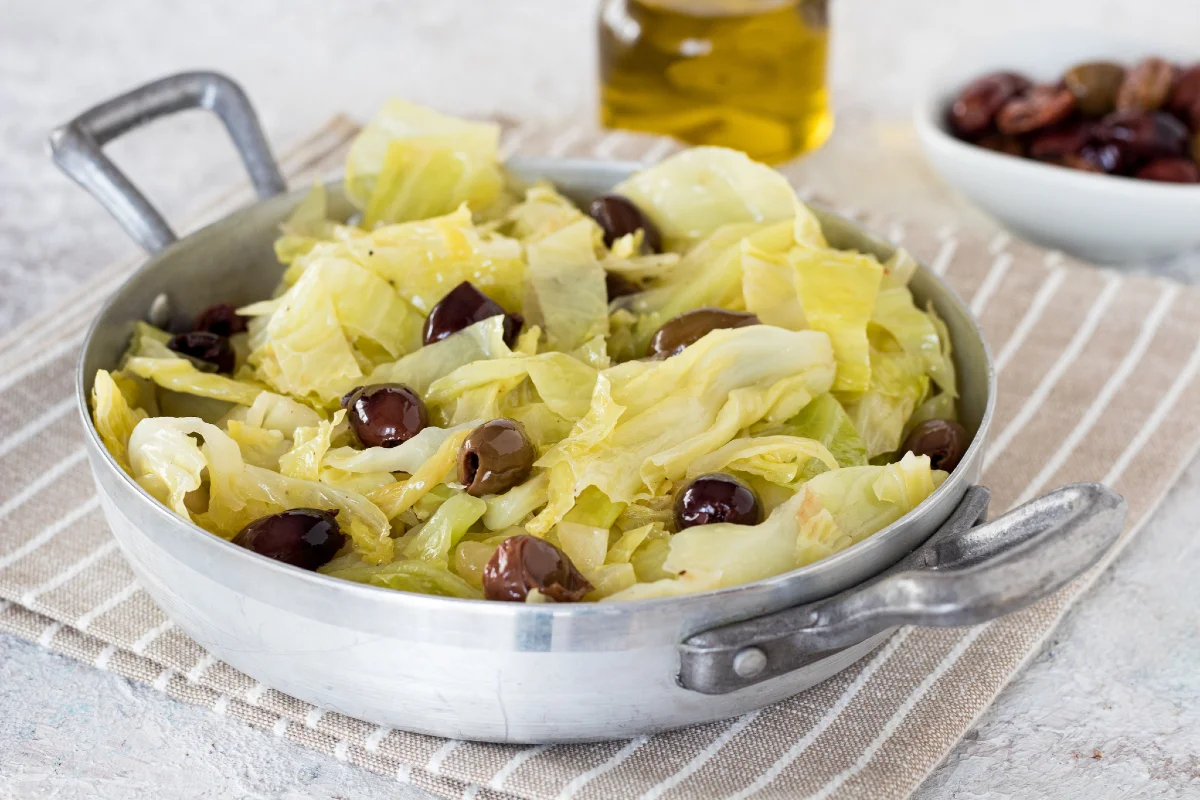
This pan-cooked cabbage is softened with onion and vegetable stock, then finished with Taggiasca olives and black pepper. It makes a straightforward winter side dish to serve with a range of main courses.
Ingredients
- 600 gcabbage, for cleaning
- 50 gTaggiasca olives
- 50 ggolden onions
- 45 ml (3 tablespoons)extra-virgin olive oil
- 100 mlvegetable stock
- to tastefine salt
- to tasteblack pepper
Instructions
- 1
Prepare the vegetables
Peel and finely chop the onion, then set it aside. Remove the most damaged outer cabbage leaves, wash the cabbage under running water and cut it in half with a sharp knife.
- 2
Slice and soften
Cut the cabbage into strips, setting aside and discarding the tougher central core. Heat the extra-virgin olive oil in a fairly large frying pan, add the onion and soften it over a medium heat. Add the cabbage.
- 3
Cook the cabbage
Pour in the hot vegetable stock, cover the pan and cook for 10 minutes, stirring several times. Remove the lid and season with salt.
- 4
Add the olives
Add black pepper and the Taggiasca olives. Continue cooking until the stock has evaporated, then serve the cabbage hot with a generous pinch of pepper.
What is sautéed cabbage?
Cabbage cooked in a pan is a simple preparation found in many European home-cooking traditions, where seasonal vegetables are softened and served as a side. This version pairs cabbage with onion, stock and Taggiasca olives.
The onion and olive oil give the cabbage a savoury base, while the olives bring a salty, distinctive finish. Cooking it covered with stock first helps the strips soften before the liquid cooks away.
Nutrition and macros by portion
The nutrition label shows one serving as written: 136 calories, 0g protein, 6g carbs, 11g fat.
| Portion | Adjustment | kcal | Protein | Carbs | Fat |
|---|---|---|---|---|---|
| Lighter | Use less olive oil | 95 kcal | 0g | 4g | 8g |
| This serving | As written | 136 kcal | 0g | 6g | 11g |
| Hungry | Serve a larger portion | 204 kcal | 0g | 9g | 16g |
The olive oil supplies most of the fat, while the cabbage and onion contribute carbohydrates; the listed ingredients provide little protein. To make a more balanced plate, serve a portion alongside a protein-rich main and add potatoes or bread if you want more filling carbohydrates.
The key ingredients
Cabbage: Remove the outer leaves that are in poor condition, wash it well and slice around the firm central core. Try to cut the leaves into strips of a similar width so they cook evenly.
Taggiasca olives: These small olives add a concentrated savoury note. Add them towards the end so their flavour remains distinct.
Onion and oil: Finely chopped onion softens in the extra-virgin olive oil to form the starting point for the dish. Keep the heat at medium so it softens without browning too quickly.
Why the covered cooking matters
Hot vegetable stock creates steam under the lid, helping the cabbage become tender without requiring a large amount of liquid. Stir several times during the 10-minute covered stage so the cabbage cooks more evenly.
Once the lid is off, the remaining stock can evaporate. Keep cooking until the pan is no longer watery, as directed, before serving.
Seasoning and texture
Salt: Season after the covered cooking stage, keeping in mind that the olives will also contribute saltiness. Taste before adding more.
Pepper: Add black pepper with the olives, then finish with another generous pinch when serving. Its warmth complements the cabbage and the olives' savoury flavour.
Doneness: The cabbage should be softened but still hold its shape as strips. Continue cooking after removing the lid until the stock has evaporated.
Timing and serving
The recipe takes 40 minutes in total, including preparation and cooking. The covered cooking stage lasts 10 minutes; after that, the time needed to evaporate the stock depends on the pan and heat.
Serve the cabbage hot as a side with a main course. Its savoury, peppery flavour works well alongside simply cooked dishes that leave room for the olives to stand out.
How to balance the plate
This is a vegetable side rather than a complete meal, so pair it with a source of protein such as beans, eggs, fish or meat, according to the rest of your menu. A portion of potatoes, bread or another grain can round out the plate if you want a more substantial meal.
Recipe notes & tips
- Use a wide frying pan so the cabbage has room to cook rather than piling up too deeply.
- Cut the cabbage into even strips to help it soften at a similar rate.
- Stir several times while the pan is covered, as the method directs.
- Taste before adding extra salt because the olives are savoury.
- Wait for the stock to evaporate before serving so the cabbage is not sitting in excess liquid.
Variations
- Add garlic: Soften a little finely chopped garlic with the onion.
- Use another olive: Substitute another variety of black olive if Taggiasca olives are unavailable.
- Add chilli: Include a little chilli with the black pepper for a spicier finish.
- Finish with lemon: Add a small squeeze of lemon just before serving for a brighter taste.
- Use white cabbage: Choose a firm white cabbage and slice it into even strips.
Common mistakes to avoid
- Leaving the core in: The central part is tougher; remove it before slicing the cabbage.
- Cutting uneven strips: Very different sizes cook unevenly; aim for strips of similar width.
- Using a small pan: Crowded cabbage is harder to stir; choose a fairly wide frying pan.
- Adding too much salt: Olives add savouriness; taste the dish before adjusting the seasoning.
- Serving too soon: Excess stock can leave the dish watery; keep cooking uncovered until it evaporates.
How to store
Cool leftovers promptly, transfer them to an airtight container and refrigerate for up to 3 days. Reheat in a frying pan over a medium-low heat until hot throughout, stirring gently; add a small splash of water if the cabbage seems dry.
Frequently asked questions
Can I prepare the cabbage ahead?
You can wash and slice the cabbage and chop the onion ahead, then refrigerate them separately in covered containers. Cook the dish close to serving time for the best texture.
How do I know when the cabbage is done?
It should be softened while still holding its shape in strips. After the covered 10-minute stage, cook uncovered until the stock has evaporated.
Can I use a different type of cabbage?
Yes. Use a firm cabbage and slice it evenly, removing the tough central core as described in the method.
Can I use a different stock?
The recipe specifies vegetable stock. Another stock can change the dish's flavour, so taste before adding the salt.
Can I freeze this dish?
It can be frozen in an airtight container, although the cabbage may be softer after thawing. Defrost it in the fridge and reheat thoroughly in a pan.
Cook it from the original
This recipe comes from giallozafferano.es. Their page has the author’s own photos, notes and tips — the best place to cook it from.
Open the recipe on giallozafferano.es