
Shirazi salad
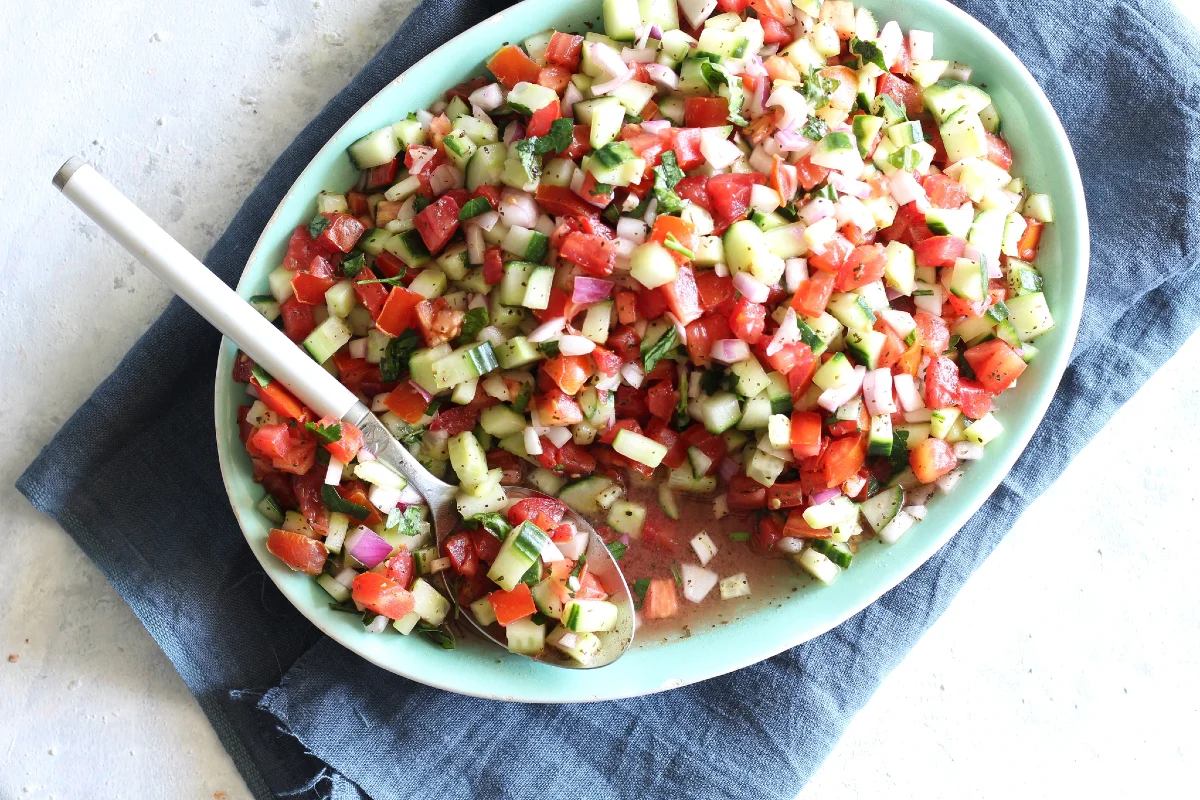
Shirazi salad is a crisp Persian salad of finely diced cucumber, tomato and red onion, tossed with lemon, olive oil and herbs. It makes a fresh, quick side dish, especially alongside grilled or simply cooked food.
Ingredients
- 670 g (about 2)long cucumbers
- 670 g (about 6)perini tomatoes
- 220 g (about 2 small)red onions
- 2 bunchesparsley
- 10 leavesbasil
- 1 teaspoondried mint
- 90 glemon juice
- 60 ml (4 tablespoons)extra-virgin olive oil
- to tastefine salt
- to tasteblack pepper
Instructions
- 1
Prepare the cucumbers
Trim the ends from the cucumbers. Use a vegetable peeler to remove the skin in alternating strips, then halve them lengthways and scoop out the central seeds. Cut the cucumber into fairly small cubes.
- 2
Dice the vegetables
Halve the tomatoes and remove their seeds, then cut them into cubes. Clean the red onions and dice them too.
- 3
Combine the vegetables
Put the cucumber, tomatoes and onions in a serving dish and mix them together.
- 4
Start the dressing
Pour the olive oil into a small bowl, then add salt and black pepper.
- 5
Finish the dressing
Stir in the lemon juice. Chop the parsley and basil, add them to the bowl with the dried mint, and whisk until the dressing is emulsified.
- 6
Dress and serve
Pour the dressing over the salad and mix well before serving.
What is Shirazi salad?
Shirazi salad takes its name from Shiraz, a city in Iran, and is a familiar Persian combination of cucumber, tomato and onion. The vegetables are cut into small pieces so that each forkful brings together their different textures.
This version keeps the mix bright with lemon juice and olive oil, then adds parsley, basil and dried mint. It is served as a cool side rather than a cooked dish.
Nutrition and macros by portion
The nutrition label shows one serving as written: 142 calories, 3g protein, 15g carbs, 9g fat.
| Portion | Adjustment | kcal | Protein | Carbs | Fat |
|---|---|---|---|---|---|
| Lighter | Use less olive oil | 99 kcal | 2g | 11g | 6g |
| This serving | As written | 142 kcal | 3g | 15g | 9g |
| Hungry | Serve a larger portion | 213 kcal | 5g | 23g | 14g |
Most of the carbohydrates come from the vegetables, while the olive oil supplies most of the fat. The vegetables and herbs contribute a little protein, but this salad is best treated as a side; pair it with a protein-rich main and a grain or bread for a more rounded plate.
Small, even pieces
Cucumber: remove the central seeds as directed, then dice the flesh fairly small. This helps the pieces sit neatly alongside the tomato and onion.
Tomatoes: taking out the seeds before dicing limits excess liquid in the finished salad. Use a sharp knife to keep the cubes intact.
A balanced dressing
Lemon and oil: combine the lemon juice with the olive oil, salt and pepper before adding the herbs. Whisk until the mixture looks blended rather than separated.
Seasoning: taste the dressing before pouring it over the vegetables, and adjust the salt and pepper to your preference.
Fresh herbs and mint
Parsley and basil: chop them shortly before mixing so they stay fragrant. The recipe uses two bunches of parsley and ten basil leaves, making the herbs a substantial part of the salad.
Dried mint: add it to the dressing with the chopped herbs so its flavour spreads throughout the bowl.
Mix just before serving
Once dressed, the vegetables will gradually release liquid, especially the tomatoes and cucumbers. For the crispest texture, combine the vegetables and dressing shortly before serving.
Stir gently but thoroughly so the dressing coats the diced ingredients without crushing them.
What to serve it with
The salad's lemony, herb-filled flavour works well beside grilled vegetables, meat or fish, or with a simple rice dish. It can also add freshness to a plate of flatbread and dips.
If serving it as part of a larger meal, keep the other dishes simply seasoned so the herbs and citrus remain easy to taste.
Recipe notes & tips
- Use a peeler to remove the cucumber skin in alternating strips, as directed.
- Scoop out the cucumber and tomato seeds before dicing to help keep the salad from becoming too watery.
- Cut the vegetables into similarly small pieces for an even mix.
- Chop the parsley and basil just before making the dressing.
- Whisk the oil and lemon juice until blended before adding the herbs.
- Dress the salad close to serving time for a fresher texture.
Variations
- Extra herbs: add more parsley or basil if you prefer a greener, more herb-forward salad.
- More mint: increase the dried mint slightly for a more pronounced mint flavour.
- Gentler onion: dice the red onion especially finely so it blends more evenly into each bite.
- Cucumber texture: leave more of the skin on if you prefer a firmer bite.
- Serving style: spoon the salad alongside grilled food or serve it with flatbread.
Common mistakes to avoid
- Leaving the seeds in: the salad can turn watery; remove the cucumber and tomato seeds before dicing.
- Large uneven pieces: they are harder to combine evenly; cut the vegetables into small, similar-sized cubes.
- Overmixing: soft tomatoes can break down; fold the salad together gently.
- Adding dressing too early: the vegetables release liquid as they stand; dress the salad shortly before serving.
- Unmixed dressing: oil and lemon can separate; whisk them together before adding the herbs.
How to store
Store leftovers covered in the fridge and eat within 1 day for the best texture. The vegetables will soften and release liquid as they sit; stir before serving and drain any excess liquid if needed. This salad is served cold, so reheating is not necessary.
Frequently asked questions
Can I make Shirazi salad ahead?
You can dice the vegetables and prepare the dressing ahead, keeping them separately covered in the fridge. Combine them shortly before serving to preserve the crispest texture.
Do I need to remove the cucumber and tomato seeds?
The method calls for removing both. This helps limit excess liquid and keeps the diced vegetables distinct.
Can I use a different type of tomato?
Yes. Use ripe tomatoes that hold their shape when diced, and remove the seeds as directed.
Can I use fresh mint instead of dried mint?
The recipe specifies dried mint, which has a different intensity and texture from fresh. If substituting, add fresh mint sparingly and adjust to taste.
How do I stop the salad becoming watery?
Remove the cucumber and tomato seeds, and wait to add the dressing until close to serving. If liquid collects after storage, drain it before serving.
Cook it from the original
This recipe comes from giallozafferano.es. Their page has the author’s own photos, notes and tips — the best place to cook it from.
Open the recipe on giallozafferano.es