
Kale and borlotti bean farinata
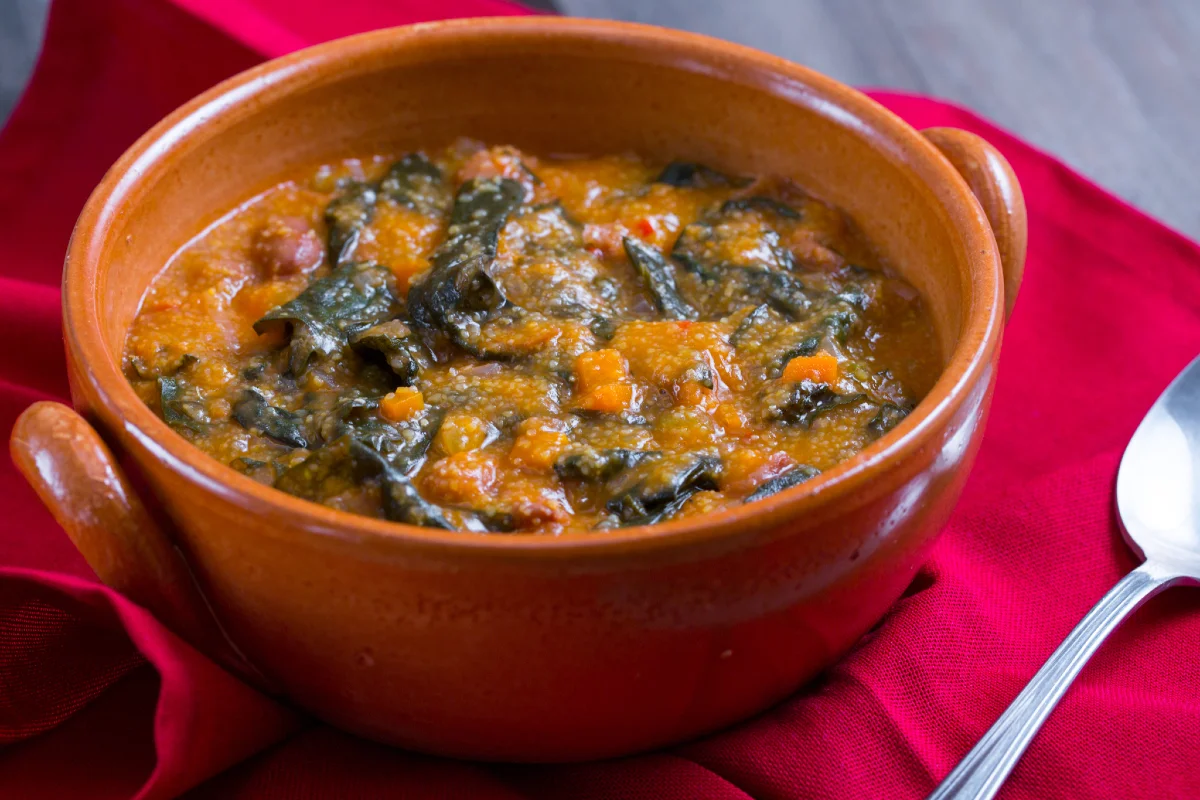
This rustic Tuscan-style farinata is a thick, comforting stew of kale and borlotti beans finished with instant polenta. It makes a warming first course, with vegetables, beans and cornmeal coming together in one pot.
Ingredients
- 100 ginstant polenta
- 300 gkale
- 200 gcooked borlotti beans
- 1red onion
- 2 clovesgarlic
- 70 gcarrots
- 70 gcelery
- 1fresh chilli
- as neededsage
- 45 mlpassata
- 15 mltomato purée
- as neededvegetable stock
- a littleolive oil
- to tastesalt
- to tasteblack pepper
Instructions
- 1
Prepare the vegetables
Remove the kale stalks and finely chop them. Trim and finely chop the carrots, celery and onion. Warm a little oil with the garlic in a tall saucepan.
- 2
Soften the base
Add the chopped vegetables, chilli and a few sage leaves. Cook until softened, then remove the garlic.
- 3
Simmer the kale
Add the kale and cook for a few minutes until it begins to soften. Stir in the passata and tomato purée, then add enough stock to cover. Cook for about 30 minutes and season with salt and pepper.
- 4
Add beans and polenta
Stir in the drained borlotti beans and cook for a further 30 minutes. Add the instant polenta and cook until it has absorbed the liquid. Once the farinata is thick, serve it hot with a drizzle of raw olive oil.
What is kale and borlotti bean farinata?
Farinata is a name used for rustic, thick soups and porridges in parts of Italy; Tuscan versions often bring together vegetables, pulses and grains. This version combines kale and borlotti beans with cornmeal, which thickens the broth into a hearty spoonable dish.
The gradual cooking lets the vegetables flavour the stock, while the polenta gives the finished farinata its characteristic dense texture.
Nutrition and macros by portion
The nutrition label shows one serving as written: 188 calories, 0g protein, 35g carbs, 1g fat.
| Portion | Adjustment | kcal | Protein | Carbs | Fat |
|---|---|---|---|---|---|
| Lighter | Less polenta, more kale | 132 kcal | 0g | 25g | 1g |
| This serving | As written | 188 kcal | 0g | 35g | 1g |
| Hungry | Larger portion | 282 kcal | 0g | 53g | 2g |
The cornmeal and borlotti beans provide most of the carbohydrates, while the beans also contribute some protein. Olive oil supplies most of the fat, and the vegetables add fibre and volume. For a more balanced plate, serve a smaller bowl alongside a green salad or other vegetables.
Build a flavourful base
Chopped onion, carrot and celery form the aromatic base. Let them soften gently in the oil so they become tender before the kale goes in.
Garlic, chilli and sage season the base; removing the garlic after the vegetables soften keeps its flavour from dominating the long simmer.
Prepare the kale
Kale stalks are firmer than the leaves, so chop them finely as directed. This helps them cook through alongside the other vegetables.
Add the leaves after the chopped base has softened, giving them a few minutes to wilt before adding the tomato and stock.
Simmer until tender
The recipe simmers the kale mixture for about 30 minutes, then cooks the beans in it for another 30. Keep the ingredients covered with stock as they cook, adding more if the pan becomes too dry.
Use a gentle simmer rather than a hard boil, and check that the vegetables are tender before adding the polenta.
Get the texture right
Add the drained beans after the first simmer so they warm through and take on the tomato and herb flavours. Stir them in carefully to keep them intact.
Polenta thickens the liquid as it absorbs it. Add it at the end and stir until the farinata is dense; if it becomes thicker than you like, loosen it with a little stock.
Serve it hot
A drizzle of olive oil added just before serving brings a fresh, savoury finish. Serve the farinata hot while its thick texture is at its best.
It works well as a first course or a simple meal with crusty bread and a crisp green salad.
Recipe notes & tips
- Drain the borlotti beans well before adding them to the pot.
- Chop the kale stalks finely so they soften along with the other vegetables.
- Keep the vegetables covered with stock during the long simmer.
- Stir the polenta in gradually to help it distribute evenly.
- Finish each serving with olive oil just before bringing it to the table.
Variations
- Use cannellini beans: swap them for the borlotti beans for a milder flavour.
- Make it less spicy: leave out the fresh chilli for a gentler bowl.
- Add more herbs: include a little rosemary alongside the sage.
- Use cavolo nero: substitute it for the kale, allowing extra time if its leaves are particularly firm.
- Adjust the thickness: add extra hot vegetable stock for a looser, soup-like result.
Common mistakes to avoid
- Chopping the stalks too coarsely: they can stay firm, so cut them finely.
- Letting the pan dry out: check the liquid during simmering and add stock to keep the ingredients covered.
- Boiling too vigorously: a gentle simmer helps the vegetables cook evenly without reducing the liquid too fast.
- Adding the polenta too early: wait until the beans have had their further 30 minutes of cooking.
- Leaving the farinata unstirred: stir after adding polenta so it absorbs liquid evenly and does not catch on the pan.
How to store
Cool leftovers promptly and refrigerate them in a covered container for up to 3 days. Reheat gently in a saucepan, stirring in a splash of water or stock to loosen the thickened farinata.
Frequently asked questions
Can I use dried borlotti beans?
Yes, but cook them fully before adding them to the farinata. The recipe's timing assumes the beans are already cooked.
Can I use another type of kale?
Yes. Cavolo nero or another firm-leaved kale can work; chop the stalks finely and cook until the leaves are tender.
How thick should the farinata be?
It should be dense after the polenta has absorbed the liquid. Stir in a little stock if you prefer a looser consistency.
Why is my farinata too thick?
Polenta continues to absorb liquid as it cooks and stands. Loosen it gradually with hot vegetable stock or water.
Can I make it without chilli?
Yes. Omit the fresh chilli for a milder version; the sage, garlic and tomato still provide plenty of flavour.
Can I freeze leftovers?
The farinata can be frozen, though its texture may become softer after thawing. Freeze in portions, then thaw and reheat gently with a splash of stock.
Cook it from the original
This recipe comes from giallozafferano.es. Their page has the author’s own photos, notes and tips — the best place to cook it from.
Open the recipe on giallozafferano.es