
Kimchi Ramen
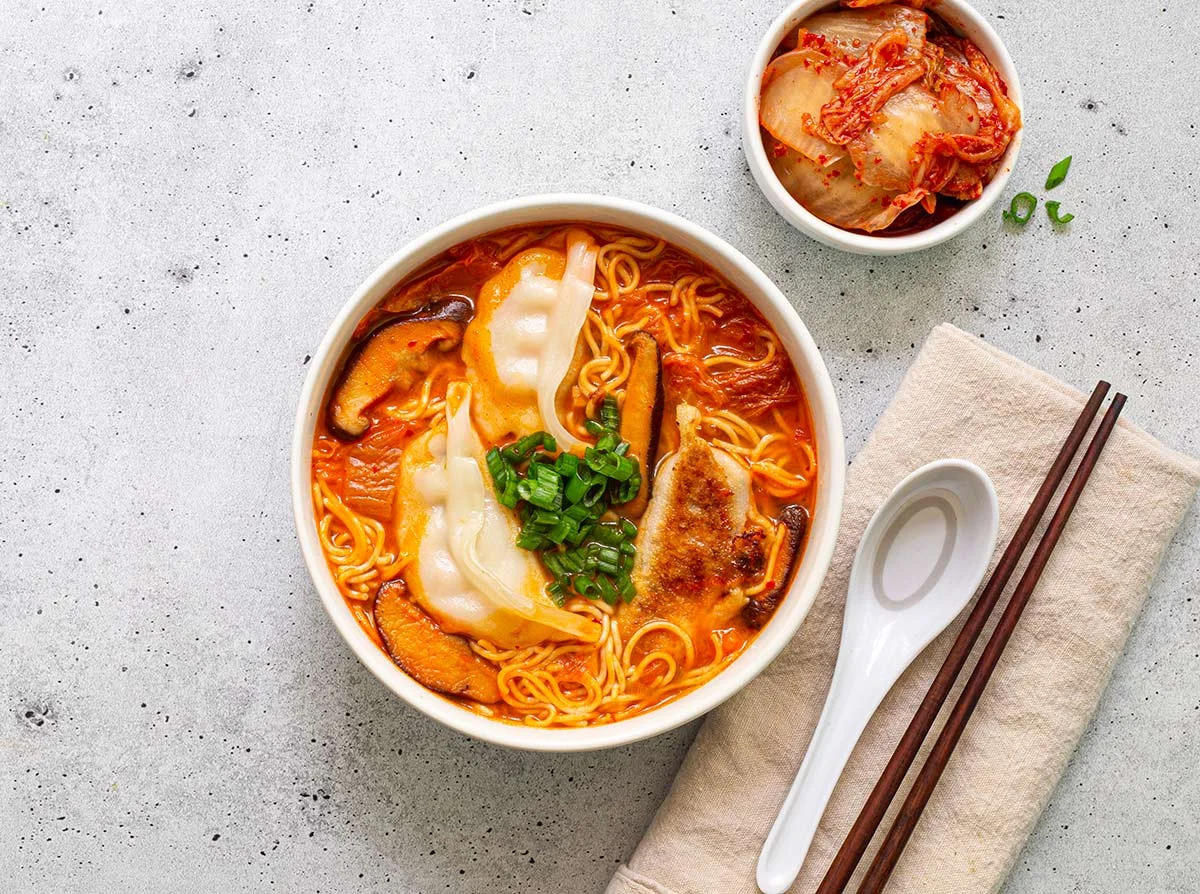
This quick kimchi ramen combines noodles, savoury mushrooms, tangy kimchi and gluten-free gochujang, with potstickers to make it more substantial. It is a handy one-serving meal when you want a spicy, warming bowl in about 25 minutes.
Ingredients
- 5–6frozen gluten-free potstickers
- 15 ml (1 tablespoon)avocado or olive oil
- 120 ml (1/2 cup)sliced mushrooms (any type)
- 80 ml (1/3 cup)kimchi
- 7.5 ml (1 1/2 teaspoons)gluten-free gochujang
- 600 ml (2 1/2 cups)water
- 1 containerGloryLand gluten-free ramen (any flavour)
- 1green onion, sliced
Instructions
- 1
Cook the potstickers
Prepare the frozen potstickers according to the package directions.
- 2
Cook the vegetables
Heat the oil in a small pot and add the mushrooms. Cook for 5 minutes, stirring occasionally. Stir in the kimchi and gochujang, then cook for another 2–3 minutes.
- 3
Boil the ramen
Pour in the water and bring it to a boil. Add the noodles and seasoning packet, then stir. Boil for 3 minutes, add the potstickers and boil for 1 more minute. Serve topped with the sliced green onion.
What is kimchi ramen?
Kimchi ramen brings together ramen noodles and kimchi, a Korean fermented vegetable dish, in a spicy, savoury broth. This version adds mushrooms and gochujang, then tops the bowl with potstickers for a mix of noodles, vegetables and dumplings.
The method builds flavour in the pot before adding the broth and noodles. Cooking the mushrooms with kimchi and gochujang first helps their flavours carry through the water.
Nutrition and macros by portion
The nutrition label shows one serving as written: 149 calories, 2g protein, 6g carbs, 14g fat.
| Portion | Adjustment | kcal | Protein | Carbs | Fat |
|---|---|---|---|---|---|
| Lighter | Use less oil | 104 kcal | 1g | 4g | 10g |
| This serving | As written | 149 kcal | 2g | 6g | 14g |
| Hungry | Add more potstickers | 224 kcal | 3g | 9g | 21g |
The noodles contribute most of the carbohydrates, while the oil is the main source of fat; the potstickers provide some protein, with smaller amounts from the other ingredients. To balance the bowl, serve it with an extra side of vegetables.
The key ingredients
Kimchi: its tangy, fermented flavour gives the broth much of its character. Different jars can vary in saltiness and heat, so taste the finished broth before adding anything extra.
Gochujang: this Korean chilli paste adds heat and savoury depth. Check the label to make sure it is gluten-free, as specified in the recipe.
Ramen: use the gluten-free ramen container named in the ingredient list and include its seasoning packet. The packet is part of the broth’s seasoning, so the flavour will depend on the variety you choose.
Build flavour before adding water
Mushrooms cook first in the oil, giving them time to soften and release some moisture. Stir them now and then so they cook evenly in the small pot.
Kimchi and gochujang follow for 2–3 minutes. Keep stirring so the paste coats the mushrooms and kimchi rather than sitting in one spot.
Check the noodles for doneness
Once the water boils, add the noodles and seasoning and cook them for 3 minutes, as directed. If the noodles still feel firm, follow the timing on the ramen packaging for that product.
The potstickers go in for the final minute, after they have been cooked separately. This warms them through without keeping them in the broth for the full noodle cooking time.
Choose your broth balance
The recipe uses 600 ml water with the ramen seasoning, kimchi and gochujang. Stir well as the pot comes back to a boil so the seasoning is distributed through the broth.
Kimchi and seasoning packets can differ in intensity. Taste before serving, and adjust only if needed; no extra salt is specified in the recipe.
Serve it while hot
Add the sliced green onion at the end so it stays fresh and crisp against the hot broth. Serve straight away, while the noodles and potstickers have their best texture.
For a fuller meal, serve with a simple side of vegetables. Keep the toppings light if you want the kimchi broth and dumplings to remain the focus.
Recipe notes & tips
- Have the potstickers cooked and ready before you start boiling the ramen.
- Stir the mushrooms occasionally during their 5-minute cook.
- Use a small pot that leaves room for the noodles and potstickers.
- Check that both the ramen and gochujang are labelled gluten-free.
- Serve immediately to keep the noodles from softening in the broth.
Variations
- Change the mushrooms: use any type of mushroom, as the recipe allows.
- Choose your oil: use avocado or olive oil.
- Adjust the heat: choose a milder or hotter kimchi to suit your preference.
- Switch the ramen flavour: use any flavour of the specified gluten-free ramen.
- Add greens: serve with extra green onion on top.
Common mistakes to avoid
- Skipping the potstickers’ separate cooking: cook them according to the packet before adding them to the broth.
- Adding kimchi and gochujang with the water: cook them with the mushrooms for 2–3 minutes first.
- Boiling the noodles for too long: start checking at the recipe’s 3-minute mark.
- Adding potstickers too early: put them in for just the final minute of boiling.
- Leaving the bowl to stand: serve promptly so the noodles do not continue softening in the broth.
How to store
This bowl is best served fresh, as noodles continue to soften in the broth. If needed, refrigerate leftovers promptly in a covered container and use within 2 days; reheat thoroughly in a saucepan, adding a splash of water if the broth has been absorbed.
Frequently asked questions
Can I use another type of mushroom?
Yes. The recipe allows any type of mushroom, sliced before cooking.
Can I use olive oil instead of avocado oil?
Yes. Either avocado oil or olive oil works in this recipe.
How spicy is this ramen?
The heat depends on the kimchi, gochujang and ramen flavour you use. For a milder bowl, choose less-hot versions of those ingredients.
Can I make this without potstickers?
You can leave them out, but the recipe will no longer include the dumplings that make the bowl more substantial.
Can I prepare the ramen ahead?
It is best cooked just before serving because the noodles soften as they sit in the broth. You can cook the potstickers beforehand, following their package directions.
Cook it from the original
This recipe comes from glutenfreeandmore.com. Their page has the author’s own photos, notes and tips — the best place to cook it from.
Open the recipe on glutenfreeandmore.com