
Pan-fried sea bream fillets
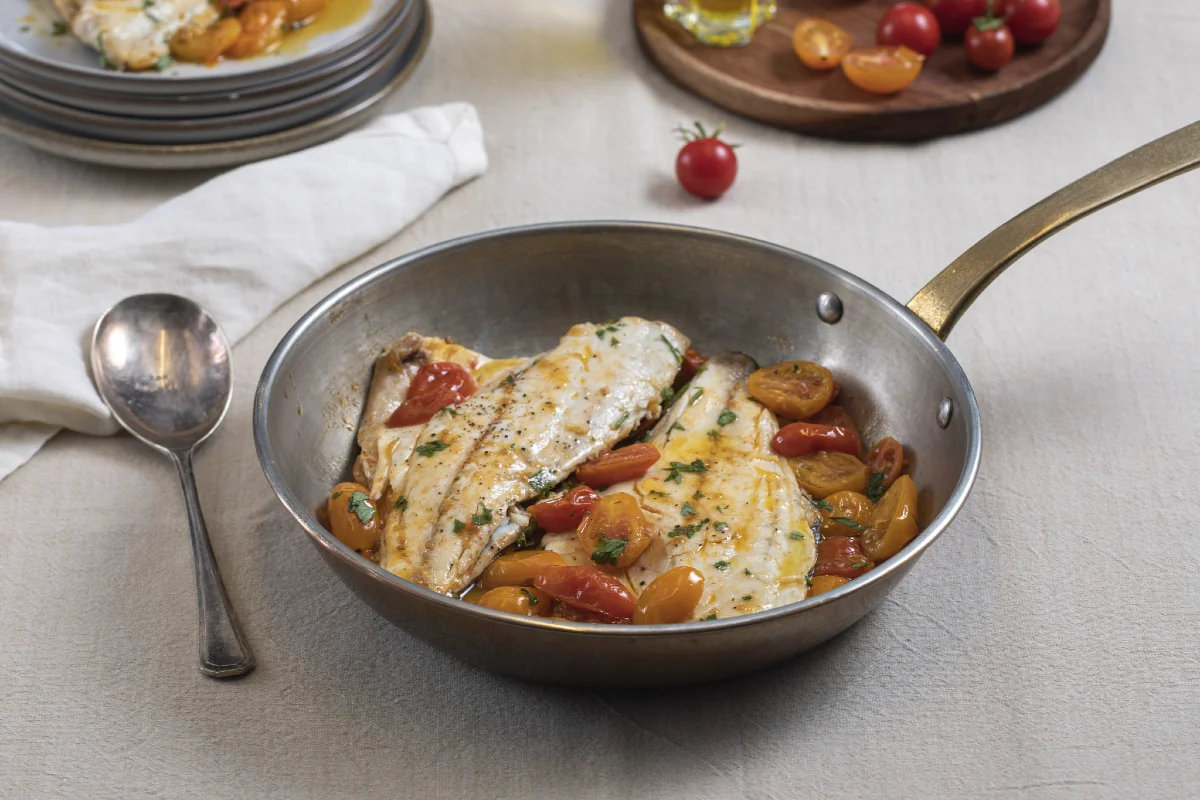
These pan-fried sea bream fillets are cooked with cherry tomatoes, garlic, lemon peel and parsley for a quick, fresh-tasting fish supper. The fish cooks briefly in a wide pan, then gets a final turn in the softened tomatoes.
Ingredients
- 550 g (4 fillets)sea bream fillets
- 300 gred and yellow plum cherry tomatoes
- zest of 1/2 lemonlemon
- 2 clovesgarlic
- 2 sprigsparsley
- to tastefine salt
- as neededextra-virgin olive oil
Instructions
- 1
Prepare the ingredients
Chop the parsley, keeping the stems aside. Peel the lemon to take off the zest, then wash and halve the cherry tomatoes.
- 2
Warm the oil
In a very wide frying pan, warm the oil over low heat for 5 minutes with the garlic cloves, parsley stems and lemon peel. Turn the heat up slightly and add the sea bream fillets skin-side down.
- 3
Cook the fillets
Once the fillets have begun to change colour, after about 2 minutes, turn them over and cook for another 2 minutes. Transfer them to a plate and cover.
- 4
Soften the tomatoes
Add the cherry tomatoes to the cooking juices and let them sizzle for about 10 minutes, or until their flesh has softened. Remove the lemon peel, garlic and parsley stems, then season with salt. Return the fillets to the pan and cook for 2 more minutes so they take on the flavour.
- 5
Finish and serve
Turn the fillets over gently and serve them hot with the chopped parsley.
What are pan-fried sea bream fillets?
Sea bream is a mild, flaky fish often used in Mediterranean-style home cooking. Here, the fillets are briefly pan-fried and served with softened tomatoes, garlic, lemon and parsley.
The method builds flavour in one pan: the oil is gently infused first, the fish cooks quickly, and the tomatoes soften in the juices left behind.
Nutrition and macros by portion
The nutrition label shows one serving as written: 390 calories, 58g protein, 7g carbs, 13g fat.
| Portion | Adjustment | kcal | Protein | Carbs | Fat |
|---|---|---|---|---|---|
| Lighter | Use less olive oil | 273 kcal | 41g | 5g | 9g |
| This serving | As written | 390 kcal | 58g | 7g | 13g |
| Hungry | Add potatoes or bread | 585 kcal | 87g | 11g | 20g |
Sea bream provides most of the protein, while the tomatoes contribute a modest amount of carbohydrate. Olive oil supplies most of the added fat; its exact contribution depends on how much is used. Serve with plenty of vegetables and a measured portion of potatoes, rice or bread to balance the plate.
Preparing the flavourings
Parsley: Chop the leaves for serving and keep the stems to flavour the oil; remove the stems before the tomatoes finish cooking.
Lemon: Use the peel to scent the oil, then take it out with the garlic. The recipe calls for zest from half a lemon.
Cooking the fillets
Skin side: Begin with the fillets skin-side down in the warmed oil, then turn them once they have started to change colour.
Timing: The initial cooking is about 2 minutes per side. Fillet thickness can affect the exact timing, so use the change in colour as your cue and avoid leaving the fish in the pan longer than needed.
Getting the tomatoes tender
Tomatoes: Halving them helps their flesh soften in the pan juices over about 10 minutes. Let them sizzle gently rather than letting the pan become fiercely hot.
Final turn: Return the fish for just 2 minutes after removing the flavourings. This gives it time to take on the tomato juices without a long second cook.
Serving the fish
Parsley: Scatter the chopped leaves over the fish just before serving for a fresh finish.
On the side: Serve with boiled new potatoes, bread or rice to catch the tomato juices, and add a green salad or steamed vegetables for a more rounded plate.
Recipe notes & tips
- Use a wide pan so the fillets have room to cook without overlapping.
- Pat the fish dry before cooking if it is wet, to reduce splashing and help the skin make contact with the pan.
- Keep the oil over low heat while it infuses with the garlic, parsley stems and lemon peel.
- Cover the cooked fillets while the tomatoes soften so they stay warm.
- Remove the garlic and lemon peel before returning the fish to the pan, as directed.
Variations
- Add capers: Stir a small handful into the tomatoes for a briny note.
- Use lemon juice: Add a little at the end for a sharper finish.
- Include chilli: Add a pinch of chilli flakes to the oil for gentle heat.
- Try other tomatoes: Use halved small tomatoes if plum cherry tomatoes are unavailable.
- Add olives: Stir sliced olives into the tomatoes for a savoury variation.
Common mistakes to avoid
- Crowding the pan: The fillets may cook unevenly; use a pan wide enough to hold them in a single layer.
- Heating the oil too fiercely: The garlic and lemon can scorch; infuse them over low heat for the stated 5 minutes.
- Turning too soon: The fish can break apart; wait until it begins to change colour before turning.
- Overcooking the fish: It can become dry; follow the brief cooking times and check the fillets as they cook.
- Leaving the flavourings in: Garlic, lemon peel and parsley stems remain in the pan otherwise; remove them before the final 2-minute cook.
How to store
Refrigerate leftovers in a sealed container and eat within 1–2 days. Reheat gently in a covered pan over low heat until hot throughout; avoid prolonged heating, which can dry out the fish.
Frequently asked questions
Can I use sea bream fillets without skin?
Yes. Cook them carefully, as skinless fillets can be more delicate when turning. Use the colour change and short cooking time as guides.
How can I tell when the fish is cooked?
It should change from translucent to opaque and flake easily. The recipe gives about 2 minutes on each side, followed by 2 minutes with the tomatoes.
Can I prepare the ingredients ahead?
You can chop the parsley and halve the tomatoes shortly beforehand. For the best texture, cook the fish just before serving.
What can I serve with the fillets?
Try boiled potatoes, rice or bread to go with the tomato juices, alongside a green salad or steamed vegetables.
Can I use a different kind of fish?
A similar mild white fish can work, but fillet thickness varies. Adjust the cooking time and check for opaque flesh that flakes easily.
Cook it from the original
This recipe comes from giallozafferano.es. Their page has the author’s own photos, notes and tips — the best place to cook it from.
Open the recipe on giallozafferano.es