
Green Pozole
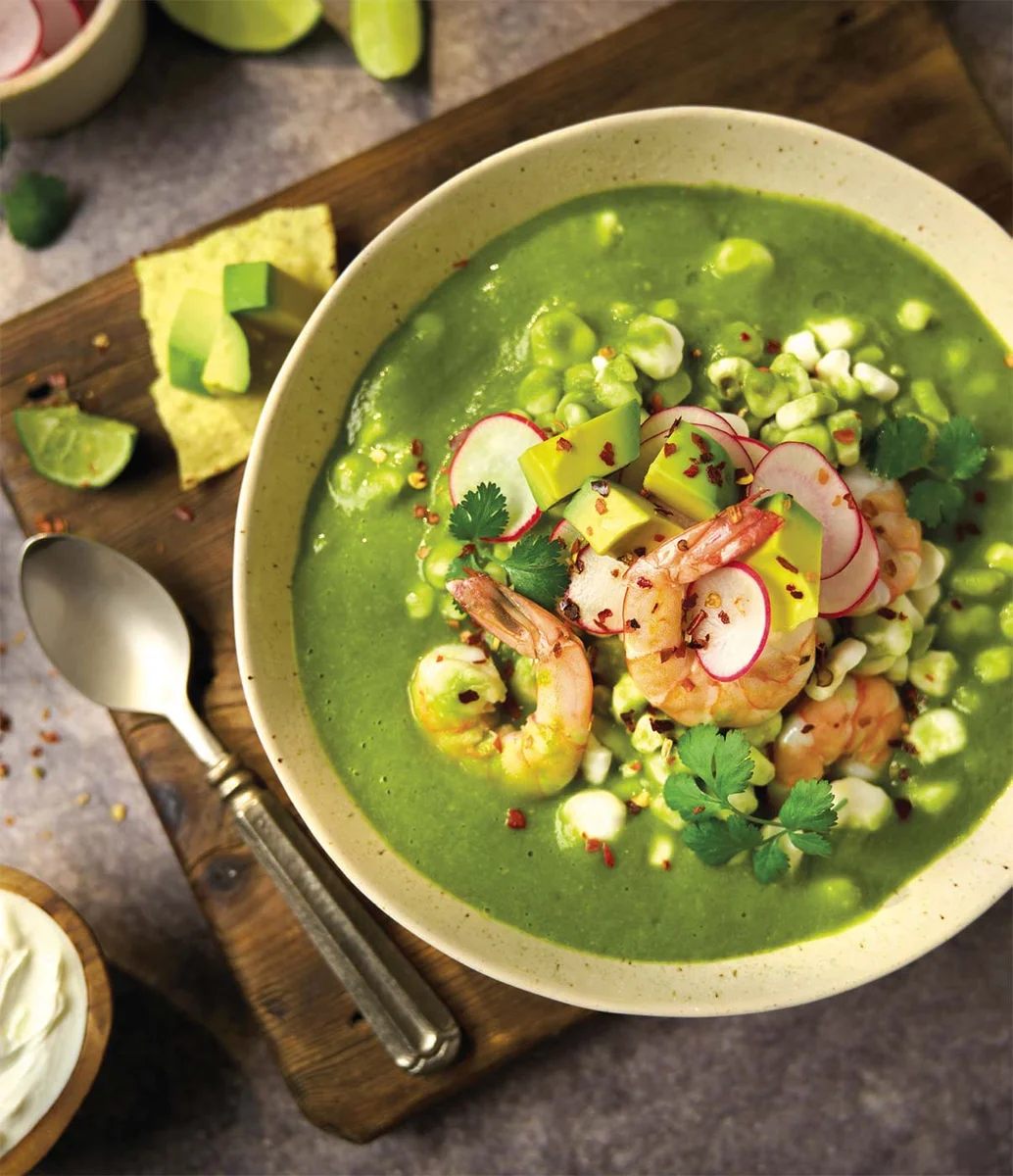
Green pozole is a bright, herb-rich Mexican soup made with hominy and a smooth sauce of tomatillos, poblano peppers, pumpkin seeds and fresh herbs. This version adds shrimp at the end, while keeping the broth adaptable to other seafood.
Ingredients
- 5green tomatillos
- ½jalapeño
- ½white onion
- 2garlic cloves
- 2poblano peppers, roasted, seeded and peeled
- 60 g (½ cup)toasted salted pumpkin seeds
- 15 g (½ cup)parsley leaves with stems
- 15 g (½ cup)cilantro, with stems
- 3epazote leaves or radish leaves
- 60 ml (4 tablespoons)olive oil
- 1.4 litres (6 cups)chicken, shrimp or fish stock
- 680 g (4 cups)cooked hominy, rinsed
- 18 mediumshrimp, peeled and deveined
- 1 cupwater
- to tastesalt
- to tastelime
- to tastechopped cilantro
- to tasteoregano
- to tastedried chile
- to tastesliced radish
- to tasteavocado
- to tastetostadas
Instructions
- 1
Soften the vegetables
Put the tomatillos, jalapeño, onion and garlic in a small pan with 1 cup of water. Simmer for 15 minutes, or until the vegetables are soft.
- 2
Blend the green sauce
Transfer the softened vegetables to a blender with the poblano peppers, pumpkin seeds, parsley, cilantro and epazote or radish leaves. Blend until very smooth.
- 3
Simmer the pozole
Heat the olive oil in a large pan, then pour in the sauce and simmer for 5 minutes. Add the stock and hominy and simmer for another 10 minutes; season with salt.
- 4
Cook and serve
Just before serving, add the shrimp and cook gently for a few minutes. Ladle into bowls and serve with the garnishes on the side.
What is green pozole?
Pozole is a Mexican soup built around hominy, with regional versions that vary in colour and seasoning. Green pozole is associated with Guerrero and gets its herbal character from green vegetables, herbs and seeds.
This version makes the green ingredients into a smooth sauce, then simmers it with stock and hominy. Shrimp goes in just before serving, so the seafood stays central rather than getting lost in the broth.
Nutrition and macros by portion
The nutrition label shows one serving as written: 300 calories, 20g protein, 35g carbs, 12g fat.
| Portion | Adjustment | kcal | Protein | Carbs | Fat |
|---|---|---|---|---|---|
| Lighter | Use less olive oil | 210 kcal | 14g | 25g | 8g |
| This serving | As written | 300 kcal | 20g | 35g | 12g |
| Hungry | Add extra hominy | 450 kcal | 30g | 53g | 18g |
Hominy supplies most of the carbohydrate, while olive oil and pumpkin seeds contribute much of the fat; shrimp provides the main protein. Add a generous squeeze of lime and radish or other fresh garnishes, and serve tostadas alongside rather than piling them into the bowl if you want to keep the meal balanced.
Building the green sauce
Tomatillos and jalapeño: simmering them with onion and garlic softens their flavour and makes them easy to blend. Remove the jalapeño seeds first if you prefer a milder result.
Poblanos and seeds: roasted, peeled poblanos give the sauce depth, while pumpkin seeds help make it fuller and more substantial. Blend thoroughly for a smooth broth.
Choosing the herbs
Fresh leaves: parsley and cilantro bring a lively, leafy flavour, and the stems can go into the blender too. Epazote is a distinctive choice; radish leaves are the stated alternative.
Stock: chicken, shrimp or fish stock will all work, with shrimp or fish stock giving the broth a particularly seafood-friendly base. Salted pumpkin seeds and stock both contribute salt, so taste before adding much more.
Getting the texture right
Blending: keep blending until the sauce looks uniformly smooth, scraping down the blender if needed. A coarse sauce will still taste good, but it will not give the broth the same even texture.
Hominy: rinse the cooked hominy before adding it, then let it simmer in the green broth for the full 10 minutes. It should be hot throughout and remain pleasantly chewy.
Timing the shrimp
Shrimp cooks quickly, so add it only when the broth is ready to serve. Cook gently for a few minutes, just until the shrimp turn opaque and are cooked through; avoid a prolonged boil.
Serving the bowls
Set out lime, cilantro, oregano, dried chile, radish, avocado and tostadas so everyone can finish their own bowl. Lime brings a fresh contrast to the rich, seeded broth, while tostadas add crunch.
Recipe notes & tips
- Rinse the cooked hominy well before adding it to the broth.
- Blend the sauce in batches if your blender is small.
- Taste the broth after adding the stock before salting, especially when using salted seeds.
- Keep the shrimp chilled until shortly before it goes into the pan.
- Serve the garnishes separately so they stay fresh and crisp.
Variations
- Swap the seafood: Use seared scallops or pieces of fish in place of the shrimp, as suggested for the broth.
- Adjust the heat: Use less jalapeño for a gentler soup or add dried chile at the table.
- Choose the leaves: Use epazote or radish leaves according to what is available.
- Change the stock: Try chicken, shrimp or fish stock to suit the seafood you are serving.
- Make it meat-free: Use vegetable stock and leave out the shrimp for a hominy-and-herb soup.
Common mistakes to avoid
- Adding shrimp too early: It can overcook while the broth simmers; add it only shortly before serving.
- Blending too briefly: A rough sauce gives a less even broth; blend until very smooth.
- Over-salting: Salted seeds and stock can already be salty; taste the finished broth before seasoning.
- Skipping the hominy rinse: Rinsing helps remove excess liquid from the cooked hominy before it goes into the soup.
- Boiling the shrimp hard: Keep the broth at a gentle simmer so the shrimp cooks without becoming tough.
How to store
Refrigerate leftover broth and hominy in a covered container for up to 3 days. For the best texture, store cooked shrimp separately if possible and add it when reheating; warm gently until hot throughout, without boiling.
Frequently asked questions
Can I make the green sauce ahead?
Yes. Blend the sauce and refrigerate it in a covered container, then continue with the oil and simmering steps when you are ready to cook.
Can I use frozen shrimp?
Yes. Thaw it completely and pat it dry before adding it to the gently simmering broth.
What can I use instead of epazote?
The recipe lists radish leaves as an alternative. Use the same quantity.
How do I know when the shrimp is cooked?
It should turn opaque and be cooked through after a few minutes in the hot broth. The exact time depends on its size, so check it rather than relying only on the clock.
Can I make this without seafood?
Yes. Use vegetable stock and omit the shrimp for a soup centred on the green broth and hominy.
Cook it from the original
This recipe comes from ediblemontereybay.com. Their page has the author’s own photos, notes and tips — the best place to cook it from.
Open the recipe on ediblemontereybay.com