
Spaghetti with clams and lemon
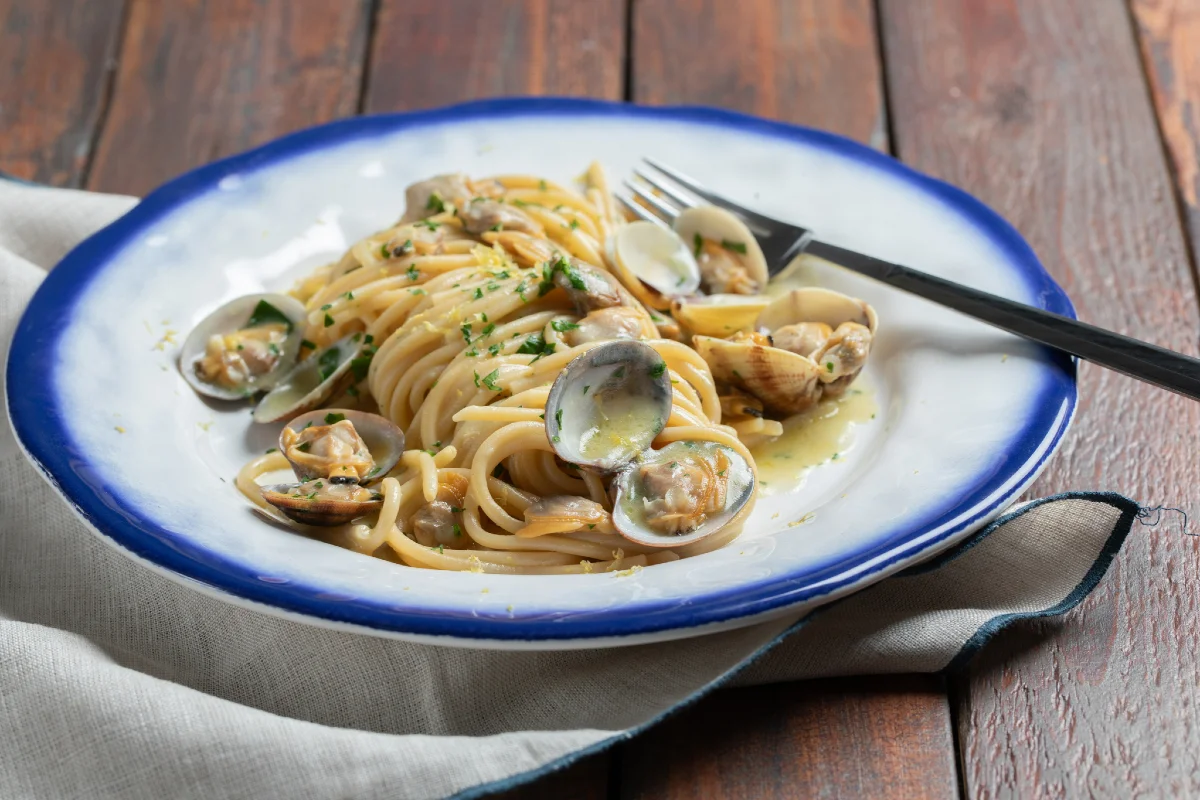
Spaghetti with clams and lemon is a quick seafood pasta, finished with fresh parsley and fragrant lemon zest. Cooking the spaghetti in the clam juices helps it take on the savoury flavour of the shellfish.
Ingredients
- 320 gspaghetti
- 1 kgclams, well drained
- Zest of 1 lemonlemon zest
- 70 gwhite wine
- 1 bunchparsley
- 2 clovesgarlic
- As neededfine salt
- As neededextra-virgin olive oil
Instructions
- 1
Prepare the clams
Make sure the clams have been purged. To purge them, soak them in salted water for 2 hours, then tap them to check for sand. Separate the parsley leaves from the stalks and finely chop the leaves; set them aside. Without peeling it, crush the garlic with the flat of a knife. Put it in a large frying pan with the parsley stalks and a drizzle of olive oil, then warm gently to release their flavour.
- 2
Cook the clams
Add the purged clams to the pan and pour over the white wine. Cover and cook until the clams have all opened.
- 3
Strain the juices
Strain the liquid from the pan and remove the shells from a good portion of the clams. Meanwhile, cook the spaghetti in unsalted boiling water for about 3 minutes.
- 4
Finish the spaghetti
Pour some of the strained clam liquid into the same pan. Add the spaghetti and finish cooking it in the pan, stirring it through the liquid as you would a risotto. Add hot water if needed.
- 5
Add parsley
If the pasta does not taste savoury enough, add some of the remaining clam liquid. Stir in the clams and chopped parsley.
- 6
Add lemon zest
Grate the lemon zest over the pasta and mix well. Use tongs and a ladle to twirl the spaghetti into nests, then arrange them on plates, add a few clams to each and serve.
What is spaghetti with clams?
Spaghetti with clams is an Italian seafood pasta, often associated with the coastal cooking of southern Italy. This version pairs the shellfish’s briny cooking juices with white wine, parsley and a bright finish of lemon zest.
The pasta finishes cooking in the clam liquid rather than being simply dressed at the end. That gives the spaghetti time to absorb the flavour while the lemon keeps the dish fresh and aromatic.
Nutrition and macros by portion
The nutrition label shows one serving as written: 470 calories, 25g protein, 64g carbs, 10g fat.
| Portion | Adjustment | kcal | Protein | Carbs | Fat |
|---|---|---|---|---|---|
| Lighter | Use less olive oil | 329 kcal | 18g | 45g | 7g |
| This serving | As written | 470 kcal | 25g | 64g | 10g |
| Hungry | Add more spaghetti | 705 kcal | 38g | 96g | 15g |
Most of the carbohydrates come from the spaghetti, while olive oil contributes much of the fat. Clams provide protein, and the pasta also adds a smaller amount; the clam cooking liquid can contribute a substantial amount of sodium. Pair a portion with a generous serving of vegetables or salad to round out the plate.
Get the clams ready
Purging: The recipe calls for soaking the clams in salted water for 2 hours, then tapping them to check for sand. This preparation time is separate from the stated 20-minute cooking time.
Check: Discard any clams that remain closed after cooking. Straining the cooking liquid also helps keep grit out of the finished pasta.
Build the flavour gently
Aromatics: Warm the crushed, unpeeled garlic and parsley stalks slowly in olive oil so they flavour it without browning. The parsley leaves are saved for the finish, where their freshness is more noticeable.
Wine: The white wine goes into the pan with the clams, where it combines with their juices as they open. Keep the pan covered during this stage so the clams cook in the steam.
Finish the pasta in the pan
Early draining: The spaghetti is boiled for only about 3 minutes before it goes into the frying pan. It will continue cooking there, so transfer it while it is still firm.
Sauce: Add the strained clam liquid a little at a time as the spaghetti cooks, stirring it through. If the pan becomes dry before the pasta is done, loosen it with hot water.
Check the texture and seasoning
Doneness: The spaghetti should be tender but still have some bite, and the liquid should cling lightly to it rather than pooling heavily. Taste before adding any extra salt, as the clam liquid can already be salty.
Balance: If the pasta needs more savoury flavour, the method allows for more of the reserved clam liquid. Lemon zest and chopped parsley go in at the end to keep their aromas fresh.
Serve it straight away
Plating: Twirl the spaghetti into nests with tongs and a ladle, then add some clams to each plate. Serving promptly gives the pasta its best texture.
On the side: A simple green salad or steamed vegetables make a fresh accompaniment without competing with the seafood. Bread can be served alongside to mop up any remaining juices.
Recipe notes & tips
- Use a large pan so the clams can sit in a fairly even layer.
- Keep the parsley stalks for the pan and reserve the leaves for the end.
- Strain the clam liquid carefully before using it with the pasta.
- Transfer the spaghetti after about 3 minutes so it can finish cooking in the pan.
- Add hot water gradually if the pasta starts to look dry.
- Taste the sauce before seasoning with salt.
Variations
- Chilli: Add a little dried chilli to the oil with the garlic for gentle heat.
- Extra lemon: Add a small squeeze of lemon juice at the end for a sharper finish.
- No wine: Replace the white wine with water, then use the clam liquid to build flavour.
- More herbs: Add finely chopped parsley leaves at the table for a fresher herbal note.
Common mistakes to avoid
- Rushing the purge: Soak the clams for the stated 2 hours and check them for sand before cooking.
- Browning the garlic: Warm it gently with the parsley stalks so it flavours the oil without becoming bitter.
- Overcooking the pasta: Boil it for only about 3 minutes before finishing it in the pan.
- Adding all the liquid at once: Use some first, then add more only if the pasta needs flavour or moisture.
- Salting too soon: Taste the clam liquid and pasta before adding salt, as the shellfish juices may be salty.
How to store
For the best texture, serve the pasta straight away. Refrigerate leftovers in a covered container for up to 1 day, then reheat gently in a pan with a splash of water; avoid prolonged reheating, which can toughen the clams.
Frequently asked questions
Do I need to purge the clams?
Yes. The method calls for soaking them in salted water for 2 hours and tapping them to check for sand before cooking.
Why is the spaghetti cooked for only 3 minutes first?
It finishes cooking in the frying pan with the clam liquid. Starting it early helps it absorb the sauce as it becomes tender.
Should I add salt to the pasta water?
This recipe specifies unsalted boiling water. Taste the finished pasta before adding any salt, because the clam juices may already be salty.
Can I use the clam liquid to finish the pasta?
Yes. Strain it first, then add some to the pan with the spaghetti. Use more of the reserved liquid if the pasta needs a stronger savoury flavour.
How do I know the clams are cooked?
They are ready when they have opened in the covered pan. Discard any that remain closed after cooking.
Can I make this ahead?
It is best cooked just before serving, since the pasta continues to absorb liquid and the clams can become tough if reheated for too long.
Cook it from the original
This recipe comes from giallozafferano.es. Their page has the author’s own photos, notes and tips — the best place to cook it from.
Open the recipe on giallozafferano.es