
Pici cacio e pepe
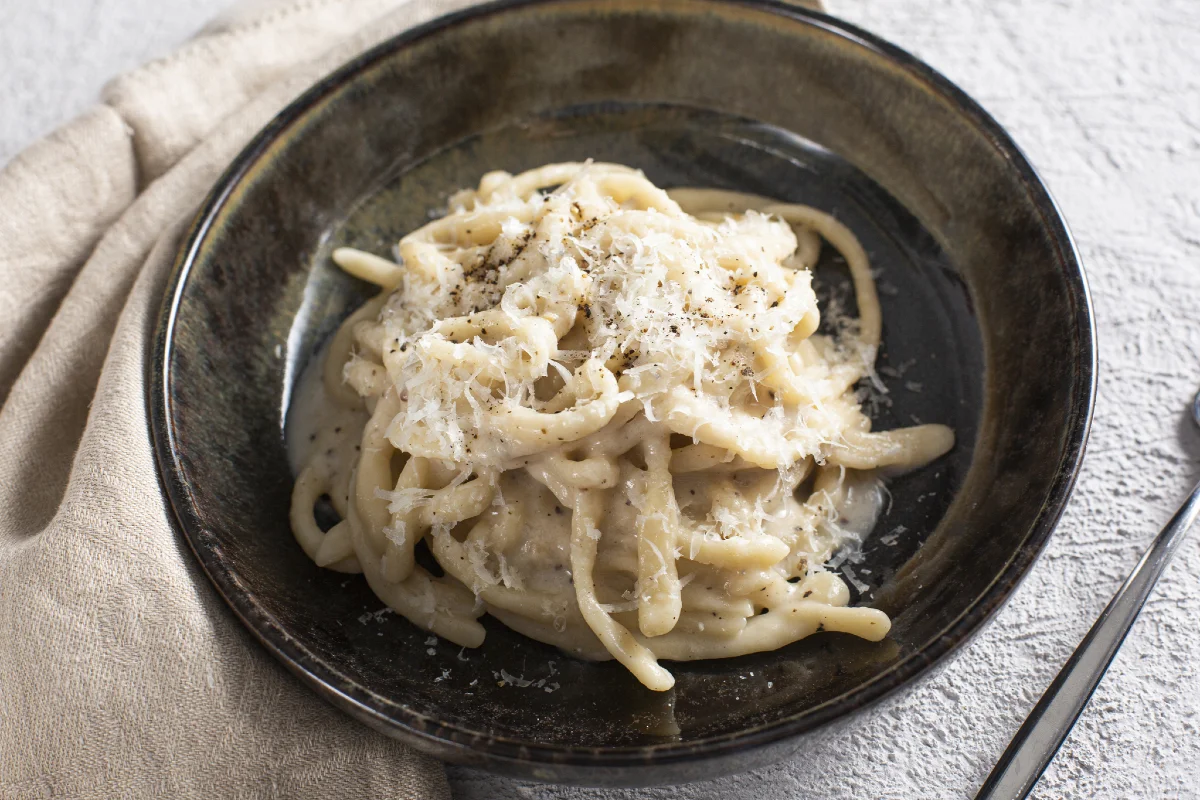
Pici cacio e pepe pairs thick, hand-rolled pasta with a simple sauce of Pecorino Romano and black pepper. Making the pasta from scratch takes a little time, but the short ingredient list lets its chewy texture and sharp, peppery flavour shine.
Ingredients
- 300 g00 flour
- 150 gwarm water
- 1 tablespoon (15 ml)extra-virgin olive oil
- 1 pinchfine salt
- 100 gPecorino Romano, for grating
- ½ tablespoon (7.5 ml)whole black peppercorns
Instructions
- 1
Mix the dough
Tip the flour onto your work surface and make a well. Add the warm water, salt and olive oil.
- 2
Knead and rest
Use a fork to draw the flour into the liquid, then knead by hand until the dough is smooth and even. Wrap it in cling film and chill for 30 minutes.
- 3
Prepare the toppings
While the dough rests, crush the black peppercorns in a mortar and grate the Pecorino. Once the resting time is over, take out the dough and divide it into portions.
- 4
Shape the pici
Lightly flour the work surface and roll the dough to a thickness of 1 cm. Cut it into strips, then roll each strip between your palms to make long, thin strands of even thickness.
- 5
Toast the pepper
Once all the pici are shaped, bring a large pan of lightly salted water to the boil. Meanwhile, toast the pepper in a frying pan, loosening it with a ladleful of pasta cooking water.
- 6
Cook the pasta
Drop the pici into the boiling water. Drain them straight into the frying pan with the pepper, then add a little more pasta water.
- 7
Make the sauce
Take the pan off the heat, add the grated Pecorino and mix thoroughly to bring everything together.
- 8
Finish and serve
Serve the pici with the cacio e pepe sauce, finished with more Pecorino and a grind of black pepper. Serve immediately.
What is pici cacio e pepe?
Pici are thick, hand-rolled strands of pasta associated with Tuscany. Cacio e pepe, meaning cheese and pepper, is a Roman pasta preparation built around Pecorino and black pepper.
This version brings the two together: fresh pici provide a substantial, chewy base, while grated Pecorino and starchy cooking water form a simple coating. It is a satisfying first course made with a handful of ingredients.
Nutrition and macros by portion
The nutrition label shows one serving as written: 800 calories, 28g protein, 114g carbs, 25g fat.
| Portion | Adjustment | kcal | Protein | Carbs | Fat |
|---|---|---|---|---|---|
| Lighter | Smaller pici portion | 560 kcal | 20g | 80g | 18g |
| This serving | As written | 800 kcal | 28g | 114g | 25g |
| Hungry | Larger pici portion | 1200 kcal | 42g | 171g | 38g |
Most of the carbohydrates come from the flour, while the Pecorino and olive oil provide much of the fat; the cheese also supplies most of the protein. Add a generous serving of vegetables or a salad alongside to round out the plate.
A simple fresh pasta dough
Flour first: make a well in the flour so the warm water, oil and salt can be stirred in gradually. Knead until the dough feels smooth rather than rough or floury.
Rest: chilling the wrapped dough for 30 minutes gives it time to relax, making it easier to roll and shape.
Rolling the pici
Even strands: roll the dough to the stated 1 cm thickness, cut it into strips and roll each strip beneath your palms. Aim for a fairly uniform thickness so the strands cook at a similar pace.
Light flouring: dust the work surface lightly to prevent sticking, but avoid adding so much flour that the strands become dry.
Getting the sauce smooth
Pasta water: the recipe uses a ladleful to loosen the toasted pepper, then a little more after the pici are added. The water also helps the grated cheese coat the pasta.
Off the heat: add the Pecorino once the pan is no longer on the hob. Mix promptly so the cheese blends with the water instead of overheating.
Pepper and Pecorino
Freshly crushed pepper: crushing whole peppercorns releases their aroma and gives the sauce a lively bite. Toast them briefly, then deglaze the pan with pasta water as directed.
Finely grated cheese: a fine grate makes the Pecorino easier to mix into the sauce. Keep a little aside for the finishing sprinkle.
Timing and serving
The stated total time is 55 minutes, including the 30-minute dough rest. Shape the pici while keeping the water and pan steps in mind so the sauce is ready when the pasta is cooked.
Serve straight away, while the sauce is glossy. A crisp green salad or simply dressed vegetables make a fresh accompaniment to the rich cheese and pasta.
Recipe notes & tips
- Keep the dough covered whenever you are not working with it so the surface does not dry out.
- Use just enough flour on the work surface to keep the dough from sticking.
- Reserve the pasta cooking water before draining the pici.
- Grate the Pecorino finely so it combines more easily with the pasta water.
- Take the pan off the heat before adding the cheese.
- Serve as soon as the sauce is mixed for the best texture.
Variations
- More pepper: add an extra grind at the table for a bolder finish.
- Cheesier finish: grate a little more Pecorino over each serving.
- Lighter side: serve with a crisp green salad dressed simply with oil and vinegar.
- Vegetable side: add steamed or roasted seasonal vegetables alongside the pasta.
- Hand-rolled shapes: make the pici slightly thinner or thicker, keeping each strand as even as possible.
Common mistakes to avoid
- Dry dough: keep it wrapped during the rest and while shaping so it stays workable.
- Uneven strands: roll each pici to a similar thickness so they cook evenly.
- Skipping the pasta water: reserve some before draining, as it helps loosen the pepper and cheese.
- Adding cheese over high heat: take the pan off the heat first to help the Pecorino form a smooth coating.
- Waiting to serve: the sauce is best served immediately after mixing.
How to store
Fresh pici are best cooked and eaten straight away. If you have leftovers, refrigerate them in a sealed container and eat within 2 days; reheat gently in a pan with a splash of water, knowing the sauce may not be as smooth.
Frequently asked questions
Can I make the dough ahead?
Yes. Wrap it well and refrigerate it, then bring it out when you are ready to divide and shape it.
How thick should the pici be?
Roll the dough to 1 cm thick before cutting it into strips, then form long strands of even thickness with your palms.
Why use pasta cooking water?
It loosens the toasted pepper and helps the Pecorino coat the pasta. Reserve some before you drain the pici.
When should I add the Pecorino?
Add it after taking the pan off the heat, then mix it in promptly with the pasta and cooking water.
Can I use pre-grated Pecorino?
Freshly grated Pecorino is preferable here because it is fine and easy to mix into the sauce. If using pre-grated cheese, check that it is finely grated.
What can I serve with pici cacio e pepe?
A crisp green salad or simply cooked seasonal vegetables make a good contrast to the rich, peppery pasta.
Cook it from the original
This recipe comes from giallozafferano.es. Their page has the author’s own photos, notes and tips — the best place to cook it from.
Open the recipe on giallozafferano.es