
Homemade Pasta
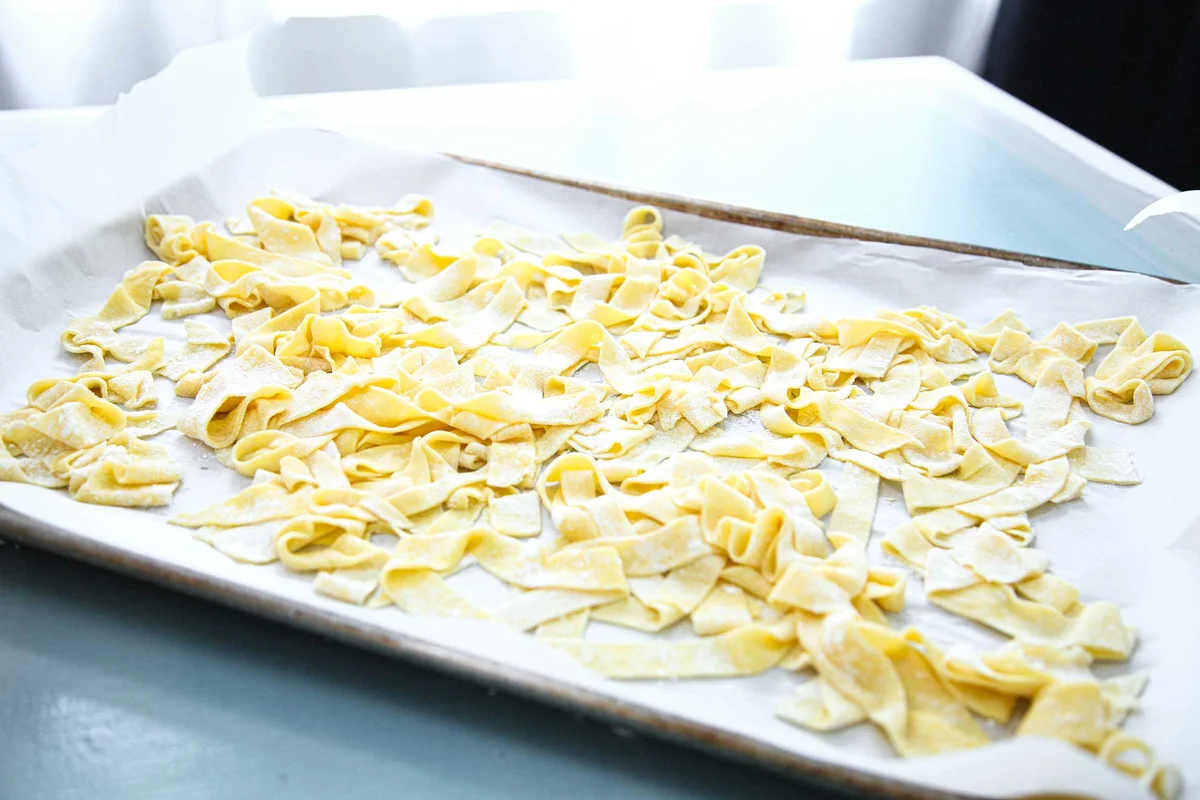
This homemade gluten-free pasta is made by mixing flour with eggs and shaping the dough into rustic ribbons by hand. It is a straightforward option when you want fresh pasta without specialist equipment.
Ingredients
- 240 g (2 cups), plus extra for rollingCarol’s gluten-free flour
- 5 largeeggs
- 1egg yolk
- ¼ teaspoon, plus more for the pasta waterfine sea salt
Instructions
- 1
Prepare the tray
Line a large sheet pan with parchment paper and dust it lightly with flour. Set it aside.
- 2
Make the well
Put the flour in a large mixing bowl and shape it into a mound with a generous well in the centre. Add the eggs, egg yolk and salt to the well.
- 3
Mix the ingredients
Beat the eggs with a fork inside the well, gradually drawing flour in from the sides. Keep mixing until no wet egg remains; the mixture will be partly sticky and partly dry and crumbly.
- 4
Knead the dough
Work the mixture with your hands until it forms a smooth dough. Use it straight away, or wrap it tightly in cling film and refrigerate for up to 3 days.
- 5
Divide the dough
When you are ready to make the pasta, work with one-quarter of the dough at a time. Keep the rest covered in cling film.
- 6
Flour the surface
Dust a clean, dry worktop, a rolling pin and all sides of the dough with gluten-free flour.
- 7
Roll the dough
Roll the dough as thinly as possible, dusting flour over and underneath it as needed to prevent sticking.
- 8
Cut into ribbons
Use a sharp knife or pizza cutter to cut the dough into long strips about 6–13 mm (¼–½ inch) wide. The pasta is rustic, so the strips do not need to be perfectly straight.
- 9
Arrange the pasta
Pile the ribbons on the floured parchment paper, dusting them lightly with more flour if they are sticky. Repeat the rolling and cutting with the remaining dough.
- 10
Boil the pasta
Bring a large pot of well-salted water to a boil. Carefully add the pasta and stir gently with a spoon to help prevent sticking. Boil for 2–3 minutes; the cooking time depends on the pasta’s thickness.
- 11
Check and serve
Check that the pasta is done, then lift it out with tongs and add it directly to your warmed sauce, tossing to coat. Alternatively, plate it and drizzle with olive oil, then season with salt and pepper and add parsley and freshly grated Parmesan.
- 12
Store cut pasta
Keep cut pasta in a sealed container in the fridge for up to 3 days or in the freezer for up to 3 months. Cook it straight from frozen.
What is homemade pasta?
Pasta is a staple of Italian cooking, traditionally made from flour and water or eggs, then shaped into forms that suit different sauces. This version uses gluten-free flour and eggs to make a fresh dough that can be rolled and cut at home.
Hand-cut ribbons give it a deliberately rustic look and avoid the need for a pasta machine. The egg-rich dough brings the ingredients together, while careful flouring helps make the dough easier to roll.
Nutrition and macros by portion
The nutrition label shows one serving as written: 52 calories, 4g protein, 0g carbs, 4g fat.
| Portion | Adjustment | kcal | Protein | Carbs | Fat |
|---|---|---|---|---|---|
| Lighter | Use less olive oil | 36 kcal | 3g | 0g | 3g |
| This serving | As written | 52 kcal | 4g | 0g | 4g |
| Hungry | Serve a larger portion | 78 kcal | 6g | 0g | 6g |
The eggs provide most of the protein and fat, while the gluten-free flour contributes most of the carbohydrates. Pair a portion with vegetables and a sauce containing beans, lentils or another protein source for a more balanced plate.
Choosing the flour
Gluten-free flour: use the specified flour for this recipe, as blends can differ in how they absorb moisture. Keep some extra flour nearby for dusting the worktop and dough.
Mixing the dough
The well: keep the eggs in the centre at first, drawing in flour gradually with a fork. This helps combine the ingredients without sending egg running across the bowl.
The texture: the mixture may look uneven before you knead it. Work it by hand until it comes together into a smooth dough.
Rolling and cutting
Small batches: roll one-quarter of the dough at a time and keep the rest covered. This makes the dough easier to handle and helps stop the unused portion from drying out.
Thin sheets: roll as thinly as you can, adding a little flour above and below if the dough begins to stick. Cut strips around 6–13 mm wide for rustic ribbons.
Cooking to the right texture
Boiling: add the pasta carefully to well-salted, boiling water and stir gently to separate the ribbons. Begin checking after 2 minutes, since thicker strips may need longer.
Finishing: lift the pasta out as soon as it is done and toss it with warmed sauce. This helps coat the ribbons while they are still hot.
Serving ideas
Sauce: toss the cooked ribbons directly into a warmed sauce of your choice. The recipe also suggests a simple finish of olive oil, salt, pepper, parsley and freshly grated Parmesan.
On the plate: serve the pasta with a vegetable-rich sauce or alongside vegetables to round out the meal.
Recipe notes & tips
- Keep the unused dough covered while rolling each portion.
- Dust both the worktop and the dough to make rolling easier.
- Use a sharp knife or pizza cutter for cutting the ribbons.
- Stir the pasta gently after adding it to the boiling water.
- Start checking doneness at 2 minutes, especially for thin ribbons.
Variations
- Change the shape: cut shorter ribbons for a different rustic pasta style.
- Use a different sauce: toss the cooked pasta with a warmed sauce you enjoy.
- Add vegetables: serve the ribbons with cooked vegetables in the sauce.
- Finish with herbs: use parsley as suggested, or choose another herb to suit the sauce.
- Add cheese: finish the plated pasta with freshly grated Parmesan as in the recipe.
Common mistakes to avoid
- Adding flour too quickly: draw it into the egg gradually with a fork.
- Leaving dough uncovered: keep portions you are not working with wrapped in cling film.
- Skipping the dusting: flour the surface, rolling pin and dough to reduce sticking.
- Cutting overly thick strips: keep the ribbons around 6–13 mm wide so they cook more evenly.
- Overcooking the pasta: check it after 2 minutes and allow for thickness when deciding whether it needs longer.
How to store
Wrap uncooked dough tightly in cling film and refrigerate it for up to 3 days. Cut pasta can be stored in a sealed container in the fridge for up to 3 days or frozen for up to 3 months; boil it from frozen.
Frequently asked questions
Can I make the dough ahead?
Yes. Wrap it tightly in cling film and refrigerate for up to 3 days.
Do I need a pasta machine?
No. The dough can be rolled with a rolling pin and cut into ribbons with a sharp knife or pizza cutter.
How thin should I roll the dough?
Roll it as thinly as possible, dusting the surface and dough with flour when needed to prevent sticking.
How long does the pasta take to cook?
Boil it for 2–3 minutes, checking for doneness because the time varies with the thickness of the pasta.
Can I cook the pasta from frozen?
Yes. The recipe says to boil frozen cut pasta without thawing it first.
How should I serve it?
Toss the cooked pasta with a warmed sauce, or serve it with olive oil, salt, pepper, parsley and freshly grated Parmesan.
Cook it from the original
This recipe comes from glutenfreeandmore.com. Their page has the author’s own photos, notes and tips — the best place to cook it from.
Open the recipe on glutenfreeandmore.com