
Spinach canederli
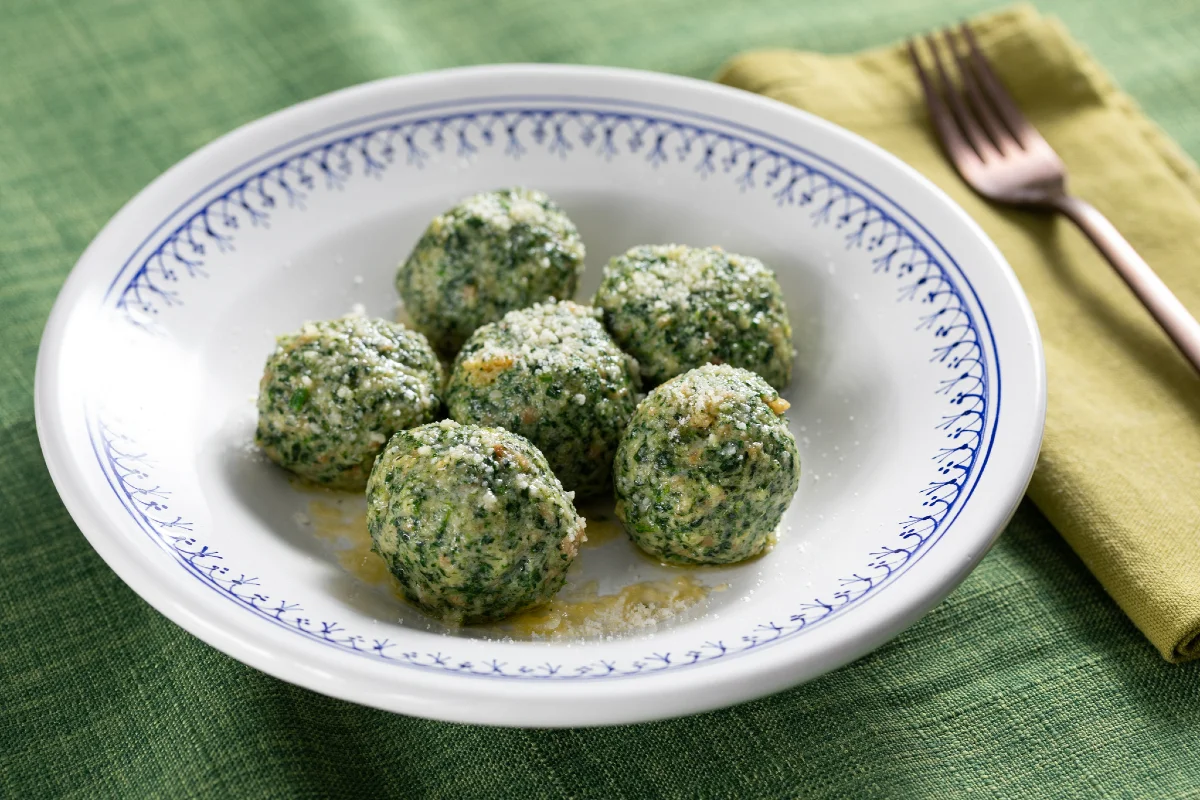
Spinach canederli are soft Tyrolean bread dumplings enriched with spinach, egg and Asiago. This vegetarian version is simmered in vegetable stock, then served with butter and sage for a comforting meal.
Ingredients
- 200 gspinach
- 150 gstale bread
- 40 gAsiago
- 40 gonion
- 25 g00 flour
- 2eggs
- 50 gwhole milk
- to tastenutmeg
- to tasteextra-virgin olive oil
- to tastevegetable stock
- to tastebutter
- to tastesage
- to tastesalt
- to tasteblack pepper
- to tastegrated Parmigiano Reggiano (optional)
Instructions
- 1
Prepare the spinach
Boil the spinach, drain it and squeeze out as much water as possible. Leave it to cool, and prepare the vegetable stock. Cut the stale bread into small cubes, put them in a bowl and pour over the milk; leave to soak.
- 2
Chop the vegetables
Finely chop the cooled spinach. Peel and finely chop the onion, then heat a little olive oil in a frying pan and add the onion.
- 3
Soften the onion
Cook the onion gently for a few minutes until softened, then turn off the heat. Add the chopped spinach and flour to the bowl of soaked bread.
- 4
Mix the ingredients
Add the eggs, grated Asiago, salt, pepper and a little nutmeg.
- 5
Combine the mixture
Add the warm onion and mix with a wooden spoon or your hands until the mixture is even.
- 6
Rest and shape
Cover the bowl with cling film and leave the mixture to rest for 30 minutes. Shape it into round dumplings, like meatballs; this quantity makes about 12. Heat the vegetable stock, adjust the seasoning if needed and bring it to the boil.
- 7
Cook the dumplings
Meanwhile, melt a knob of butter in a pan over a low heat and add a few sage leaves. Simmer the canederli in the hot stock for about 10 minutes, or until tender. Drain them and briefly toss them in the butter and sage.
- 8
Serve the canederli
Arrange the spinach canederli on plates and spoon over the pan juices. Add grated Parmigiano Reggiano if you like.
What are canederli?
Canederli are dumplings associated with Tyrol and the Alpine regions of northern Italy, Austria and neighbouring areas. They are often made with stale bread and served in broth or with a sauce.
This vegetarian variation folds spinach and Asiago into the bread mixture, then finishes the dumplings with butter and sage. The soaked bread gives them a tender centre, while the cheese adds savoury flavour.
Nutrition and macros by portion
The nutrition label shows one serving as written: 87 calories, 4g protein, 9g carbs, 4g fat.
| Portion | Adjustment | kcal | Protein | Carbs | Fat |
|---|---|---|---|---|---|
| Lighter | Use less butter | 61 kcal | 3g | 6g | 3g |
| This serving | As written | 87 kcal | 4g | 9g | 4g |
| Hungry | Serve extra canederli | 131 kcal | 6g | 14g | 6g |
Bread and flour provide most of the carbohydrates, while butter, olive oil and Asiago contribute much of the fat. Eggs, Asiago and spinach provide protein, though the amount per dumpling is modest. Pair a serving with a generous portion of vegetables or salad for a more balanced plate.
The bread and spinach
Stale bread: cut it into small, even cubes so the milk can soak in consistently. Bread that is too fresh can turn mushy, so use a loaf that has dried out a little.
Spinach: squeeze it very well after boiling and cooling. Excess water can make the mixture loose and harder to shape.
Building the mixture
Onion: soften it gently in olive oil rather than browning it heavily; the mild flavour blends into the dumplings. Let it cool slightly before mixing it in.
Asiago and egg: grated cheese seasons and enriches the mixture, while egg helps hold it together. Mix until evenly combined, without crushing the bread into a paste.
Resting and shaping
Rest: give the covered mixture 30 minutes so the bread absorbs the milk and the ingredients settle together. This makes the mixture easier to handle.
Shape: form about 12 round dumplings of similar size. If the mixture feels very wet, make sure the spinach has been squeezed thoroughly before changing the proportions.
Simmering to tenderness
Stock: bring the vegetable stock to the boil, then cook the dumplings in the hot liquid for about 10 minutes. Keep an eye on them and avoid a rough, prolonged boil, which can break them apart.
Doneness: they should be tender when cut or pressed gently. Drain them carefully before tossing them briefly with the butter and sage.
Butter, sage and serving
Sage butter: warm the sage leaves gently in a knob of butter while the dumplings cook. Keep the heat low so the butter and herbs flavour the pan without scorching.
Serve the canederli straight away, with the pan juices spooned over them. A green salad or simply cooked seasonal vegetables makes a fresh accompaniment.
Recipe notes & tips
- Cut the stale bread into small cubes so it soaks evenly.
- Squeeze the cooked spinach thoroughly to avoid a wet mixture.
- Grate the Asiago finely so it distributes throughout the dumplings.
- Keep the stock at a gentle simmer once the canederli are in the pot.
- Use a slotted spoon to lift the tender dumplings out without breaking them.
Variations
- Use another cheese: Substitute a similarly firm, savoury cheese for the Asiago.
- Add more herbs: Mix finely chopped parsley into the dumpling mixture for a fresher flavour.
- Finish with Parmesan: Scatter grated Parmigiano Reggiano over the plated dumplings.
- Serve in broth: Skip the butter-and-sage toss and serve the canederli directly in their cooking stock.
- Add black pepper: Grind extra pepper over the finished dish for a sharper finish.
Common mistakes to avoid
- Wet spinach: Squeeze it firmly after cooking so its water does not loosen the mixture.
- Fresh, soft bread: Choose stale bread, which absorbs the milk without turning to mush.
- Uneven cubes: Cut the bread into similarly sized pieces so they soak at the same rate.
- Boiling too vigorously: Keep the stock at a gentle simmer to help the dumplings stay intact.
- Overcooking: Check after about 10 minutes and remove the canederli once tender.
How to store
Refrigerate leftover canederli in an airtight container for up to 2 days. Reheat gently in hot stock or in a covered pan with a little butter, until heated through.
Frequently asked questions
Can I make the mixture ahead?
Yes. Cover it and refrigerate it after mixing, then shape and cook the dumplings when ready. Allowing it to rest for 30 minutes is part of the method.
How do I know if the mixture is ready to shape?
It should hold together when shaped and feel evenly moist rather than wet. Thoroughly squeezed spinach and properly soaked stale bread help achieve the right texture.
Can I cook the canederli directly in broth?
Yes. The recipe cooks them in vegetable stock; they are then drained and tossed with butter and sage. You can instead serve them in the stock.
How long do the dumplings take to cook?
Allow about 10 minutes in hot vegetable stock, then check that they are tender. Larger dumplings may need a little longer.
What can I serve with spinach canederli?
They work well with a simple green salad or cooked vegetables. Their butter-and-sage finish is rich, so a fresh, lightly dressed side complements it.
Cook it from the original
This recipe comes from giallozafferano.es. Their page has the author’s own photos, notes and tips — the best place to cook it from.
Open the recipe on giallozafferano.es