
Salt-baked sea bream
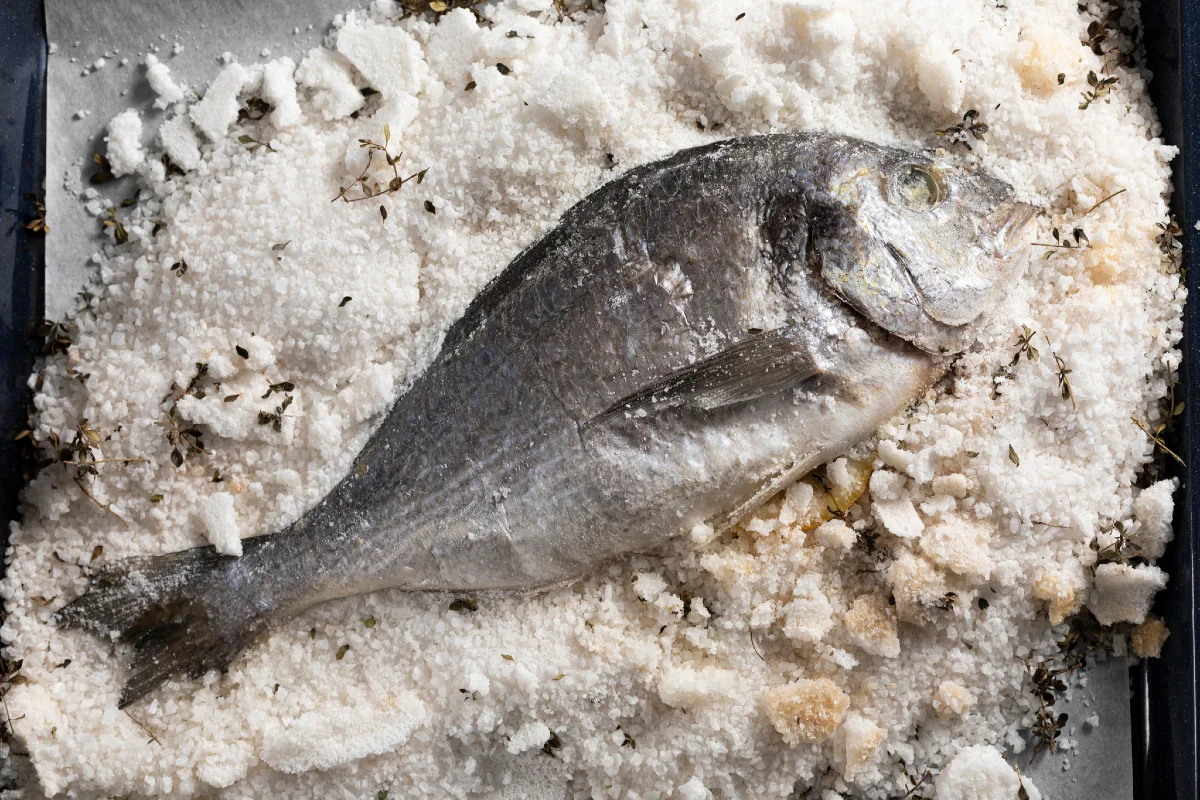
Sea bream is baked beneath a firm, aromatic salt crust, then carefully lifted out in tender fillets. The salt protects the fish as it cooks, making this a simple centrepiece for a meal with very little hands-on work.
Ingredients
- 1 kgcleaned and gutted sea bream
- 2 kgcoarse salt
- as neededlemon thyme
- as neededextra-virgin olive oil
- 1lemon
- to tasteblack pepper
Instructions
- 1
Mix the salt
Put 1 kg of the salt in an ovenproof dish, add some lemon thyme, then add the remaining salt and mix.
- 2
Stuff the fish
Meanwhile, slice the lemon. Fill the cleaned, gutted sea bream's cavity with the lemon slices and some lemon thyme.
- 3
Cover and bake
Line a baking tray with baking paper and spread just under half the flavoured salt over it. Set the sea bream on top, cover it with the remaining salt and press the salt firmly against the fish. Bake in a preheated conventional oven at 200°C for 25–30 minutes.
- 4
Open the crust
When cooked, crack the salt crust with two spoons and carefully remove the skin. Lift the upper fillets away from the backbone with two forks; then lift off the head, remove the backbone and take out the lower fillets.
- 5
Season and serve
Plate the fillets and season them with olive oil, lemon thyme and black pepper.
What is salt-baked sea bream?
Salt-baking is a traditional Mediterranean way of cooking whole fish under a firm shell of salt. The crust is removed rather than eaten, and the fish inside cooks in the heat and moisture trapped around it.
Here, lemon and lemon thyme scent the cavity, while the coarse salt forms the protective covering. The method keeps the fish's own flavour in the foreground and makes a striking main course from a short ingredient list.
Nutrition and macros by portion
The nutrition label shows one serving as written: 300 calories, 60g protein, 2g carbs, 8g fat.
| Portion | Adjustment | kcal | Protein | Carbs | Fat |
|---|---|---|---|---|---|
| Lighter | Use less finishing oil | 210 kcal | 42g | 1g | 6g |
| This serving | As written | 300 kcal | 60g | 2g | 8g |
| Hungry | Add potatoes on the side | 450 kcal | 90g | 3g | 12g |
Most of the protein comes from the sea bream, while its flesh also contributes some fat; the olive oil adds more fat, and the lemon and thyme contribute very little energy. The salt crust is removed, so the amount of salt actually eaten is difficult to estimate. Pair a fillet portion with vegetables and potatoes or bread for a balanced plate.
Why use coarse salt?
Coarse salt: its larger crystals help form a sturdy crust that can be cracked away after baking. Mix it with the thyme before shaping the layer, so the herb is distributed through the covering.
Salt crust: press it firmly over the fish so it adheres and encloses the bream. Keep the crust intact during baking; it is there to cover the fish, not to season it like a rub.
Prepare the fish carefully
Cleaned fish: the recipe calls for a sea bream that is already cleaned and gutted. Pat the outside dry if it is wet, so the salt layer is easier to shape around it.
Cavity filling: arrange the lemon slices and thyme inside the fish before covering it. This adds fragrance from within without needing extra seasoning under the crust.
Getting the bake right
Oven: preheat a conventional oven to 200°C before the fish goes in. The stated baking time is 25–30 minutes, with the exact point depending on the fish and oven.
Doneness: once the crust is cracked, the flesh should look opaque and lift away from the backbone in clean fillets. Open the covering carefully so you can check the fish without breaking it up.
Crack and fillet the crust
Crust: use two spoons to break it open, then lift the pieces away from the fish. Take care not to push salt into the exposed flesh.
Fillets: remove the skin gently and lift the upper fillets away with two forks. Once the head and backbone are lifted off, the lower fillets can be taken out too.
Finish and serve
Seasoning: drizzle the plated fillets with olive oil and finish with lemon thyme and black pepper. Add the oil at the end so its flavour stays fresh.
On the plate: serve with potatoes, green vegetables or a crisp salad to make a complete meal. Keep the accompaniments simply seasoned so they do not overwhelm the delicate fish.
Recipe notes & tips
- Use a baking tray large enough to hold the fish with space around it.
- Keep the lemon and thyme inside the cavity rather than adding them to the crust.
- Press the salt firmly so it stays in place around the fish.
- Have two spoons ready to crack the crust and two forks ready to lift the fillets.
- Remove any salt fragments from the fish before serving.
Variations
- Add garlic: tuck a lightly crushed clove into the cavity with the lemon and thyme.
- Use rosemary: replace some of the lemon thyme with a small sprig of rosemary.
- Add orange: use a few orange slices in place of some of the lemon.
- Serve with salsa verde: spoon a little herb sauce alongside the fillets.
- Add vegetables: serve with simply cooked greens or roasted seasonal vegetables.
Common mistakes to avoid
- Loose crust: press the salt firmly against the fish so it holds together during baking.
- Salt on the flesh: brush away crust fragments before serving so the fish is not overly salty.
- Rough filleting: lift the flesh gently with forks to keep the fillets intact.
- Skipping the preheat: bring the oven to 200°C before baking so the stated timing starts in a hot oven.
- Over-seasoning: taste before adding extra salt, as small crust fragments may remain.
How to store
Refrigerate leftover fillets in an airtight container within two hours and use within 1–2 days. Reheat gently in a covered dish in a low oven until just warmed through, or enjoy the leftovers cold.
Frequently asked questions
Can I prepare the fish in advance?
You can slice the lemon and mix the salt with the thyme ahead of time. Stuff and cover the fish just before baking for the best texture.
How can I tell when the sea bream is cooked?
After cracking the crust, the flesh should be opaque and should lift from the backbone. If it still looks translucent near the thickest part, return it to the oven briefly.
Do I eat the salt crust?
No. Crack it open and remove it, taking care to brush salt fragments away from the fish before serving.
Can I use fine salt instead of coarse salt?
Coarse salt is best for building and removing a firm crust. Fine salt is less easy to handle for this method and can cling more readily to the fish.
Can I make this with another whole fish?
A similarly sized whole fish can be cooked this way, but the timing may differ with its size and shape. Check the flesh for doneness before serving.
What should I serve with it?
Try potatoes and green vegetables, or a crisp salad with bread. Keep the sides simply seasoned to complement the fish.
Cook it from the original
This recipe comes from giallozafferano.es. Their page has the author’s own photos, notes and tips — the best place to cook it from.
Open the recipe on giallozafferano.es