
Homemade Dough, if you like homemade
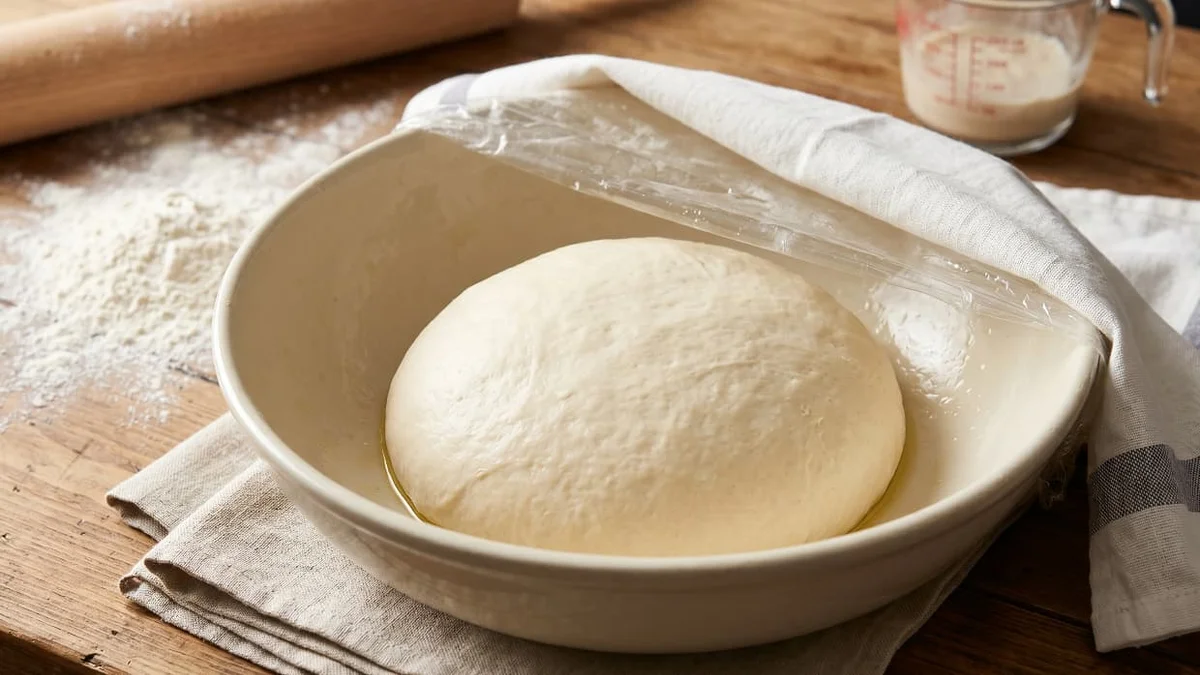
This homemade pizza dough uses yeast, bread flour and olive oil to make a soft, pliable base for your favourite toppings. It takes little hands-on time, though the dough needs a long rise before it is ready to roll out.
Ingredients
- 414 ml (1¾ cups)warm water (105–110°F)
- 1 envelope (about 7 g; 2¼ teaspoons)active dried yeast
- 8 g (2 teaspoons)sugar
- 45 ml (3 tablespoons)olive oil
- 480 g (4 cups), plus extra for dustingbread flour (high-gluten flour can be used instead)
- 10 g (2 teaspoons)salt
- as needednon-stick spray
Instructions
- 1
Proof the yeast
Mix the warm water, yeast and sugar in a liquid measuring jug. Leave for about 5 minutes, until the yeast dissolves and the mixture looks foamy and puffed up, then stir in the olive oil.
- 2
Mix and knead
Meanwhile, put the flour and salt in the bowl of a stand mixer fitted with a dough hook. Gradually pour in the yeast mixture as the dough starts to come together. Knead for 1 to 3 minutes, adding a little more flour if needed, until the dough pulls away from the bowl and no longer sticks to your fingers when touched.
- 3
Shape the dough
Transfer the dough to a floured work surface and knead by hand with floured hands for 1 to 2 minutes. Shape it into a ball and place it in a large bowl coated with non-stick spray.
- 4
Let it rise
Cover the bowl with cling film or a clean tea towel. Leave the dough in a warm part of the kitchen for 1½ to 2 hours, until it has doubled in size.
- 5
Roll and top
Roll out the dough and add whichever toppings you like.
What is homemade pizza dough?
Pizza dough is a yeasted bread dough rolled into a base and baked with toppings. Pizza has roots in Italy, while this straightforward homemade version relies on bread flour, yeast and a little olive oil.
The dough is made in a stand mixer, then briefly kneaded by hand and left to rise. That combination makes it practical to prepare ahead of assembling your pizzas.
Nutrition and macros by portion
The nutrition label shows one serving as written: 1115 calories, 31g protein, 187g carbs, 25g fat.
| Portion | Adjustment | kcal | Protein | Carbs | Fat |
|---|---|---|---|---|---|
| Lighter | Use a smaller dough portion | 781 kcal | 22g | 131g | 18g |
| This serving | As written | 1115 kcal | 31g | 187g | 25g |
| Hungry | Make a larger pizza | 1673 kcal | 47g | 281g | 38g |
The flour supplies most of the carbohydrates, while the olive oil contributes much of the fat; the flour also provides some protein. Pair a pizza made with this dough with vegetables, and choose toppings that suit the rest of your meal.
Choosing the flour
Bread flour: its higher protein content helps the dough develop a stretchy structure that is useful for shaping a pizza base.
High-gluten flour: the recipe gives this as an interchangeable option. Keep a little extra flour nearby for dusting and for adjusting dough that feels too sticky.
Proofing the yeast
Warm water: use water within the stated 105–110°F range so it is warm rather than hot. Mix it with the yeast and sugar, then wait about 5 minutes.
Foam: a foamy, puffed-up appearance is the recipe’s cue that the yeast has proofed. Stir in the oil after this happens.
Getting the dough texture right
In the mixer: knead for 1 to 3 minutes, adding flour sparingly if the dough sticks. It should pull away from the sides of the bowl and feel non-sticky when touched.
By hand: finish with 1 to 2 minutes of kneading on a floured surface. Use just enough flour to make handling manageable without leaving the dough heavily coated.
Allowing time to rise
The listed 8 minutes is the total time supplied with the recipe, but it does not include the stated 1½ to 2 hours for rising. Plan for that rest before you want to roll out the dough.
Leave the covered bowl in a warm area and look for the dough to double in size. This visible cue matters more than relying on the clock alone.
Making and serving the pizzas
Once risen, roll the dough out and top it as desired; the recipe does not specify a particular shape, topping or baking time. Divide or use the dough as needed for the two pizza recipes it is intended to accompany.
Serve the finished pizzas with a simple salad or cooked vegetables for a fresh contrast to the dough and toppings.
Recipe notes & tips
- Measure the warm water within the stated 105–110°F range.
- Wait for the yeast mixture to look foamy before adding the olive oil.
- Add any extra flour gradually so the dough does not become dry.
- Use floured hands and a floured work surface for the brief hand-kneading stage.
- Cover the bowl well while the dough rises to keep its surface from drying out.
Variations
- Wholemeal blend: replace some of the bread flour with wholemeal flour, adding it gradually and checking the dough texture.
- Herb dough: mix dried herbs into the flour and salt before adding the yeast mixture.
- Garlic dough: add a little finely minced garlic when stirring in the olive oil.
- Flavoured oil: use garlic- or herb-infused olive oil in place of plain olive oil.
- Small bases: divide the risen dough into smaller portions before rolling for individual pizzas.
Common mistakes to avoid
- Water too hot: it can impair the yeast; keep the water within the recipe’s 105–110°F range.
- Impatient proofing: the mixture may not be ready if it is not foamy; give it about 5 minutes.
- Too much extra flour: it can make the dough stiff; add it a little at a time.
- Sticky dough: do not skip the brief hand-kneading on a floured surface; use floured hands to make it easier to handle.
- Rushing the rise: allow 1½ to 2 hours in a warm place and wait for the dough to double.
How to store
The recipe does not specify storage instructions. If preparing ahead, keep the dough covered in the refrigerator and use it promptly; bring it back towards room temperature before rolling so it is easier to shape.
Frequently asked questions
How long does the dough take to rise?
The recipe allows 1½ to 2 hours in a warm area of the kitchen. It is ready when it has doubled in size.
Can I make this without a stand mixer?
The method uses a stand mixer and dough hook, then finishes the dough by hand. You can knead by hand from the start, though the recipe does not give a hand-kneading time for that approach.
Can I use high-gluten flour instead of bread flour?
Yes. The recipe says bread flour and high-gluten flour can be used interchangeably.
How do I know when the dough is kneaded enough?
It should pull away from the sides of the mixer bowl and not stick to your fingers when touched. Finish with 1 to 2 minutes of hand-kneading.
What does this recipe make?
It makes enough dough for the two pizza recipes mentioned in the description.
Cook it from the original
This recipe comes from aish.com. Their page has the author’s own photos, notes and tips — the best place to cook it from.
Open the recipe on aish.com