
Duchess potatoes with spinach
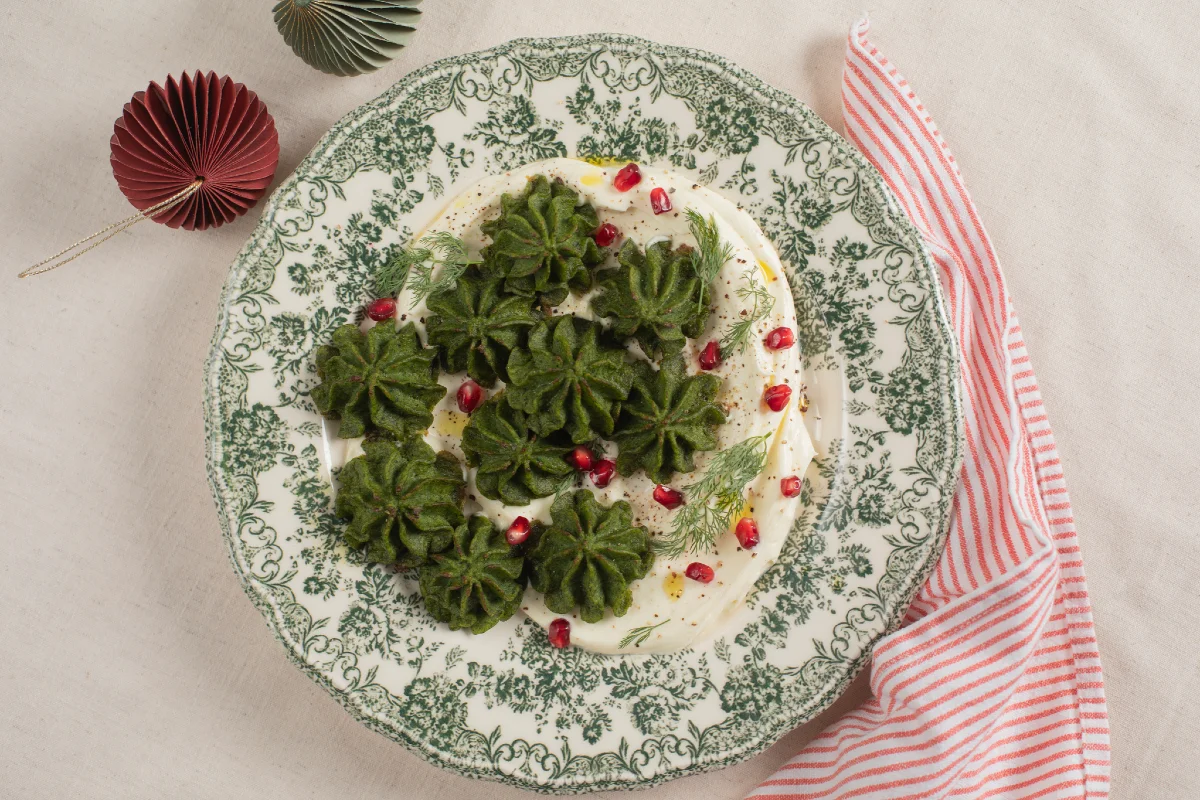
These spinach duchess potatoes are piped, baked potato bites served with a quick cream-cheese sauce. They make an elegant festive appetiser, with dill and pomegranate adding freshness and colour.
Ingredients
- 450 gred potatoes
- 150 gspinach
- ¼white onion
- 50 gbutter
- 1egg yolk
- as neededdill
- as needednutmeg
- as neededextra-virgin olive oil
- as neededblack pepper
- as neededfine salt
- 80 gcream cheese
- 70 gsingle cream
- as neededextra-virgin olive oil
- as neededfine salt
- as neededblack pepper
- as neededpomegranate
- as neededextra-virgin olive oil
- as neededblack pepper
- as neededdill
Instructions
- 1
Cook the potatoes
Put the whole, unpeeled potatoes into cold salted water. Bring to the boil and cook for 30–35 minutes, checking with a fork that they are tender. Meanwhile, finely chop the onion. Warm a little oil in a non-stick frying pan and cook the onion gently until soft.
- 2
Wilt the spinach
Add the spinach to the pan, season with a pinch of salt, cover and cook until wilted.
- 3
Drain the spinach
Transfer the cooked spinach to a colander and press it lightly to remove excess moisture. Blend it with a hand blender.
- 4
Mash the potatoes
Blend the spinach until smooth, then leave it to cool. Drain the cooked potatoes and pass them through a potato ricer while they are still hot.
- 5
Mix the mash
Add the butter and stir straight away so it melts. Season with grated nutmeg and salt, then mix in the spinach purée.
- 6
Add the seasoning
Stir in the egg yolk, chopped dill and black pepper.
- 7
Pipe the potatoes
Mix thoroughly with a spatula, then transfer the mixture to a piping bag fitted with a 12 mm star nozzle. Keep it in the fridge while the oven heats; the mixture should be cold when you pipe it. Pipe well-spaced rosettes onto a baking tray lined with baking paper, working in two batches if needed.
- 8
Bake the rosettes
Brush the tops with a little oil and bake in a preheated conventional oven at 200°C for 18 minutes. Let them cool slightly before handling, as they are delicate while hot. Meanwhile, put the cream and cream cheese in a bowl.
- 9
Make the sauce
Season the cream and cream cheese with oil, salt and pepper. Whisk vigorously until smooth and creamy.
- 10
Plate the dish
Spread the cream-cheese sauce over a serving plate and arrange the green duchess potatoes on top.
- 11
Garnish and serve
Finish with dill sprigs, pomegranate seeds and black pepper to taste, then serve.
What are duchess potatoes?
Duchess potatoes are a French-style preparation of mashed potato, shaped with a piping bag and baked until lightly browned. Their ridged edges make them look smart enough for a celebration while keeping the centre soft.
This version folds spinach into the potato and serves the piped bites with a creamy cheese sauce. Dill and pomegranate bring a fresh, colourful finish.
Nutrition and macros by portion
The nutrition label shows one serving as written: 58 calories, 1g protein, 5g carbs, 4g fat.
| Portion | Adjustment | kcal | Protein | Carbs | Fat |
|---|---|---|---|---|---|
| Lighter | Use less sauce | 41 kcal | 1g | 3g | 3g |
| This serving | As written | 58 kcal | 1g | 5g | 4g |
| Hungry | Serve a larger portion | 87 kcal | 2g | 7g | 6g |
The potatoes provide most of the carbohydrates, while butter, cream, cream cheese and olive oil contribute most of the fat. The egg yolk and dairy add some protein, with spinach contributing a small amount as well. For a more balanced plate, pair a few rosettes with a generous serving of salad or other vegetables.
Getting the potato mixture right
Potatoes: cooking them whole with their skins on helps keep them from absorbing too much water. Rice them while hot so the butter melts into the mash smoothly.
Spinach: squeeze out excess liquid after cooking, then blend it into a smooth purée. Too much moisture can make the potato mixture difficult to pipe and less able to hold its shape.
Piping neat rosettes
Cold mixture: chill the mash before piping, as the method specifies. It will be firmer and easier to shape into defined ridges.
Even spacing: leave room between each rosette on the lined tray, and bake in batches if necessary. A 12 mm star nozzle gives the duchess potatoes their characteristic fluted edges.
Checking doneness
Potatoes: after 30–35 minutes from boiling, test one with a fork; it should be tender enough to rice without lumps. Cooking time can vary with the size of the potatoes.
Baked rosettes: use the stated 18 minutes at 200°C as your guide. They should be set and lightly coloured, and need a short rest before you move them because they are fragile when hot.
The cream-cheese base
Whisk the cream cheese and single cream with the seasoning until the mixture is smooth and creamy. Spread it across the serving plate as a base rather than spooning it over the rosettes, so their piped shape remains visible.
Serving for a gathering
Arrange the spinach potato rosettes over the sauce shortly before serving, then add dill and pomegranate seeds. The garnish gives each bite a herbal note and a little fruity contrast.
These are designed as appetisers, so serve them alongside other small festive dishes. For a more substantial plate, add a green salad or roasted vegetables.
Recipe notes & tips
- Use potatoes of a similar size so they cook at roughly the same rate.
- Press the cooked spinach gently in the colander to remove excess liquid before blending.
- Rice the potatoes while they are hot, before adding the butter.
- Chill the potato mixture before piping to help the rosettes keep their shape.
- Pipe the rosettes with space between them and bake in batches if your tray is crowded.
- Let the baked duchess potatoes cool briefly before lifting them from the tray.
Variations
- More herbs: add extra chopped dill to the potato mixture for a stronger herbal flavour.
- Peppery finish: add a little more black pepper to the cream-cheese sauce.
- Extra garnish: scatter additional pomegranate seeds over the platter just before serving.
- Different cheese: replace the cream cheese with another soft, spreadable cheese.
- Smaller bites: pipe smaller rosettes and check them early, as their baking time may be shorter.
Common mistakes to avoid
- Wet spinach: excess water can loosen the mash; drain and press the spinach before blending.
- Lumpy potatoes: rice them while hot for a smoother mixture that pipes more easily.
- Warm mash: piping before chilling can make the rosettes lose definition; refrigerate the mixture first.
- Overcrowded tray: rosettes need space; use two batches rather than squeezing them together.
- Handling them hot: the baked potatoes are delicate straight from the oven; let them cool slightly before moving.
- Lumpy sauce: whisk the cream cheese and cream thoroughly until the mixture is smooth before plating.
How to store
Store leftover duchess potatoes and sauce separately in airtight containers in the fridge for up to 2 days. Reheat the potatoes on a baking tray in a 180°C oven until hot; stir the sauce before serving and avoid reheating it for too long.
Frequently asked questions
Can I prepare the potato mixture ahead?
Yes. Make the mixture, cover it and keep it in the fridge until ready to pipe. It should be cold when shaped, as directed in the method.
Can I make the duchess potatoes without a piping bag?
A piping bag with a star nozzle gives them their ridged shape. Without one, you can shape small mounds with a spoon, though they will look different.
Why is my mixture too soft to pipe?
The spinach may still contain too much water, or the mixture may not be cold enough. Drain the spinach well and chill the potato mixture before piping.
Can I bake all the rosettes at once?
Use as many trays as fit with enough room between the rosettes. The recipe allows for a couple of batches, so bake in separate rounds if the tray is crowded.
How do I know when the potatoes are cooked?
After 30–35 minutes from the point the water boils, test with a fork. The potatoes should be tender enough to pass through a potato ricer.
Can I serve them without the cream-cheese sauce?
Yes, though the sauce is part of this version of the dish. You can serve the rosettes on their own or with another sauce you like.
Cook it from the original
This recipe comes from giallozafferano.es. Their page has the author’s own photos, notes and tips — the best place to cook it from.
Open the recipe on giallozafferano.es