
Pea farinata with courgettes
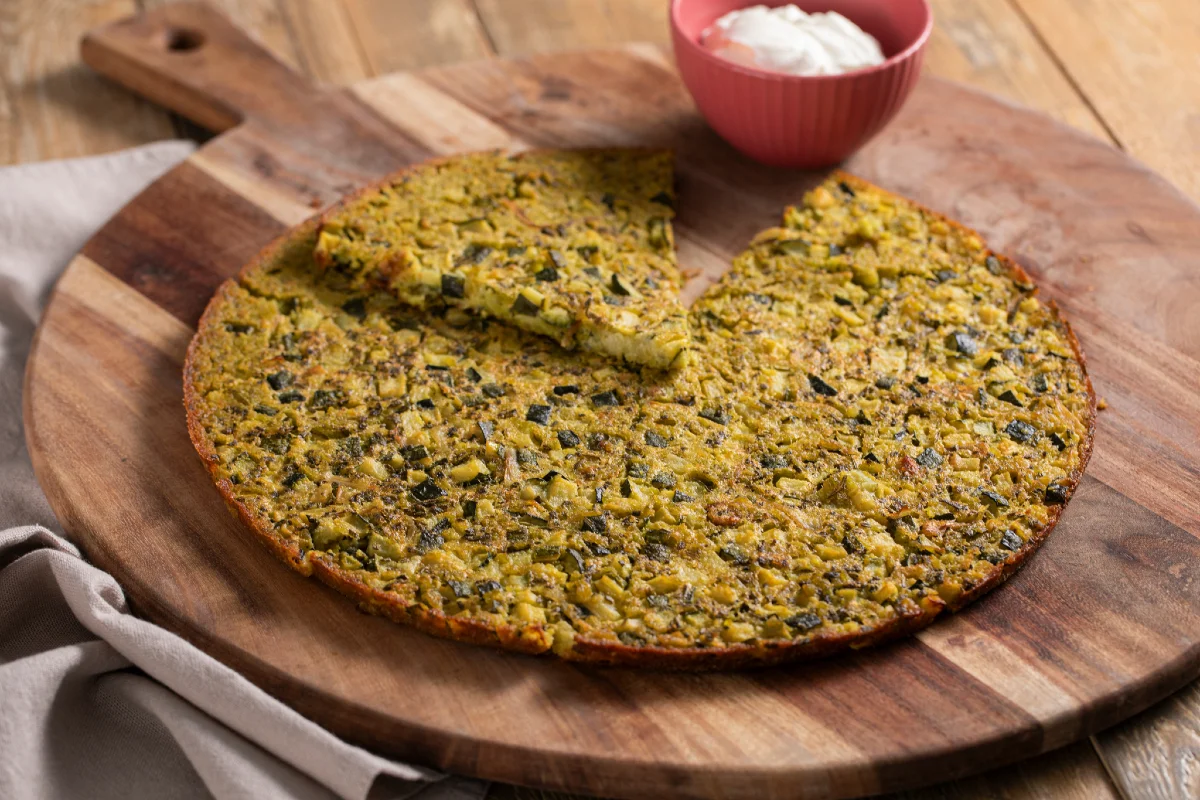
This savoury baked farinata swaps the traditional chickpea flour for ground dried peas, with courgettes, garlic and herbs folded through the batter. It makes a useful springtime main or side, with a crisp-edged surface and a tender centre.
Ingredients
- 200 gdried split peas
- 400 gcourgettes
- 1shallot
- 1 clovegarlic
- 10 gbreadcrumbs
- 340 gwater
- 70 gextra-virgin olive oil
- to tasterosemary
- to tastesage
- to tastesalt
Instructions
- 1
Prepare courgettes
Wash and trim the courgettes. Cut them lengthways into slices, then into thin sticks.
- 2
Dice and soften
Cut the courgette sticks into 5 mm cubes. Peel and chop the shallot. Warm a little of the oil in a non-stick frying pan, then add the shallot.
- 3
Cook courgettes
Add the peeled garlic clove and let it brown gently over a low heat. Add the diced courgettes, season with salt and fry over a medium-high heat for a few minutes.
- 4
Prepare herbs
Remove the garlic and set the courgettes aside. Finely chop the rosemary and sage.
- 5
Grind the peas
Grind the dried peas in a very powerful food processor until they become flour. Tip the pea flour into a bowl and add the water.
- 6
Mix the batter
Pour in the oil, then add the chopped herbs and salt.
- 7
Prepare the tin
Fold in the browned, cooled courgettes and mix thoroughly. Grease a 34 cm non-stick tin with a 2 cm-high rim, then dust its base with the breadcrumbs.
- 8
Bake the farinata
Pour the mixture into the tin and spread it evenly. Bake in a conventional oven at 220°C for 30 minutes. Remove from the oven and leave to cool until just warm before serving.
What is pea farinata?
Farinata is a thin, savoury bake traditionally made with chickpea flour, water and olive oil, and associated with Ligurian cooking in north-west Italy. This version uses ground dried peas instead, giving the batter a different legume flavour.
Courgettes, shallot, garlic and fresh herbs bring a springtime feel. Baking the mixture in a wide tin helps it cook as a shallow layer, rather than like a thick, soft pie.
Nutrition and macros by portion
The nutrition label shows one serving as written: 171 calories, 7g protein, 17g carbs, 9g fat.
| Portion | Adjustment | kcal | Protein | Carbs | Fat |
|---|---|---|---|---|---|
| Lighter | Use less olive oil | 120 kcal | 5g | 12g | 6g |
| This serving | As written | 171 kcal | 7g | 17g | 9g |
| Hungry | Serve a larger slice | 257 kcal | 11g | 26g | 14g |
The dried peas provide most of the carbohydrates, fibre and plant protein, while the olive oil supplies most of the fat. Courgettes add volume and some carbohydrate, with only a small contribution from the breadcrumbs. Pair a portion with salad or other vegetables for a more varied plate.
The pea flour
Grinding the dried split peas in a very powerful food processor is the key ingredient step. Aim for a fine, even flour so it mixes readily with the water.
Keep the processor lid on and let the dust settle before opening it. If the peas remain coarse, the batter may have a less even texture.
Cook the courgettes first
Small cubes cook quickly and distribute evenly through the farinata. Frying them with the shallot lets them soften and brown before they go into the batter.
Remove the garlic clove after it has flavoured the pan, then let the courgettes cool before folding them in. This avoids adding the vegetables while they are still hot.
Mix and season
Add the water and oil to the pea flour, then stir in the herbs, salt and cooled courgettes. Mix until the ingredients are evenly combined.
Rosemary and sage give the bake its herbal flavour. Chop them finely so they are spread through the mixture rather than concentrated in a few bites.
Tin and texture
The recipe uses a 34 cm non-stick tin with a 2 cm-high rim. Greasing it and scattering breadcrumbs across the base helps the farinata release after baking.
Spread the mixture evenly to keep the layer at a consistent depth. The bake is done after 30 minutes at 220°C; allow it to cool until just warm before serving.
Serving ideas
Serve the farinata warm as a vegan main with a crisp green salad or sliced tomatoes. It can also be cut into smaller pieces and served as a side.
A squeeze of lemon or a simple salad dressing adds freshness alongside the olive oil and herbs. Let the bake settle briefly before slicing so the pieces hold together more neatly.
Recipe notes & tips
- Cut the courgettes into even 5 mm cubes so they cook at a similar rate.
- Use a powerful food processor to grind the dried peas as finely as possible.
- Let the cooked courgettes cool before stirring them into the batter.
- Spread the mixture evenly in the tin for consistent baking.
- Allow the farinata to cool until just warm before cutting and serving.
Variations
- Add black pepper: season the batter with freshly ground pepper.
- Try thyme: use it in place of some of the rosemary or sage.
- Add lemon: finish each portion with a little lemon juice.
- Serve with salad: pair it with dressed leaves for a fresh contrast.
Common mistakes to avoid
- Coarse pea flour: grind the peas until fine for a more even batter.
- Large courgette pieces: cut them into small, even cubes so they soften quickly.
- Hot courgettes: cool them before folding them in to avoid adding them straight from the pan.
- Uneven layer: spread the mixture across the tin so it bakes consistently.
- Slicing too soon: let the farinata cool until just warm so it is easier to portion.
How to store
Cool leftovers, cover and refrigerate for up to 3 days. Reheat in an oven until warmed through; the surface may be less crisp after storage.
Frequently asked questions
Can I use ready-made pea flour?
Yes, if it is made from dried peas and has a fine texture. Use 200 g and mix it with the water as directed.
How finely should I grind the peas?
Grind them as finely and evenly as your food processor allows. A coarse grind can make the texture less smooth.
Can I prepare the courgettes ahead?
Yes. Cook them with the shallot and garlic, remove the garlic, then cool and refrigerate them until you are ready to mix the batter.
How can I tell when the farinata is ready?
Bake it for 30 minutes at 220°C as directed. The surface should look set; leave it to cool until just warm before serving.
Is this recipe vegan?
The listed ingredients are plant-based. Check that your breadcrumbs contain no ingredients you wish to avoid.
Cook it from the original
This recipe comes from giallozafferano.es. Their page has the author’s own photos, notes and tips — the best place to cook it from.
Open the recipe on giallozafferano.es