
Baked turbot
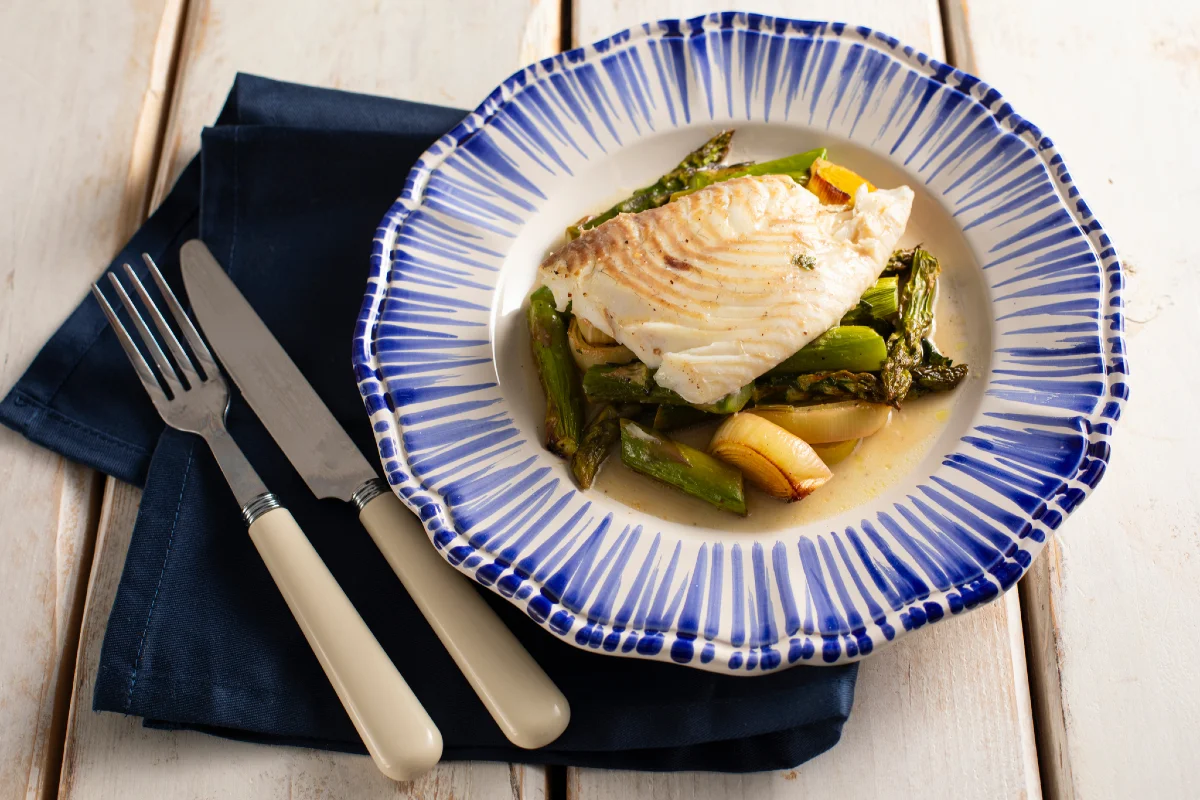
Whole turbot bakes over asparagus, leeks and lemon for a simple fish main with its vegetable side cooked in the same tray. It makes a practical centrepiece for a spring meal, with the cooking juices ready to spoon over the fish.
Ingredients
- 1 kgwhole turbot, gutted
- as neededextra-virgin olive oil
- to tastefine salt
- to tasteblack pepper
- 400 gasparagus, untrimmed
- 2leeks
- 2 clovesgarlic
- 1lemon
- as neededparsley
- 2 tablespoons (30 ml)extra-virgin olive oil
- to tastefine salt
- to tasteblack pepper
Instructions
- 1
Prepare the vegetables
Heat the oven to 200°C. Remove the tough white ends from the asparagus and peel the stalks if they are especially firm, then cut them into pieces. Trim the leeks, remove their outer leaves and slice them about 5 mm thick.
- 2
Arrange the tray
Line a baking tray with baking paper and spread the leeks and asparagus over it. Add the two whole garlic cloves and parsley.
- 3
Season and slice
Season the vegetables with salt and pepper and drizzle over a little olive oil. Thinly slice the lemon.
- 4
Add the turbot
Move the vegetables aside to make room in the middle of the tray and lay the lemon slices there. Cut a cross into the skin on the turbot’s back, set the fish on top of the lemon and season its surface with salt.
- 5
Bake until ready
Drizzle the turbot with extra-virgin olive oil and bake at 200°C for about 25–30 minutes. It is ready when the skin lifts easily when pulled with a fork.
- 6
Serve with juices
Spread the vegetables over the serving plates, place the turbot fillets on top and spoon over the cooking juices.
What is baked turbot?
Turbot is a flatfish served here whole, roasted with vegetables and lemon. This tray-bake approach keeps the fish and its accompaniment together, with the lemon beneath the fish helping to keep it from drying out.
As the recipe does not specify a regional tradition, its appeal is in the straightforward combination of fish, olive oil and spring vegetables. The leeks and asparagus also take on the flavour of the fish’s cooking juices.
Nutrition and macros by portion
The nutrition label shows one serving as written: 300 calories, 28g protein, 11g carbs, 15g fat.
| Portion | Adjustment | kcal | Protein | Carbs | Fat |
|---|---|---|---|---|---|
| Lighter | Use less olive oil | 210 kcal | 20g | 8g | 11g |
| This serving | As written | 300 kcal | 28g | 11g | 15g |
| Hungry | Add boiled potatoes | 450 kcal | 42g | 17g | 23g |
The turbot provides most of the protein, while the asparagus and leeks contribute carbohydrates and fibre. Olive oil supplies most of the fat; the amount used for the initial drizzle is not specified, so the nutrition estimate will vary. Keep the vegetables generous on the plate, or add boiled potatoes if you want a more substantial meal.
Choosing and preparing the vegetables
Asparagus: trim away the tough ends before cutting the stalks into pieces. Peel only the firm stalks; tender ones can be left as they are.
Leeks: remove the outer leaves and slice them about 5 mm thick so they cook alongside the asparagus. Spread both vegetables across the lined tray rather than piling them up.
Making a bed for the fish
Lemon layer: make a gap among the vegetables and arrange the thin lemon slices beneath the turbot. This creates a gentle bed for the fish while adding citrus to the tray juices.
Skin: score the skin on the fish’s back with a cross before baking. Keep the cuts in the skin rather than slicing deeply into the flesh.
How to judge doneness
Timing: bake at 200°C for about 25–30 minutes, as the recipe specifies. The exact time can vary with the fish’s thickness, so use the stated doneness cue as well as the clock.
Cue: the recipe says the fish is ready when the skin lifts easily when pulled with a fork. Avoid leaving it in the oven longer than needed, as the flesh can dry out.
Serving the fish and vegetables
Presentation: distribute the cooked vegetables across the base of each serving, then add the turbot fillet. Spoon the juices from the tray over the top.
Pairing: the recipe already includes a vegetable side, so serve it as written for a complete main course. Bread or boiled potatoes can be added if you want something extra to catch the juices.
Recipe notes & tips
- Line the tray with baking paper to make serving and cleaning up easier.
- Peel only asparagus stalks that feel particularly tough.
- Slice the lemon thinly so it sits evenly beneath the fish.
- Keep the garlic cloves whole as directed.
- Check the skin for easy lifting as the end of the baking time approaches.
- Spoon the tray juices over the fish when serving.
Variations
- Herb change: use another soft herb in place of the parsley.
- Citrus note: add a little lemon juice over the fish at the table.
- More vegetables: include extra asparagus and leeks, keeping them in a single layer.
- Garlic flavour: finely chop the garlic before adding it to the vegetables.
- Heartier plate: serve with boiled potatoes alongside the fish.
Common mistakes to avoid
- Leaving tough asparagus ends on: trim them away, and peel unusually firm stalks.
- Crowding the vegetables: spread them out so they cook on the tray rather than sitting in a heap.
- Skipping the lemon bed: put the slices in the centre before laying the turbot on top.
- Cutting too deeply: score the skin with a cross without slicing far into the fish flesh.
- Relying only on the timer: check that the skin lifts easily with a fork.
- Forgetting the tray juices: spoon them over the fish and vegetables when plating.
How to store
Refrigerate leftovers in a covered container and use within 2 days. Reheat gently in the oven until hot throughout; avoid prolonged heating, which can dry out the fish.
Frequently asked questions
Can I use frozen turbot?
Yes, but thaw it completely in the refrigerator first and pat it dry before baking. The recipe gives its timing for a 1 kg whole fish.
Do I need to peel the asparagus?
Only peel stalks that are particularly firm. Trim away the tough white ends, while tender stalks can be used without peeling.
How can I tell when the turbot is done?
The recipe’s cue is that the skin lifts easily when pulled with a fork. Start checking around the end of the 25–30 minute baking time.
Can I prepare the vegetables ahead?
You can trim and slice the vegetables ahead and keep them covered in the refrigerator. Assemble the tray shortly before baking.
What can I serve with baked turbot?
The asparagus and leeks are already cooked with the fish. Boiled potatoes or bread are useful additions if you would like a more filling meal.
Can I bake the turbot without baking paper?
Baking paper is used in this method to line the tray. If you leave it out, grease the tray lightly to help the fish and vegetables release.
Cook it from the original
This recipe comes from giallozafferano.es. Their page has the author’s own photos, notes and tips — the best place to cook it from.
Open the recipe on giallozafferano.es