
Gluten-Free Brined Pork Tenderloins with Cranberry Rosemary Sauce
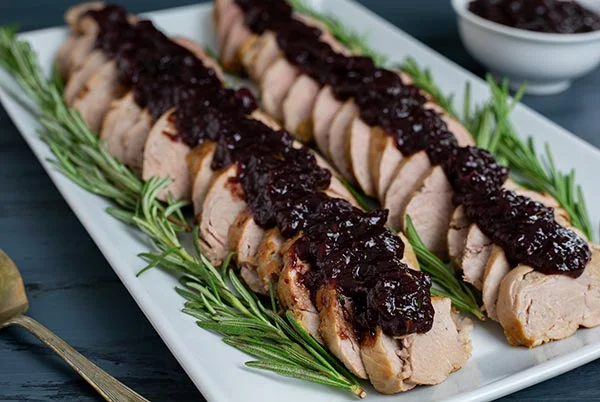
Pork tenderloins are briefly brined, seared and roasted, then served with a quick cranberry and rosemary sauce. The sweet-tart sauce and rested, tender pork make this a festive centrepiece that is straightforward to prepare.
Ingredients
- 480 ml (2 cups)water
- 120 ml (½ cup)Marukan Genuine Brewed Rice Vinegar
- 60 ml (¼ cup)pure maple syrup
- 30 ml (2 tablespoons)kosher salt or fine sea salt
- 5 ml (1 teaspoon)whole black peppercorns
- 2 (about 680 g each)pork tenderloins
- 4 sprigs, plus 5 ml (1 teaspoon) mincedfresh rosemary
- 30 ml (2 tablespoons)vegetable oil
- 60 ml (¼ cup)red wine
- 1 canwhole-berry cranberry sauce
Instructions
- 1
Brine the pork
Stir together the water, vinegar, maple syrup, salt and peppercorns until the salt dissolves. Put the tenderloins in a large food-storage bag, add the brine and 4 rosemary sprigs, and refrigerate for 2–4 hours. Take the pork out, discard the brine and pat the tenderloins dry.
- 2
Sear and roast
Preheat the oven to 200°C (400°F). Heat the oil in a large ovenproof frying pan over medium-high heat. Add the tenderloins and sear on all sides, for about 5 minutes in total. Transfer the pan to the oven and roast for 10–15 minutes, until an instant-read thermometer shows 60°C (140°F). The pork will reach 63°C (145°F) as it rests. Move the tenderloins to a chopping board, cover loosely with foil and rest for 10 minutes.
- 3
Make the sauce
Return the frying pan to the hob over medium-high heat. Stir in the minced rosemary and cook until fragrant. Add the wine and simmer until reduced by half. Lower the heat to medium-low, add the cranberry sauce and stir until it loosens and becomes more fluid.
- 4
Slice and serve
Slice the pork and spoon the cranberry sauce over the top.
What is brined pork tenderloin?
Pork tenderloin is a lean, tender cut from along the pig’s back, and brining gives it time to take on seasoning before cooking. This American-style preparation pairs the pork with cranberry sauce, a familiar sweet-tart accompaniment for roasted meat.
The brine combines rice vinegar, maple syrup, salt and peppercorns, while rosemary brings an aromatic note to both the pork and sauce. Searing first adds browned flavour before the tenderloins finish roasting.
Nutrition and macros by portion
The nutrition label shows one serving as written: 349 calories, 36g protein, 27g carbs, 9g fat.
| Portion | Adjustment | kcal | Protein | Carbs | Fat |
|---|---|---|---|---|---|
| Lighter | More vegetables, less sauce | 244 kcal | 25g | 19g | 6g |
| This serving | As written | 349 kcal | 36g | 27g | 9g |
| Hungry | Larger pork portion | 524 kcal | 54g | 41g | 14g |
The pork supplies most of the protein, while the maple syrup and cranberry sauce contribute much of the carbohydrate. Vegetable oil adds fat, and a serving of pork with sauce can be balanced with a generous portion of vegetables and a modest serving of potatoes or another starch.
Why brine the tenderloins?
Salt: it dissolves into the liquid and seasons the pork during its 2–4 hours in the fridge. The vinegar and maple syrup add tang and sweetness to the brine.
Dry surface: pat the meat dry after brining so it can brown in the hot pan. Discard the used brine rather than using it in the sauce.
Searing and roasting
Searing: turn the tenderloins so all sides get contact with the hot pan, allowing about 5 minutes for this stage. Use an ovenproof pan so you can move it straight into the oven.
Temperature: roast at 200°C (400°F) for 10–15 minutes, checking the thickest part with an instant-read thermometer. Take the pork out at 60°C (140°F); it is expected to reach 63°C (145°F) as it rests.
Getting the sauce right
Rosemary: stir the minced rosemary into the pan after the pork comes out, and cook just until fragrant. The pan’s browned residue adds flavour to the sauce.
Wine and cranberry: reduce the red wine by half before adding the cranberry sauce. Warm it over medium-low heat, stirring until the sauce loosens and becomes spoonable.
Resting and slicing
Resting: cover the cooked tenderloins loosely with foil and leave them for 10 minutes. This gives the temperature time to rise as described in the method and makes the meat easier to slice.
Slicing: cut across the tenderloins into even slices, then spoon the warm cranberry sauce over them. Serve soon after slicing for the best texture.
What to serve with it
Vegetables: roasted carrots, green beans or Brussels sprouts make a savoury side that suits the sweet-tart sauce. Add a green salad if you want a fresher contrast.
Starch: serve with roast potatoes, mashed potatoes or rice to make the meal more substantial. Spoon any extra sauce over the pork rather than the side dishes if you want to keep its flavour distinct.
Recipe notes & tips
- Use an instant-read thermometer to check the centre of the thickest part of each tenderloin.
- Pat the pork thoroughly dry before searing for better browning.
- Sear all sides before transferring the ovenproof pan to the oven.
- Let the pork rest for the full 10 minutes before slicing.
- Stir the cranberry sauce as it warms so it loosens evenly.
- Check that your chosen cranberry sauce and other packaged ingredients are labelled gluten-free if needed.
Variations
- Fresh cranberries: use a cranberry preparation with whole berries for a more pronounced fruit texture.
- Extra rosemary: add a little more minced rosemary to the sauce for a stronger herbal note.
- Orange note: add a little orange zest to the finished sauce for a citrus accent.
- Different wine: use a dry red wine you would be happy to drink with the meal.
- Milder sauce: serve some of the cranberry sauce on the side so diners can choose how much to add.
Common mistakes to avoid
- Skipping the brine: the pork misses the recipe’s seasoning time; allow 2–4 hours in the refrigerator.
- Wet pork: moisture can hinder browning; pat the tenderloins dry after draining.
- Crowding the pan: the meat may not brown evenly; use a pan large enough for both tenderloins.
- Over-roasting: tenderloin can become dry; check the centre after 10 minutes in the oven.
- Skipping the rest: slicing immediately cuts short the specified resting time; cover loosely and wait 10 minutes.
- Reducing the wine too far: the sauce may become overly concentrated; stop when the liquid is about half its starting volume.
How to store
Refrigerate leftover pork and sauce in separate airtight containers for up to 3 days. Reheat gently in a covered pan or microwave until hot, adding a splash of water to the sauce if it has thickened.
Frequently asked questions
Can I brine the pork for longer?
The recipe specifies 2–4 hours in the refrigerator. Follow that window for this brine rather than leaving the tenderloins in it overnight.
Can I make the cranberry sauce ahead?
You can prepare the sauce before serving and gently rewarm it. Stir as it heats, and loosen it with a small splash of water if necessary.
How do I know when the pork is ready?
Check the thickest part with an instant-read thermometer and remove it from the oven at 60°C (140°F). The recipe says it will rise to 63°C (145°F) while resting.
Can I use a pan that is not ovenproof?
Sear the pork in a frying pan, then transfer it to an oven-safe dish for roasting. Keep the pan juices for making the sauce.
Is this recipe gluten-free?
The title identifies the dish as gluten-free, but check the labels on the vinegar, cranberry sauce and other packaged ingredients to confirm they suit your needs.
What can I use instead of red wine?
The recipe calls for red wine. If you do not want to use it, replace it with water, though the sauce will have a different flavour.
Cook it from the original
This recipe comes from glutenfreeandmore.com. Their page has the author’s own photos, notes and tips — the best place to cook it from.
Open the recipe on glutenfreeandmore.com