
Cesare Battisti’s Milanese risotto
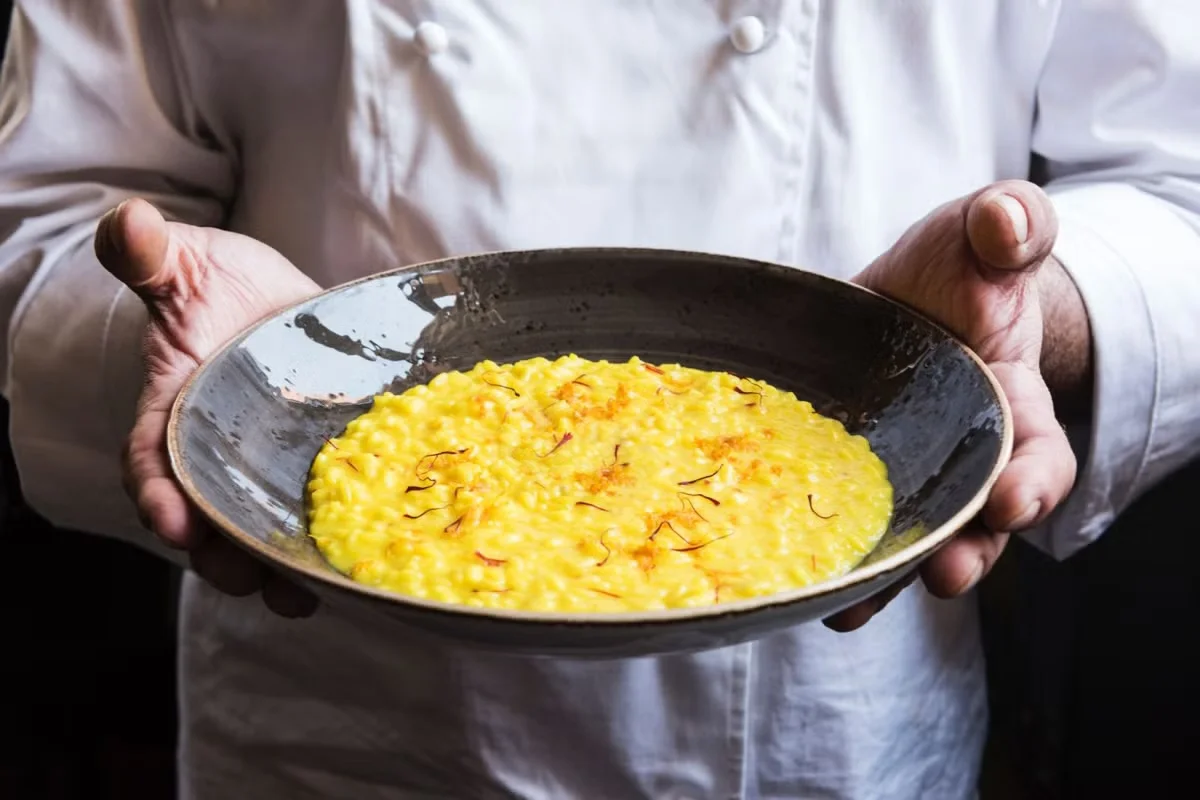
This rich Milanese risotto brings Carnaroli rice together with saffron, meat stock, butter and Lodigiano cheese. The slow addition of stock and a final rest help create its characteristic creamy texture.
Ingredients
- 250 gCarnaroli Autentico Riserva San Massimo rice
- 800 gmeat stock
- 1/2onion
- 2 tbsp (30 ml)extra-virgin olive oil
- 60 gmountain butter
- 80 ggrated Lodigiano cheese
- 20saffron threads
- 1 sachetground saffron
Instructions
- 1
Soften the onion
Warm the extra-virgin olive oil in a saucepan. Add the half onion whole and cook over a low heat until softened and cooked through, then remove it. Add the rice and toast it until translucent.
- 2
Cook the rice
Begin cooking the rice, adding the strained meat stock a little at a time. After about 6 minutes, add both the ground saffron and saffron threads. Continue simmering and stir gently as the rice cooks.
- 3
Finish and rest
After 14 minutes of cooking the rice, turn off the heat. Stir in the cheese and cold butter from the fridge to finish the risotto. Leave it to rest for 2 minutes, then serve.
What is Milanese risotto?
Risotto alla Milanese is a Lombard rice dish, traditionally associated with Milan, coloured and flavoured with saffron. This version uses Carnaroli rice, meat stock, butter and Lodigiano cheese for a rich, savoury finish.
Carnaroli is a short-grain variety suited to risotto: it can absorb cooking liquid while retaining a distinct centre. Saffron threads and powdered saffron both feature here, giving the dish two forms of the spice.
Nutrition and macros by portion
The nutrition label shows one serving as written: 1900 calories, 40g protein, 200g carbs, 100g fat.
| Portion | Adjustment | kcal | Protein | Carbs | Fat |
|---|---|---|---|---|---|
| Lighter | Use less butter | 1330 kcal | 28g | 140g | 70g |
| This serving | As written | 1900 kcal | 40g | 200g | 100g |
| Hungry | Serve a larger portion | 2850 kcal | 60g | 300g | 150g |
Most of the carbohydrates come from the rice, while the olive oil and butter contribute much of the fat. The rice, cheese and meat stock provide protein, with the cheese and stock also contributing sodium. For balance, serve it with a generous portion of plain vegetables or salad.
The ingredients that shape the dish
Carnaroli rice: toast it in the oil after removing the softened onion. The recipe calls for the grains to become translucent before the stock is added.
Saffron: the powder and threads go in after about 6 minutes of cooking. Add both at that point, as directed, so they can flavour the remaining cooking liquid.
Lodigiano and butter: these are stirred into the rice off the heat. The butter should be cold from the fridge when added.
Build the risotto gradually
Stock: add the strained meat stock a little at a time rather than all at once. Keep the rice simmering as it cooks and stir gently.
Onion: cook the half onion whole over low heat until tender, then take it out before adding the rice. This gives the oil time to take on its flavour without leaving pieces in the finished dish.
Watch the rice as it cooks
Toasting: look for the grains to turn translucent before beginning the stock additions. Avoid rushing this stage; the recipe uses it as the cue to move on.
Timing: add the saffron after about 6 minutes and turn off the heat after 14 minutes of rice cooking. The method does not specify a separate doneness test, so check the grains as you approach that point.
Finish for a creamy texture
Off the heat: stir in the grated cheese and cold butter once cooking is complete. Work them through the rice, then let the pan stand for 2 minutes before serving.
Serve promptly: risotto thickens as it sits. The brief rest is part of the method, but leaving it much longer may make it less fluid.
What to serve alongside it
The recipe makes one serving with 250 g of dry rice, so it is a substantial amount of risotto. A crisp green salad or simply cooked vegetables can add contrast without competing with the saffron.
Because the meat stock, butter and cheese make the dish savoury and rich, serve any side plainly seasoned and adjust salt only after tasting.
Recipe notes & tips
- Strain the meat stock before adding it to the rice, as the method specifies.
- Keep the onion half whole so it can be removed cleanly before toasting the rice.
- Add the stock gradually while the rice simmers.
- Stir gently during cooking rather than leaving the risotto unattended.
- Have the grated cheese and cold butter ready before the rice finishes cooking.
Variations
- Stock choice: use a mild meat stock so it complements rather than overwhelms the saffron.
- Saffron threads: steep them in a little of the recipe's warm stock before adding them with the powder.
- Cheese: use another finely grated, hard cheese if Lodigiano is unavailable.
- Onion: finely chop the onion instead of leaving it whole if you prefer it in the finished risotto.
- Herbs: finish with a little chopped parsley for a fresh note.
Common mistakes to avoid
- Adding all the stock at once: add it little by little as the recipe directs so the rice cooks gradually.
- Skipping the toast: cook the rice in the oil until translucent before starting the stock.
- Leaving the onion in: remove the softened half onion before adding the rice.
- Adding saffron too early: put in both forms after about 6 minutes of cooking.
- Using warm butter to finish: stir in butter cold from the fridge, as specified.
- Serving immediately: allow the finished risotto to rest for 2 minutes before plating.
How to store
Cool leftovers promptly, transfer them to an airtight container and refrigerate for up to 2 days. Reheat in a saucepan with a splash of water or stock, stirring until hot throughout; the texture will be thicker than when freshly made.
Frequently asked questions
Can I use a different rice?
Carnaroli is the rice specified in this recipe. Another risotto rice can be used, but cooking time and the final texture may differ.
Can I use only one type of saffron?
The recipe calls for both 20 saffron threads and one sachet of powdered saffron. Using only one will change the flavour and colour.
Why is the onion removed?
It is cooked whole in the oil to flavour it, then removed before the rice is toasted. This leaves the finished risotto without pieces of onion.
How do I know when to add the saffron?
Add the powdered saffron and threads after about 6 minutes of rice cooking, then continue simmering and stirring gently.
Why add the butter off the heat?
The method adds cold butter and grated cheese after the heat is turned off, then rests the risotto for 2 minutes. This finishes the dish without continuing to cook the rice over direct heat.
Cook it from the original
This recipe comes from finedininglovers.it. Their page has the author’s own photos, notes and tips — the best place to cook it from.
Open the recipe on finedininglovers.it