
Rice with peas
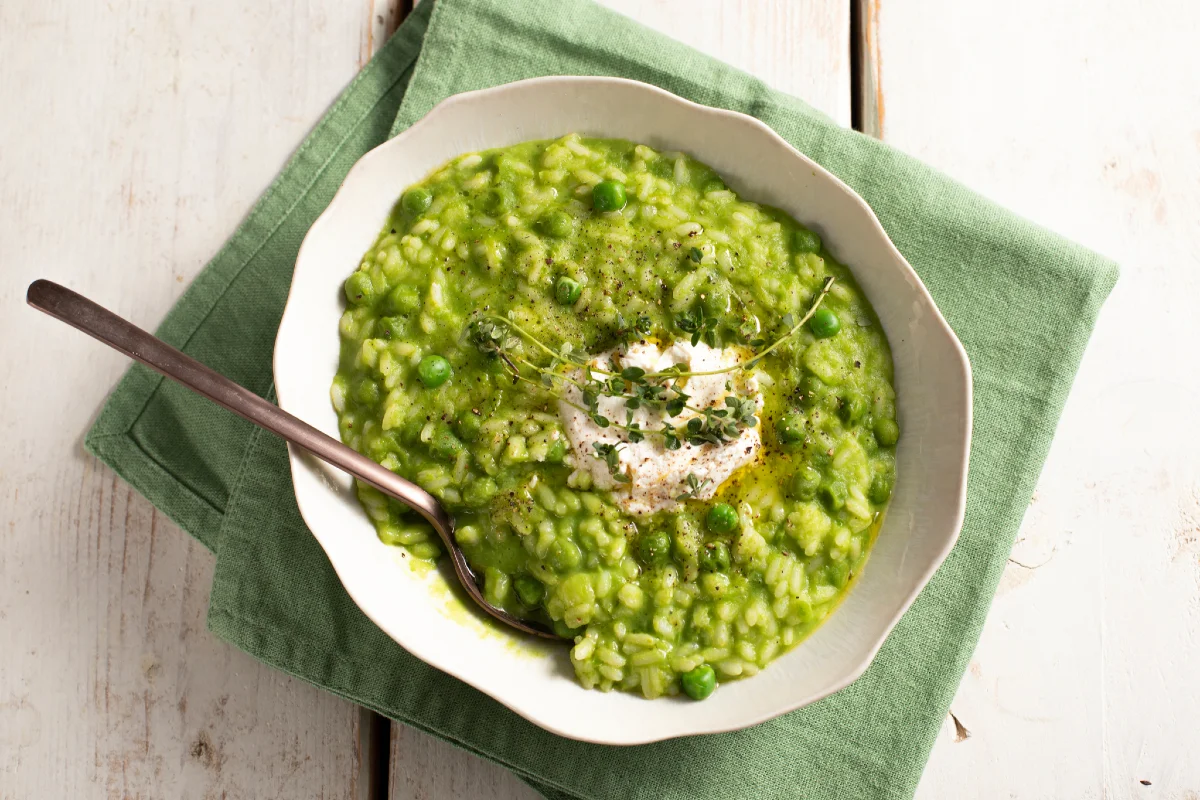
This creamy rice with peas combines tender grains with a smooth, bright-green pea purée, finished with ricotta and lemon thyme. It makes a straightforward vegetarian first course for a family meal.
Ingredients
- 320 gRibe rice
- 450 gpeas
- 1shallot
- approximately 600 gwater
- as neededextra-virgin olive oil
- as neededfine salt
- as neededblack pepper
- as neededcow's milk ricotta
- as neededlemon thyme
- as neededextra-virgin olive oil
- as neededblack pepper
Instructions
- 1
Soften the shallot
Peel and finely chop the shallot. Warm a little olive oil in a saucepan, add the shallot and cook over medium-low heat for 2–3 minutes, stirring often.
- 2
Add the peas
Add the peas and a pinch of salt, then pour in enough water to cover them, approximately 600 g.
- 3
Cook and reserve
Bring the water to the boil and cook the peas for 5 minutes. Use a slotted spoon to lift out half the peas and put them in a tall container with a little cold water.
- 4
Blend the peas
Blend the reserved peas with a hand blender until smooth and silky, then set the purée aside. Add the rice to the pan with the remaining peas and their cooking water, and stir.
- 5
Cook the rice
Cook for about 10 minutes, stirring often. Once most of the water has been absorbed, stir in almost all the pea purée and cook for about 5 minutes more, stirring frequently as you would for risotto.
- 6
Finish the rice
At the end of cooking, turn off the heat and stir in the remaining pea purée. Add a little olive oil and adjust the seasoning with salt and pepper.
- 7
Garnish and serve
Serve each portion with a spoonful of ricotta, a few lemon thyme leaves, freshly ground pepper and a drizzle of olive oil. Serve while hot.
What is rice with peas?
Rice with peas is a simple Italian-style first course that brings rice and green peas together in a soft, creamy dish. This version gets its texture from blending some of the cooked peas and stirring the purée back through the rice.
The method borrows the steady stirring of risotto, while ricotta and lemon thyme add a cool, fresh finish.
Nutrition and macros by portion
The nutrition label shows one serving as written: 505 calories, 13g protein, 78g carbs, 13g fat.
| Portion | Adjustment | kcal | Protein | Carbs | Fat |
|---|---|---|---|---|---|
| Lighter | Less oil, smaller ricotta spoonful | 354 kcal | 9g | 55g | 9g |
| This serving | As written | 505 kcal | 13g | 78g | 13g |
| Hungry | Larger rice portion | 758 kcal | 20g | 117g | 20g |
Most of the carbohydrates come from the rice, with additional carbohydrates and fibre from the peas. Olive oil and ricotta provide much of the fat, while the peas, rice and ricotta contribute protein. For a balanced plate, serve a smaller portion alongside a generous salad or vegetables.
Why blend some of the peas?
Reserve about half the peas after their brief boil and blend them with a little cold water. This creates the vivid purée that coats the rice without needing to blend the whole dish.
Keep the other peas in the pan for a mix of smooth and whole textures.
Getting the rice creamy
Ribe rice cooks in the pea broth and releases starch as you stir, helping the liquid cling to the grains. Stir often, especially as the water reduces, so the rice cooks evenly and does not catch on the bottom.
Add most of the purée when the cooking water is nearly absorbed, then finish with the rest off the heat.
Check the texture as it cooks
The recipe gives about 10 minutes before adding the purée and about 5 minutes afterwards, but check the rice for tenderness as it cooks. The finished dish should be creamy, with grains that are tender but still hold their shape.
If the pan looks dry before the rice is ready, avoid letting it stick; stir frequently and check the liquid level.
Seasoning and garnish
Salt the peas lightly at the start, then taste and adjust the finished rice with salt and black pepper. The ricotta adds a mild, creamy contrast, while lemon thyme brings a fragrant citrus note.
Finish each serving with a little olive oil and freshly ground pepper just before serving.
What to serve with it
Serve this as a first course or as a light main, while it is still hot and creamy. A crisp green salad or simply dressed vegetables make an easy accompaniment.
If serving it as part of a larger meal, pair it with a vegetable or protein dish and keep the portions modest.
Recipe notes & tips
- Chop the shallot finely so it softens evenly in the short cooking time.
- Use a slotted spoon to lift out the peas while leaving as much cooking water as possible in the pan.
- Blend the reserved peas with only a little cold water at first, adding more only if needed to get a smooth purée.
- Stir regularly once the rice is in the pan, paying particular attention as the liquid reduces.
- Taste the rice near the end of cooking and adjust the salt and pepper before serving.
- Add the ricotta and lemon thyme just before serving so their fresh flavours remain distinct.
Variations
- Use frozen peas: add them straight to the pan and cook until tender.
- Add lemon zest: grate a little over the finished dish to emphasise the citrus note of the thyme.
- Change the herbs: use fresh mint in place of lemon thyme for a different fresh finish.
- Add grated hard cheese: stir a little in off the heat for a richer, savoury version.
- Make it dairy-free: omit the ricotta and finish with olive oil and herbs.
Common mistakes to avoid
- Adding too much water to the purée: the rice can become loose; start with only a little cold water when blending.
- Leaving the rice unattended: it may catch as the liquid reduces; stir often throughout cooking.
- Blending all the peas: the dish loses its pieces of pea; reserve half before blending.
- Adding all the purée at once: the recipe uses it in two additions, with the last stirred in off the heat.
- Serving before checking the rice: test a grain near the end and continue cooking if it is still firm.
How to store
Refrigerate leftovers in a covered container and eat within 2 days. Reheat gently in a saucepan with a splash of water, stirring until hot; the rice will be less creamy after chilling.
Frequently asked questions
Can I use frozen peas?
Yes. Add them to the pan and cook until tender before removing half for the purée. They may need a little less cooking time than larger fresh peas.
Can I make this with another type of rice?
Ribe rice is specified for this recipe. Other short- or medium-grain rice can work, but the cooking time and amount of liquid may differ, so check the packet and test the grains as they cook.
How do I know when the rice is ready?
Taste a grain: it should be tender while still holding its shape. The rice should be surrounded by a creamy consistency rather than dry or soupy.
Can I prepare the pea purée ahead?
You can blend the reserved peas shortly ahead and keep the purée covered in the fridge. Stir it back into the rice during cooking as directed.
What can I use instead of ricotta?
A spoonful of another mild, soft cheese can provide a similar creamy topping. You can also leave it out and finish with the olive oil, pepper and lemon thyme.
Cook it from the original
This recipe comes from giallozafferano.es. Their page has the author’s own photos, notes and tips — the best place to cook it from.
Open the recipe on giallozafferano.es