
RICOTTA CHEESE KNAFEH
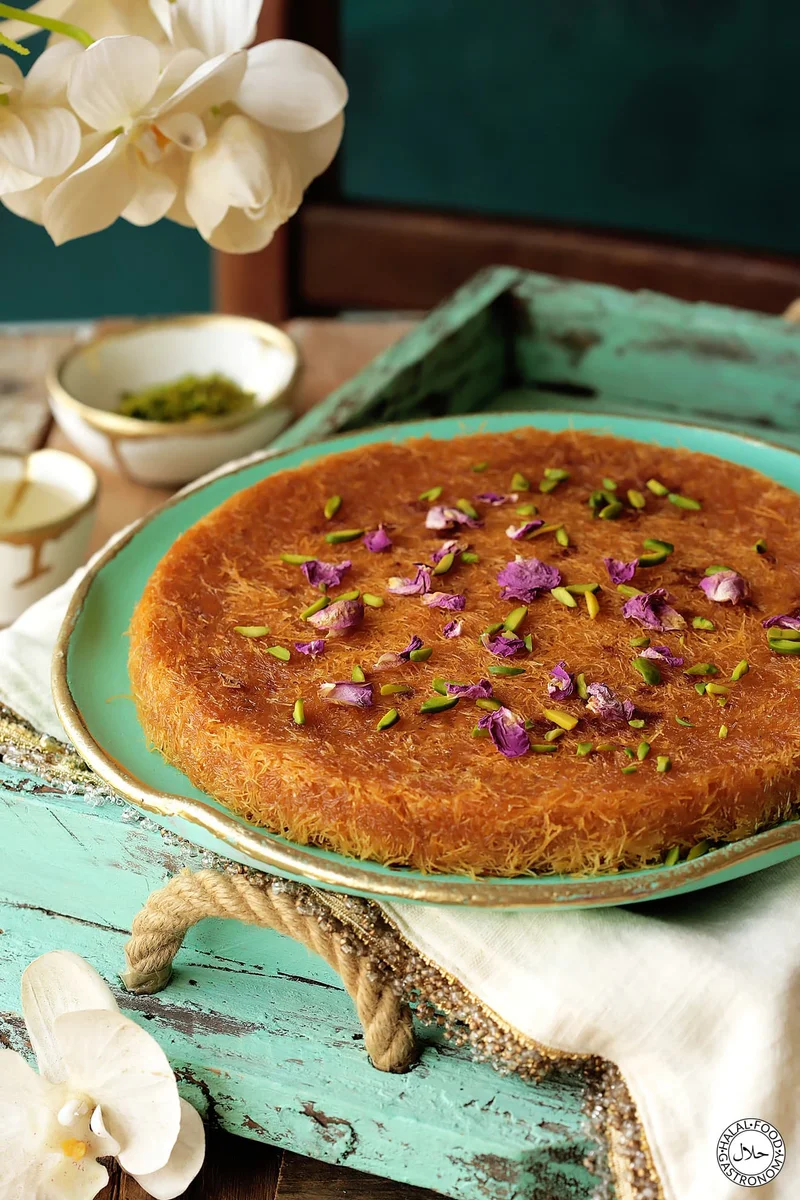
Ricotta knafeh pairs a creamy, gently tangy cheese centre with crisp, golden shredded pastry and fragrant sugar syrup. It makes a celebratory Middle Eastern-style dessert that is best served warm, while the pastry is still crunchy.
Ingredients
- 2 cups (400 g)granulated sugar
- 1 cup (about 240 ml)water
- a squeezefresh lemon juice
- ½ stickcinnamon stick (optional)
- 2cardamom pods, lightly crushed (optional)
- 500 gcreamy ricotta cheese
- ¼ cup (60 g)clotted cream or mascarpone
- 1 tablespoon (13 g), optionalgranulated sugar
- quantity not specifiedvanilla
- quantity not specifiedkunafa dough
- quantity not specifiedmelted ghee or butter
- quantity not specified, optionalpistachios
- quantity not specified, optionaldried rose petals
Instructions
- 1
Make the syrup
Put the sugar, water and a squeeze of lemon juice in a medium saucepan over high heat. Avoid stirring as it heats unless needed to help the sugar dissolve; once it boils, do not stir.
- 2
Simmer gently
Bring the syrup to a rolling boil, then immediately lower the heat to medium-low. Add the cinnamon stick and cardamom, if using, and simmer gently for 10 minutes. Set a timer; it should thicken slightly to about the consistency of hot maple syrup and will thicken further as it cools.
- 3
Cool the syrup
Take the pan off the heat and pour the syrup into a measuring jug or gravy boat. Let it cool to room temperature. Remove the cinnamon and cardamom for a subtler flavour, or leave them in for a stronger one.
- 4
Mix the filling
Stir the ricotta, cream, optional sugar and vanilla together in a medium bowl. Set the mixture aside.
- 5
Heat the oven
Set an oven shelf in the lower-middle position and preheat the oven to 200°C (390°F).
- 6
Prepare the tin
Generously grease a 30 cm round cake tin with ghee or butter. A muffin tin can also be used.
- 7
Break the pastry
Over a large bowl, cut or break the kunafa dough into pieces about 2.5 cm long. It is easiest to cut when semi-frozen, so freeze it for about an hour first, even if it is fresh. Let it return to room temperature before adding the ghee or butter.
- 8
Coat the strands
Pour the melted ghee or butter evenly over the pastry. Mix with your hands until all the strands are well coated.
- 9
Build the base
Put two-thirds of the pastry in the prepared tin and spread it across the base and up the sides. Build a raised edge to help contain the filling and protect it from burning. Press the pastry as firmly as possible with the flat bottom of a cup.
- 10
Add the filling
Spoon the cheese mixture over the pastry base and gently spread it into an even layer.
- 11
Cover with pastry
Scatter the remaining third of the pastry over the filling. Press it lightly to neaten and level the surface.
- 12
Bake until golden
Bake for 40 to 45 minutes, until the top and sides are deep golden brown. Check the colour at the side by gently pushing the pastry with a knife; a longer bake makes it crunchier.
- 13
Add the syrup
Take the knafeh out of the oven and immediately pour the cooled syrup over it, starting at the edge and moving in circles towards the centre so the surface is covered.
- 14
Rest and turn
Leave the knafeh for 5 to 10 minutes so the syrup can soak in, then turn it out onto a serving plate. Add pistachios and dried rose petals if you like.
- 15
Serve warm
Cut into wedges and serve hot or warm at room temperature. It is best on the day it is baked. Refrigerate leftovers and rewarm them in the oven or microwave.
What is ricotta knafeh?
Knafeh, also called kunafa, is a Middle Eastern dessert made with shredded pastry, a soft cheese filling and sugar syrup. This version uses ricotta for a creamy, lightly tangy centre, with cream adding richness.
The contrast is what makes it work: crisp, butter-coated strands around a soft filling, finished with fragrant syrup. Cinnamon and cardamom are optional, so the syrup can be lightly scented or more aromatic.
The syrup sets the finish
Sugar syrup: Let it come to the boil without unnecessary stirring, then leave it to simmer for the full 10 minutes. It should be a little thicker than water but still pourable; it will thicken more as it cools.
Spices: Half a cinnamon stick and two crushed cardamom pods give the syrup a gentle fragrance. Remove them after cooling if you want the flavour to stay subtle.
Keep the pastry strands distinct
Cutting: Kunafa dough is easier to break into short strands while semi-frozen. After cutting, let it come back to room temperature before mixing it with melted ghee or butter.
Coating: Work the fat through the strands by hand so it is distributed evenly. Uncoated patches are less likely to brown and crisp properly.
Build a sturdy base
Base and sides: Use about two-thirds of the pastry for the base, bringing it up the sides to form a shallow wall. That raised edge helps keep the ricotta filling in place as it bakes.
Pressing: Compress the base firmly with the flat bottom of a cup. Spread the filling gently, then add the remaining strands on top without pressing hard enough to squash the layers.
Look for deep golden colour
Doneness: Bake at 200°C for 40 to 45 minutes, checking the sides as well as the top. The pastry should be deep golden; a paler finish will be less crunchy.
Syrup timing: Pour the cooled syrup over the knafeh as soon as it leaves the oven. Rest it for 5 to 10 minutes before turning it out, giving the syrup time to soak in.
Serve it while warm
Knafeh is at its best hot or warm, when the pastry is crisp and the cheese centre is soft. Cut it into wedges and add pistachios or dried rose petals if you want a little garnish.
It is rich and sweet, so a small wedge can sit alongside fresh fruit or a plain, unsweetened drink. The recipe can also be baked in a muffin tin for individual portions, though the baking time may differ.
Recipe notes & tips
- If the sugar is slow to dissolve, give it a few stirs before the syrup boils, then stop stirring.
- Set a timer for the syrup’s 10-minute simmer so it does not reduce too far.
- Bring semi-frozen pastry back to room temperature before adding the melted ghee or butter.
- Press the base firmly and build up the sides to help contain the cheese filling.
- Pour the syrup over the knafeh immediately after baking, while it is still hot.
- Check the sides for a deep golden colour before taking the knafeh out of the oven.
Variations
- Skip the spices: Leave out the cinnamon and cardamom for a plain lemon-scented syrup.
- Keep the filling tangy: Omit the optional tablespoon of sugar from the ricotta mixture.
- Use mascarpone: Choose mascarpone instead of clotted cream for the filling.
- Make individual portions: Assemble the knafeh in a muffin tin instead of a large round tin.
- Add a garnish: Scatter pistachios and dried rose petals over the finished dessert.
Common mistakes to avoid
- Stirring once boiling: This can encourage crystallisation; stop stirring as soon as the syrup boils.
- Skipping the raised edge: The filling may escape during baking; bring the pastry up the sides of the tin.
- Leaving strands dry: They may not brown evenly; mix the melted ghee or butter through thoroughly.
- Using pastry straight from the freezer: It is harder to coat evenly; let the cut strands return to room temperature first.
- Pouring on syrup late: The hot pastry is ready to absorb it; add the syrup as soon as the tin comes out of the oven.
- Baking until pale: The strands may lack crunch; continue until the top and sides are deep golden.
How to store
Knafeh is best eaten on the day it is baked. Refrigerate leftovers and reheat them in the oven or microwave; the pastry may soften after storage.
Frequently asked questions
Can I make knafeh in a muffin tin?
Yes. The method allows for a muffin tin as an alternative to the 30 cm round tin. Check the individual portions for deep golden colour, as the timing may differ.
Can I leave out the cinnamon and cardamom?
Yes. Both are optional, and the syrup will still work without them. Removing the spices after cooling also gives a subtler flavour.
Should the syrup be hot or cold when I pour it on?
The recipe cools the syrup to room temperature before use. Pour it over the knafeh immediately after baking.
How do I know when the knafeh is done?
The top and sides should be deep golden brown after 40 to 45 minutes at 200°C. The recipe suggests checking the colour at the side with a knife.
Can I prepare the pastry in advance?
You can freeze the pastry for about an hour to make it easier to cut into short pieces. Let it return to room temperature before coating it with melted ghee or butter.
How should I serve leftover knafeh?
Store leftovers in the refrigerator and rewarm them in the oven or microwave. The dessert is at its best warm and freshly baked.
Cook it from the original
This recipe comes from halalfoodgastronomy.com. Their page has the author’s own photos, notes and tips — the best place to cook it from.
Open the recipe on halalfoodgastronomy.com