
Greek potato salad
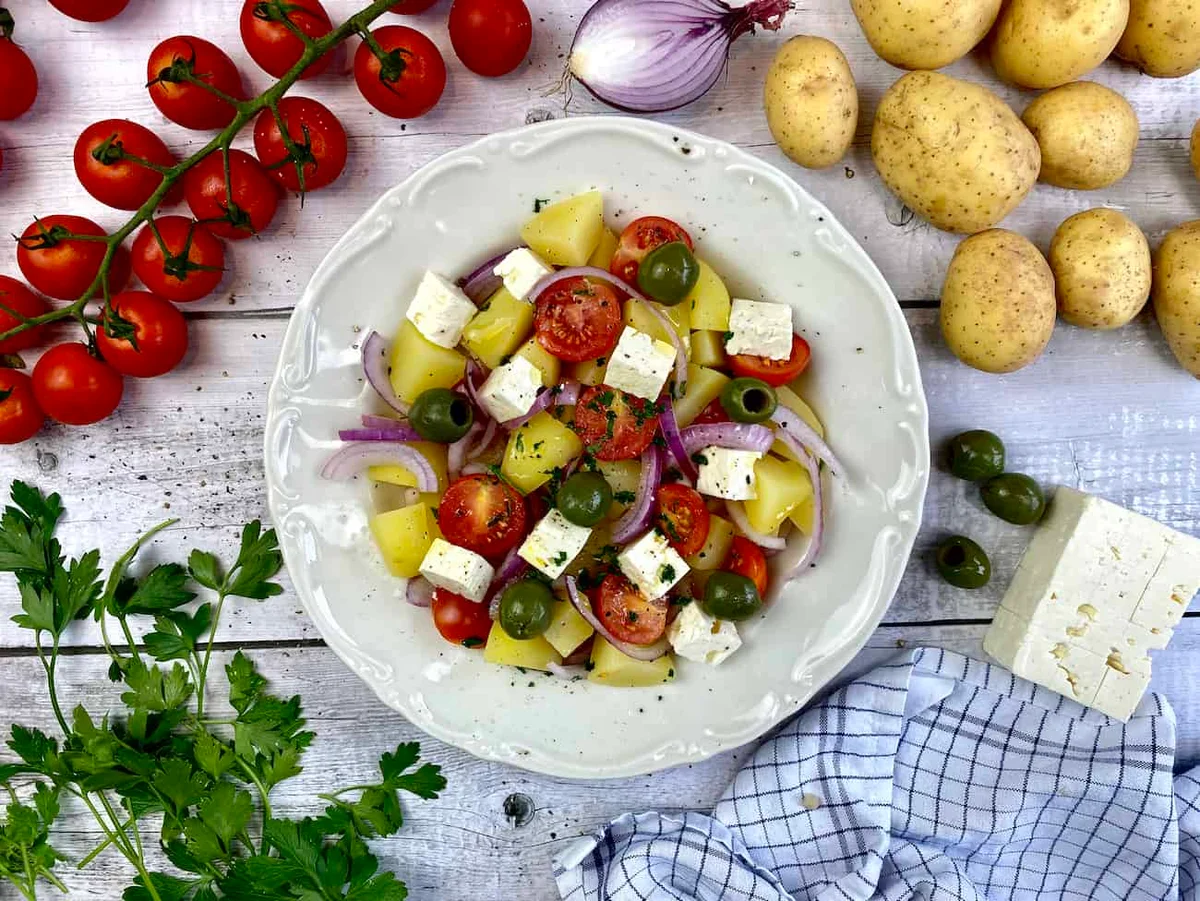
This Greek-style potato salad combines tender potatoes with tomatoes, red onion, feta and olives, finished with a parsley, vinegar and olive oil dressing. It is an easy way to bring familiar holiday or taverna flavours to a meal at home.
Ingredients
- 400 gpotatoes
- 100 gcherry tomatoes
- 70 gred onion
- 100 gfeta (or salad cheese)
- 40 gpitted olives
- 1 tbspvinegar
- 1 tbspolive oil
- ¼ bunchparsley
- somesalt
- somepepper
Instructions
- 1
Boil salted water
Bring a pan of water with a little salt to the boil.
- 2
Cook the potatoes
Wash and peel the potatoes, then cook them in the salted water for 15–20 minutes, depending on their size.
- 3
Prepare tomatoes
Wash the cherry tomatoes and cut them in half.
- 4
Cube the feta
Cut the feta into small cubes.
- 5
Slice the onion
Cut the onion into rings.
- 6
Cut the potatoes
When the potatoes are cooked, lift them out of the pan, rinse them briefly and cut them into cubes.
- 7
Combine ingredients
Put everything together in a large bowl.
- 8
Mix the dressing
Finely chop the parsley and mix it with the vinegar and oil to make the dressing.
- 9
Dress and season
Pour the dressing over the salad, add the olives and adjust the salt and pepper to taste.
- 10
Serve the salad
Enjoy.
What is Greek potato salad?
Greek potato salad is a hearty salad built around cooked potatoes and the salty, fresh flavours often associated with Greek cooking. This version pairs them with feta, olives, tomatoes, red onion and parsley.
The dish draws on familiar ingredients found in Greek home cooking and restaurant salads. Here, a simple vinegar-and-oil dressing brings the components together without masking their contrasting flavours.
Nutrition and macros by portion
The nutrition label shows one serving as written: 381 calories, 12g protein, 36g carbs, 22g fat.
| Portion | Adjustment | kcal | Protein | Carbs | Fat |
|---|---|---|---|---|---|
| Lighter | Use less feta and oil | 267 kcal | 8g | 25g | 15g |
| This serving | As written | 381 kcal | 12g | 36g | 22g |
| Hungry | Serve a larger portion | 572 kcal | 18g | 54g | 33g |
The potatoes provide most of the carbohydrates, while the olive oil, feta and olives contribute much of the fat. Feta supplies some of the protein, with smaller amounts from the other ingredients. Serve it with extra vegetables or a lean protein source to round out the plate.
Choosing the ingredients
Potatoes: choose potatoes that hold their shape after boiling, so they can be cut into cubes and mixed without turning to mash.
Feta and olives: both bring a savoury, salty note. Taste before adding much extra salt, as these ingredients can season the salad on their own.
Tomatoes and onion: halved cherry tomatoes add juiciness, while onion rings give the salad a sharper bite.
Getting the potatoes right
Size matters: the recipe gives a 15–20 minute cooking window because smaller potatoes will become tender sooner than larger ones. Start checking them towards the earlier end of that range.
Doneness: the potatoes should be tender enough to cut into cubes but still hold together. Drain and rinse them briefly as directed before cutting.
Making the dressing
Fresh parsley: chop it finely so it spreads through the dressing and salad rather than collecting in large pieces.
Vinegar and oil: mix these with the parsley, then pour the dressing over the ingredients. Toss gently so the potato cubes keep their shape.
Serving the salad
This salad can be served as a light main or as a side alongside grilled vegetables, fish or another simple savoury dish. Its potatoes make it filling, while the feta and olives add plenty of flavour.
For a more balanced plate, pair a portion with extra vegetables or a source of lean protein, if that suits the rest of your meal.
Timing and preparation
The potatoes take 15–20 minutes to cook, with the other ingredients prepared while they simmer. The overall recipe is listed as taking 20 minutes, so have a chopping board and large bowl ready before you start.
Keep the salad components in a large bowl and add the dressing once the potatoes are cut. Season at the end, after the feta and olives are mixed in.
Recipe notes & tips
- Cut the potatoes into similarly sized pieces so they cook at a similar rate.
- Begin checking the potatoes after 15 minutes, especially if they are small.
- Chop the parsley finely so it mixes evenly into the dressing.
- Add salt gradually because feta and olives are already salty.
- Mix the salad gently after adding the potatoes to help them keep their shape.
Variations
- Use salad cheese: swap it for feta if you prefer a milder cheese.
- Choose another vinegar: use a vinegar you enjoy in a simple dressing.
- Add extra parsley: increase the fresh herb flavour with more chopped parsley.
- Change the olives: use your preferred pitted variety for a different savoury note.
Common mistakes to avoid
- Overcooking the potatoes: check them from 15 minutes so they stay firm enough to cube.
- Cutting uneven pieces: keep the potato cubes similar in size for a more consistent texture.
- Adding too much salt: taste after adding the feta and olives, then season if needed.
- Rough mixing: fold the ingredients together gently to avoid breaking up the potatoes.
- Leaving the parsley in large pieces: chop it finely so it disperses through the dressing.
How to store
Store leftovers in a covered container in the fridge and eat within 2 days. Serve chilled or bring it briefly to room temperature; reheating is not necessary.
Frequently asked questions
Can I make this potato salad ahead?
Yes. You can prepare it in advance and keep it covered in the fridge. Taste and adjust the seasoning before serving.
How can I tell when the potatoes are cooked?
They should be tender enough to cut into cubes but still hold their shape. Cooking time is 15–20 minutes, depending on their size.
Can I use salad cheese instead of feta?
Yes. The ingredient list gives salad cheese as an alternative to feta.
Should I serve the salad warm or cold?
Either is suitable. You can serve it after preparing it or chill it first.
What goes well with Greek potato salad?
Serve it with grilled vegetables, fish or another savoury main. Extra vegetables can also make a fresh accompaniment.
Cook it from the original
This recipe comes from fittastetic.com. Their page has the author’s own photos, notes and tips — the best place to cook it from.
Open the recipe on fittastetic.com