
Couscous with courgettes and prawns
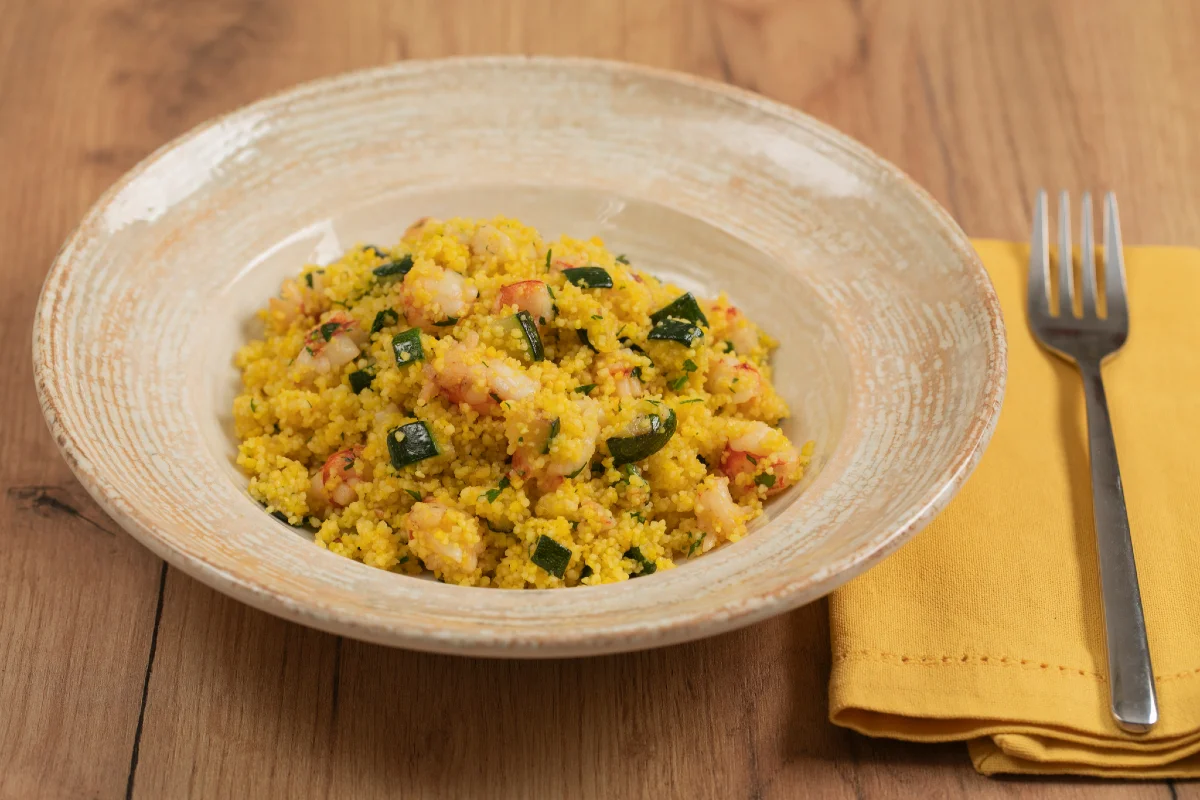
This couscous pairs tender courgettes and prawns with saffron, lemon zest and a homemade prawn-shell stock. It makes a colourful summer main or first course, with plenty of fresh flavour and a straightforward make-ahead broth.
Ingredients
- 300 gcouscous
- 400 gprawns, for cleaning
- 200 gcourgettes
- 1 clovegarlic
- 0.3 gsaffron
- as neededparsley
- as neededlemon zest
- as neededextra virgin olive oil
- as neededfine salt
- as neededblack pepper
- 50 gcarrot
- 50 gcelery
- 50 gonion
- 1 litrewater
- as neededextra virgin olive oil
- as neededcoarse salt
Instructions
- 1
Clean the prawns
Remove the heads from the prawns, then take off the shells and remove the intestinal tract.
- 2
Prepare the stock
Set the prawn shells and heads aside, and cut the prawn meat into pieces. Heat a little oil in a saucepan, add the roughly chopped carrot, celery and onion, then add the prawn remains.
- 3
Simmer the stock
Add coarse salt and 1 litre of water. Bring to the boil and cook for about 20–30 minutes, skimming off any foam that gathers on the surface.
- 4
Strain the stock
Strain the stock when it has finished cooking and weigh out 300 g for the couscous. Dissolve the saffron in a little warm water.
- 5
Soak the couscous
Put the couscous in a large bowl. Add the dissolved saffron, fine salt and 300 g of hot stock.
- 6
Rest and fluff
Cover the bowl with cling film and leave the couscous to rest for 5 minutes. Meanwhile, dice the courgettes; once the resting time is up, fluff the couscous with a fork.
- 7
Cook the topping
Heat a little oil with the garlic clove in a frying pan, then add the courgettes and season with salt and pepper. Cook over a medium heat for 15 minutes, add the prawns and cook for a further 5 minutes, then remove the garlic.
- 8
Combine the ingredients
Tip the courgettes and prawns into the bowl with the couscous. Add chopped parsley and a drizzle of oil.
- 9
Finish with lemon
Add lemon zest and mix everything together until combined.
What is couscous with courgettes and prawns?
Couscous is a North African staple made from small granules of wheat semolina, and it is also widely used in Mediterranean cooking. Here, it is served with courgettes and prawns for a summery dish scented with saffron and lemon.
The version works by using the prawn shells to make a quick stock, then soaking the couscous in a measured portion of it. That gives the grains savoury flavour before the vegetables and prawns are folded through.
Nutrition and macros by portion
The nutrition label shows one serving as written: 390 calories, 22g protein, 61g carbs, 8g fat.
| Portion | Adjustment | kcal | Protein | Carbs | Fat |
|---|---|---|---|---|---|
| Lighter | Use less olive oil | 273 kcal | 15g | 43g | 6g |
| This serving | As written | 390 kcal | 22g | 61g | 8g |
| Hungry | Serve a larger portion | 585 kcal | 33g | 92g | 12g |
The couscous supplies most of the carbohydrates, while the prawns contribute much of the protein. Olive oil accounts for most of the fat, though the amount is given as needed, so the actual total will vary. For a balanced plate, serve a generous portion of salad or extra vegetables alongside.
Make the prawn stock
Shells and heads: keep them for the stock rather than discarding them, as they bring flavour to the cooking liquid. The roughly cut carrot, celery and onion add a simple aromatic base.
Skimming: as the stock simmers for 20–30 minutes, remove any foam from the surface. Strain it well and weigh out 300 g for the couscous; the recipe does not call for using the whole litre.
Get the couscous texture right
Hot stock: pour the 300 g over the couscous along with the saffron and salt, then cover the bowl for 5 minutes. Keeping it covered lets the grains absorb the liquid evenly.
Fluffing: separate the grains with a fork after resting, before adding the topping. This helps avoid compacted clumps when everything is mixed together.
Cook the courgettes and prawns
Courgettes: dice them so the pieces cook through during their 15 minutes in the pan. Season as they cook, and stir occasionally so they soften without catching.
Prawns: add them after the courgettes have cooked, then give them a further 5 minutes. Remove the garlic clove at the end, as instructed, before combining the mixture with the couscous.
Season with saffron and lemon
Saffron: dissolve the 0.3 g in a little warm water before it goes into the couscous. This helps distribute its colour and aroma through the grains.
Lemon zest: add it at the end with chopped parsley, so its bright fragrance stays noticeable. Mix gently to bring the flavours together without crushing the softened courgettes.
Plan the timing
Stock first: the simmering takes about 20–30 minutes, followed by straining and measuring. You can prepare this part while organising the remaining ingredients.
Finish near serving: couscous needs only 5 minutes to rest, while the courgettes and prawns take about 20 minutes in the pan. The listed total time is 80 minutes, including the preparation involved in cleaning the prawns and making the stock.
What to serve alongside
Fresh sides: a crisp green salad or sliced tomatoes make a simple accompaniment and add a cool contrast to the warm couscous.
For a fuller spread: serve with grilled vegetables or a little extra lemon at the table. The couscous can also be served as a first course before a lighter main.
Recipe notes & tips
- Keep the prawn shells and heads for the stock before you start cooking.
- Weigh out 300 g of strained stock for the couscous rather than pouring in the full litre.
- Dissolve the saffron in warm water before adding it to the couscous.
- Cover the couscous for the full 5-minute resting time.
- Fluff the couscous with a fork before mixing in the topping.
- Add the lemon zest at the end for a fresh citrus aroma.
Variations
- Extra herbs: add a little more chopped parsley when serving.
- More citrus: serve with lemon wedges for anyone who wants extra tang.
- Vegetable mix: replace some of the courgette with diced peppers, keeping the same general cooking method.
- Softer flavour: use a little less lemon zest for a milder finish.
- Spicy note: add a pinch of chilli while cooking the courgettes.
Common mistakes to avoid
- Discarding the shells: keep the heads and shells to flavour the stock.
- Using all the stock: measure out 300 g for the couscous as directed.
- Skipping the cover: cover the bowl for 5 minutes so the couscous can absorb the liquid.
- Adding prawns too early: cook the courgettes for 15 minutes first, then add the prawns for the final 5 minutes.
- Leaving the garlic in: remove the clove after cooking the topping, as the method specifies.
- Mixing before fluffing: separate the rested couscous with a fork before adding the courgettes and prawns.
How to store
Cool leftovers promptly and store them in an airtight container in the fridge for up to 2 days. Reheat gently in a pan or microwave until piping hot, adding a small splash of water if the couscous seems dry.
Frequently asked questions
Can I use ready-peeled prawns?
You can, but the recipe uses the heads and shells to make stock. Without them, you will miss that source of flavour; use a suitable prepared seafood stock instead if needed.
Do I need to use the full litre of water?
No. The water is used to make the stock, and the recipe calls for 300 g of strained stock to soak the couscous.
How do I know when the prawns are cooked?
They should be opaque and firm after the additional 5 minutes of cooking. Avoid cooking them for longer than needed, as they can become tough.
Can I make the stock ahead?
Yes. Strain and cool it, then refrigerate it in a covered container and weigh out the 300 g needed when you prepare the couscous.
Can I serve this dish cold?
It can be eaten at room temperature, though the method serves it after combining the warm couscous with the cooked topping. Chill leftovers promptly if you plan to eat them cold later.
Cook it from the original
This recipe comes from giallozafferano.es. Their page has the author’s own photos, notes and tips — the best place to cook it from.
Open the recipe on giallozafferano.es