
Classic Greek salad
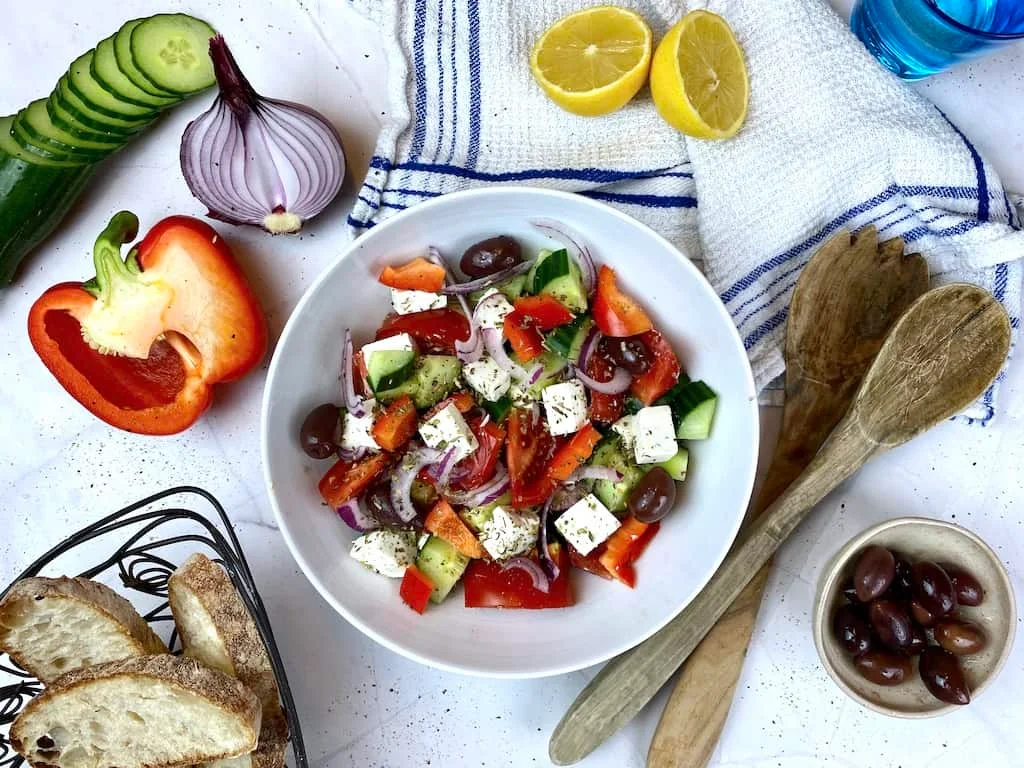
A simple Greek salad of tomatoes, cucumber, pepper, red onion, sheep’s cheese and Kalamata olives, dressed with lemon and olive oil. It is quick to prepare and brings a fresh, summery feel to the table.
Ingredients
- 250 gtomatoes
- 250 gcucumber
- 150 gpepper
- 75 gred onion
- 100 gsheep’s cheese (or light salad cheese)
- 40 gpitted black Kalamata olives
- 1, juicedlemon
- 15 ml (1 tbsp)olive oil
- to tasteoregano
- a littlesalt
- a littlepepper
Instructions
- 1
Wash the vegetables
Wash the vegetables.
- 2
Quarter the tomatoes
Cut the tomatoes into quarters.
- 3
Slice the pepper
Cut the pepper into strips.
- 4
Cut the cucumber
Quarter the cucumber, then cut it into cubes.
- 5
Slice the onion
Cut the onion into rings.
- 6
Cube the cheese
Cut the feta into cubes.
- 7
Combine the salad
Put everything in a large bowl.
- 8
Juice the lemon
Halve and squeeze the lemon, preferably into a small bowl.
- 9
Mix the dressing
Mix the olive oil with the lemon juice, salt and pepper, then pour it over the salad.
- 10
Finish with oregano
Sprinkle a little oregano over the salad and serve.
What is Greek salad?
Greek salad, often called horiatiki, is a familiar combination of crisp vegetables, olives and salty cheese. It is associated with Greece, where ripe produce and a simple dressing make the ingredients the focus.
This version keeps the preparation straightforward: the vegetables are cut, tossed with lemon and olive oil, then finished with oregano. Sheep’s cheese adds a creamy, savoury contrast to the fresh vegetables.
Nutrition and macros by portion
The nutrition label shows one serving as written: 147 calories, 6g protein, 8g carbs, 9g fat.
| Portion | Adjustment | kcal | Protein | Carbs | Fat |
|---|---|---|---|---|---|
| Lighter | Use light salad cheese | 103 kcal | 4g | 6g | 6g |
| This serving | As written | 147 kcal | 6g | 8g | 9g |
| Hungry | Add bread on the side | 221 kcal | 9g | 12g | 14g |
The tomatoes, cucumber, pepper and onion provide most of the carbohydrates, while the sheep’s cheese contributes protein and much of the fat. Olives and olive oil add further fat; serve it with bread or potatoes if you want a more filling, balanced plate.
Choosing the ingredients
Tomatoes: Choose ripe tomatoes that still hold their shape when quartered. Their juices mingle with the lemon dressing in the bowl.
Cheese: Sheep’s cheese gives the salad its characteristic tang and saltiness; the listed light salad cheese is an alternative. Cube it carefully so the pieces remain distinct.
Olives: Pitted Kalamata olives are easy to eat and bring a briny, fruity flavour. Drain them well if they are packed in liquid.
Cutting for a good mix
Even pieces: Keep the tomato quarters, pepper strips and cucumber cubes fairly similar in size, so each serving gets a mix of vegetables.
Onion rings: Thin rings distribute the onion through the salad without overwhelming the other ingredients. Separate the rings as you add them to the bowl.
Getting the dressing right
Fresh lemon: Squeeze the lemon into a small bowl first to catch any pips. Mixing it with the olive oil, salt and pepper before pouring helps spread the seasoning.
Seasoning: Add salt sparingly at first, since both the cheese and olives can be salty. Taste the salad after dressing and adjust the seasoning if needed.
Texture and timing
This salad needs no cooking; the vegetables should stay crisp and the cheese should keep its shape. Prepare it close to serving time for the freshest texture.
The method takes about 20 minutes in total. Once dressed, the tomatoes will gradually release more liquid, so avoid leaving the salad sitting for long.
What to serve with it
Serve the salad as a light lunch or alongside grilled vegetables, fish or meat. Bread is useful for soaking up the lemony juices at the bottom of the bowl.
For a more substantial meal, pair it with a filling side such as potatoes or cooked grains, while keeping the salad as the fresh, crunchy part of the plate.
Recipe notes & tips
- Use ripe but firm tomatoes so they are easy to cut and serve.
- Juice the lemon into a small bowl to catch any seeds.
- Start with a little salt, then taste before adding more.
- Cut the onion into thin rings for a gentler bite.
- Dress the salad shortly before serving to keep the vegetables crisp.
Variations
- Add cucumber ribbons: Use a vegetable peeler for long, thin strips instead of cubes.
- Use green pepper: Swap in green pepper for a slightly more savoury flavour.
- Add fresh herbs: Scatter chopped parsley over the salad with the oregano.
- Include capers: Add a small spoonful for extra briny flavour.
- Serve with bread: Offer crusty bread to make a more substantial meal.
Common mistakes to avoid
- Over-salting early: The cheese and olives are already salty, so season lightly and taste before adding more.
- Dressing too soon: The tomatoes release liquid as they stand; add the dressing close to serving.
- Cutting unevenly: Very large pieces are awkward to eat alongside smaller ones; keep the cuts fairly consistent.
- Crushing the cheese: Toss gently after adding it so the cubes remain intact.
- Skipping the lemon check: Squeeze the lemon into a small bowl first and remove any pips before mixing the dressing.
How to store
Store leftovers in an airtight container in the fridge and eat within a day for the best texture. The vegetables will soften and release liquid as they sit, so drain off excess before serving; this salad is best eaten cold and does not need reheating.
Frequently asked questions
Can I make Greek salad ahead?
You can wash and cut the vegetables ahead, but keep them chilled and undressed. Mix in the dressing shortly before serving to help the vegetables stay crisp.
Can I use another type of cheese?
Yes. The recipe allows light salad cheese as an alternative to sheep’s cheese. Choose a cheese with enough flavour and firmness to hold its shape when cubed.
What can I use instead of Kalamata olives?
Other pitted black olives can work, though the flavour may be less fruity. Drain them before adding them to the salad.
How can I make the onion milder?
Slice it thinly and separate the rings before adding them. You can also use less onion if you prefer a gentler flavour.
Is this salad suitable as a main meal?
It can make a light meal, but may not be filling enough on its own for everyone. Serve it with bread or a hearty side such as potatoes.
Cook it from the original
This recipe comes from fittastetic.com. Their page has the author’s own photos, notes and tips — the best place to cook it from.
Open the recipe on fittastetic.com