
Pan de muerto
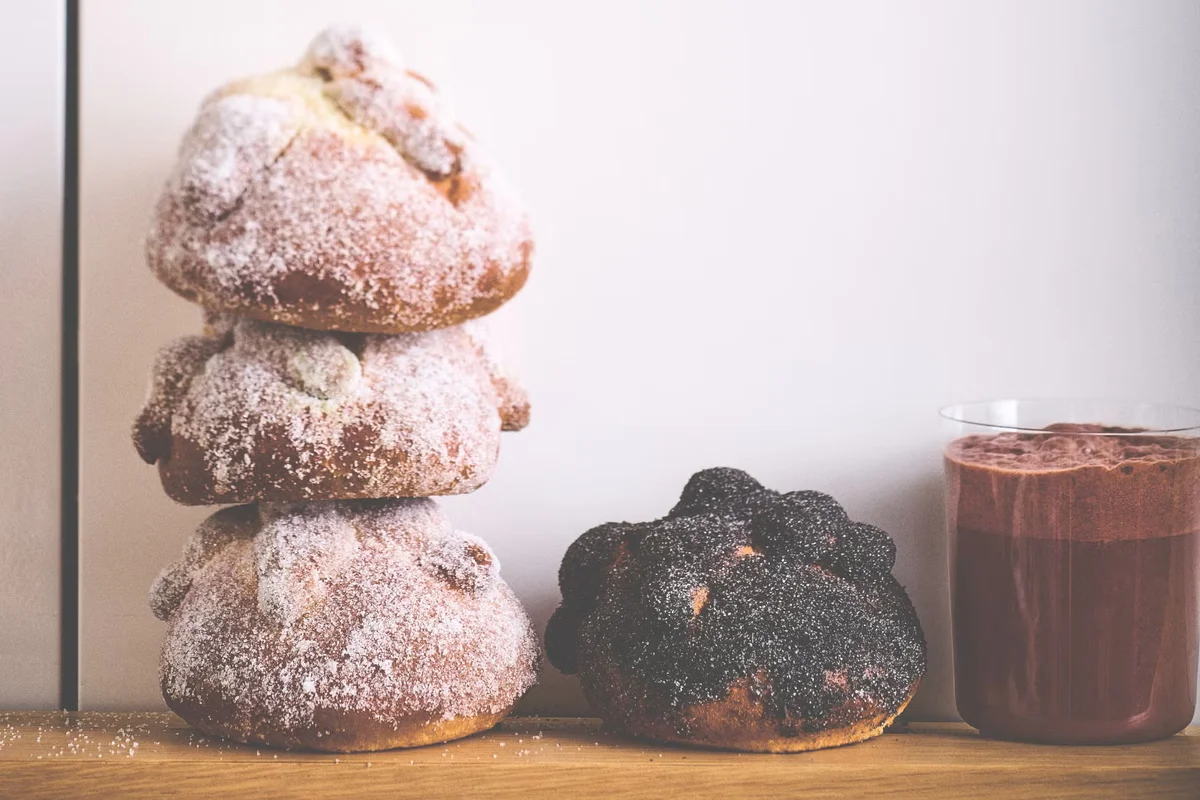
Pan de muerto is a soft, enriched Mexican bread traditionally associated with Día de Muertos. This version gets its tender crumb from a slow, buttery dough and its distinctive look from crossed dough “bones” on each loaf.
Ingredients
- 20 gyeast
- 300 gwheat flour
- 350 mlmilk
- 200 gwhole eggs
- 60 gegg yolks
- 700 gflour
- 12 gsalt
- 190 gsugar
- 200 gbutter
- 10 mlorange blossom water
- 1orange
Instructions
- 1
Make the sponge
In a bowl, mix the yeast, wheat flour and milk until smooth. Cover the bowl and leave at room temperature for 30 minutes, until bubbles appear.
- 2
Mix the dough
After the 30-minute rest, gradually add the whole eggs, then the egg yolks and flour. Add the salt and work the dough until it starts to become elastic. Mix in the sugar until fully incorporated, then gradually add the butter, orange blossom water and finely grated orange zest. Keep kneading until the dough pulls away from the work surface.
- 3
Let it rise
Shape the dough into a ball and place it in a lightly greased bowl. Cover and leave at room temperature for 1 hour, until doubled in volume.
- 4
Divide and shape
Turn the dough out onto a floured work surface and press out the air. Divide it into 4 equal portions, shape them into balls, and take one fifth of the dough from each ball for decoration. Divide the reserved dough into 16 small balls.
- 5
Form the bones
Roll each small ball into a short rope, then press it with your fingers to give it a bone-like shape.
- 6
Assemble the loaves
Re-form the 4 main dough portions into balls and brush their surfaces with water. Arrange 4 small bones in a cross on each loaf, stretching them slightly if needed to cover the surface.
- 7
Proof and bake
Leave the loaves to rise for 40 minutes to 1 hour, until doubled in volume. Bake in an oven preheated to 170 °C for 25 minutes, until golden.
What is pan de muerto?
Pan de muerto is a Mexican sweet bread traditionally made for Día de Muertos, when families remember loved ones and prepare offerings. Its round shape and bone-like dough decorations are characteristic features.
This recipe uses a yeast sponge and an enriched dough with butter, eggs, orange zest and orange blossom water. The result is fragrant, tender bread shaped into four loaves.
Nutrition and macros by portion
The nutrition label shows one serving as written: 6588 calories, 147g protein, 967g carbs, 210g fat.
| Portion | Adjustment | kcal | Protein | Carbs | Fat |
|---|---|---|---|---|---|
| Lighter | Smaller loaf portion | 4612 kcal | 103g | 677g | 147g |
| This serving | As written | 6588 kcal | 147g | 967g | 210g |
| Hungry | Larger bread portion | 9882 kcal | 221g | 1451g | 315g |
The flour and sugar provide most of the carbohydrates, while butter supplies much of the fat; eggs, yolks and flour contribute protein. Serve a smaller piece with fruit or yoghurt for a more balanced plate. The recipe is listed as one serving, although its method shapes four loaves.
The yeast sponge
Yeast and flour: the first 300 g of wheat flour is mixed with the yeast and milk to make the sponge. Give it the full 30 minutes and look for bubbles before moving on.
Room temperature: a moderately warm, draught-free spot helps the sponge get going. The visible bubbles are a more useful cue than rushing it by the clock.
Building the enriched dough
Eggs and flour: add the eggs, yolks and remaining flour gradually, then knead with the salt until the dough starts to feel elastic. Adding the sugar after this stage helps it incorporate into the developing dough.
Butter and flavour: add the butter in stages, followed by the orange blossom water and grated orange zest. Keep kneading until the dough comes away from the work surface rather than adding extra flour straight away.
Shaping the bones
Four loaves: divide the dough into equal portions, setting aside one fifth of each for decoration. The recipe makes four individual breads, each topped with four crossed bones.
Bone texture: roll each small piece into a rope and press along it with your fingers to create ridges. Brush the loaf with water so the decorations adhere, and stretch the bones gently only if they need to reach across the top.
Proofing and baking cues
First rise: the dough should double in volume during its 1-hour rest. Keep it covered so its surface does not dry out.
Second rise: after shaping, allow 40 minutes to 1 hour, again looking for the loaves to double. Bake at 170 °C for 25 minutes, until the tops are golden.
Serving the bread
Let the loaves cool before serving so the crumb has time to settle. Pan de muerto is enjoyable on its own, with coffee or hot chocolate, or alongside fruit.
The orange and orange blossom notes are delicate, so pair the bread with drinks or accompaniments that do not overwhelm them.
Recipe notes & tips
- Weigh the ingredients carefully, especially the yeast and salt.
- Add the butter gradually so it has time to work into the dough.
- Grate only the orange zest, avoiding the bitter white pith.
- Keep the dough covered during both rises to prevent a dry surface.
- Use a light brush of water to help the bone decorations stick.
- Check for a golden finish at 25 minutes, as oven performance can vary.
Variations
- Citrus emphasis: add a little more orange zest for a brighter aroma.
- Cinnamon pairing: serve the bread with a lightly spiced hot drink.
- Smaller loaves: divide the dough into more portions and adjust baking time, checking for a golden finish.
- Decorative finish: arrange the dough bones in a clear cross on each loaf.
- Orange blossom: reduce the orange blossom water slightly for a more subtle floral note.
Common mistakes to avoid
- Skipping the sponge rest: wait until bubbles appear before adding the remaining ingredients.
- Adding butter all at once: work it in gradually so the dough can absorb it.
- Adding extra flour too soon: keep kneading until the dough pulls away from the surface before correcting its texture.
- Overproofing: bake once the shaped loaves have doubled rather than leaving them indefinitely.
- Loose decorations: brush the loaf with water and press the dough bones gently into place.
How to store
Keep the cooled bread in an airtight container at room temperature and eat within 2 days for the best texture. Refresh briefly in a low oven, or freeze well-wrapped loaves for up to 2 months and thaw before serving.
Frequently asked questions
How many loaves does this recipe make?
The method divides the dough into 4 equal portions, so it makes four loaves. The supplied serving count is 1, which does not match the yield described in the method.
How do I know the sponge is ready?
After 30 minutes at room temperature, bubbles should be visible. If the surface is still inactive, give it a little more time before continuing.
Why is my dough sticky?
This is an enriched dough with eggs, milk and butter, so it can feel soft and tacky. Knead it until it begins to pull away from the work surface before considering any adjustment.
Can I prepare the dough ahead?
The recipe specifies room-temperature rises rather than an overnight rest. For the most reliable result, follow those rises and bake the same day.
Can I freeze pan de muerto?
Yes. Cool the loaves completely, wrap them well and freeze for up to 2 months. Thaw at room temperature before serving.
Cook it from the original
This recipe comes from finedininglovers.fr. Their page has the author’s own photos, notes and tips — the best place to cook it from.
Open the recipe on finedininglovers.fr