
San Sebastian Cheesecake
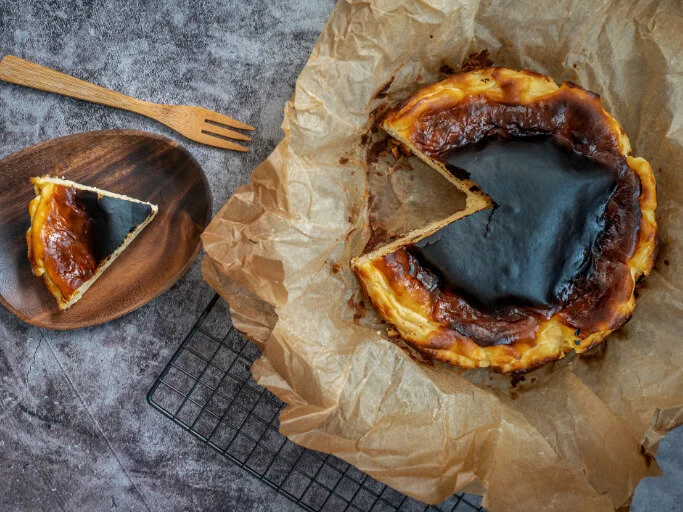
San Sebastian cheesecake is a rich, crustless cheesecake with a deeply browned top and a soft, creamy centre. This version is baked in a lined springform tin, rested for several hours and served with a simple chocolate sauce.
Ingredients
- 190 g (1 cup)sugar
- 700 g (1 1/2 pounds; 3 cups), at room temperaturecream cheese
- 30 g (1/4 cup)cornflour or potato starch
- 5, at room temperatureeggs
- 440 g (1 3/4 cups)double cream
- 170 g (1 cup), choppedchocolate
- 60 ml (1/4 cup)double cream
Instructions
- 1
Preheat the oven
Heat the oven to 180°C (350°F).
- 2
Line the tin
Line an 20 cm (8-inch) springform tin with baking parchment.
- 3
Mix the batter
In a mixer, beat the sugar and room-temperature cream cheese for 15 seconds. Add the starch and mix it in, then add the eggs gradually, one at a time. Mix in the cream.
- 4
Bake and rest
Pour the batter into the prepared tin and bake for exactly 31 minutes. Leave it to cool and rest in the tin at room temperature for at least 4 hours.
- 5
Serve with sauce
Serve the cheesecake with chocolate sauce.
- 6
Melt the chocolate
To make the sauce, microwave the chocolate until just melted, about 1 minute. Stir in the cream gradually until the mixture is smooth.
What is San Sebastian cheesecake?
San Sebastian cheesecake comes from the Basque city of Donostia-San Sebastián in Spain. Unlike many cheesecakes, it is made without a biscuit base and is known for a browned surface and a tender, creamy middle.
This version keeps the batter simple, using cream cheese, eggs, cream and starch, then adds a chocolate sauce for serving. Its long room-temperature rest helps the centre settle before slicing.
Nutrition and macros by portion
The nutrition label shows one serving as written: 762 calories, 11g protein, 48g carbs, 61g fat.
| Portion | Adjustment | kcal | Protein | Carbs | Fat |
|---|---|---|---|---|---|
| Lighter | Less chocolate sauce | 533 kcal | 8g | 34g | 43g |
| This serving | As written | 762 kcal | 11g | 48g | 61g |
| Hungry | Larger cheesecake slice | 1143 kcal | 17g | 72g | 92g |
The cream cheese, double cream and chocolate provide most of the fat, while the sugar and starch contribute much of the carbohydrate. Cream cheese and eggs supply some protein. Balance a slice with fresh fruit, or serve a smaller piece after a meal with fruit alongside.
The key ingredients
Cream cheese: bring it to room temperature so it beats smoothly with the sugar and is less likely to leave lumps.
Starch: cornflour or potato starch helps the egg-rich batter hold together while keeping the texture soft.
Cream: double cream enriches the cake and also forms the base of the chocolate sauce. Use the larger quantity in the batter and keep the smaller amount for the sauce.
Mixing the batter
Start gently: the recipe calls for just 15 seconds of beating the sugar and cream cheese before adding the starch. Mix the eggs in one at a time so each can be incorporated before the next goes in.
Scrape the bowl if needed to bring together any unmixed patches, but avoid prolonged mixing once the eggs are added. The finished batter should look even and pourable.
Baking and resting
Timing: bake at 180°C (350°F) for exactly 31 minutes, as specified in the method. Since ovens and tins can behave differently, the top and centre will provide useful visual cues alongside the stated time.
Rest: leave the cake in its tin at room temperature for at least 4 hours after baking. It will be delicate while warm, so wait until it has rested before removing the tin or cutting slices.
Making the chocolate sauce
Melt carefully: microwave the chopped chocolate for about 1 minute, stopping when it has just melted. If your microwave heats unevenly, pause to stir and check it rather than letting the chocolate scorch.
Add the cream gradually and stir until smooth. A slow addition makes it easier to combine the cream and chocolate into a cohesive sauce.
Serving ideas
Cut the rested cheesecake into 8 portions and spoon over the chocolate sauce just before serving. The cake is rich, so small slices can still make a satisfying dessert.
For contrast, serve it with fresh berries or sliced fruit on the side. Keep any extra sauce separate so each person can add the amount they want.
Recipe notes & tips
- Bring the cream cheese and eggs to room temperature before mixing.
- Measure the starch carefully so it incorporates evenly into the batter.
- Add the eggs one at a time, mixing each in before adding the next.
- Line the springform tin thoroughly so the cake is easier to release after resting.
- Make the sauce shortly before serving so it is easy to drizzle.
Variations
- Use potato starch: swap it for the cornflour in the same stated quantity.
- Add citrus: stir finely grated lemon or orange zest into the batter.
- Serve with berries: add fresh berries alongside each slice for a tart contrast.
- Change the chocolate: use dark or milk chocolate for a different sauce flavour.
- Skip the sauce: serve the cheesecake plain if you prefer its creamy, browned flavour on its own.
Common mistakes to avoid
- Cold cream cheese: it can leave lumps in the batter; let it soften to room temperature first.
- Adding eggs together: they may be harder to incorporate evenly; mix them in one at a time.
- Overmixing: prolonged beating can make the batter foamy; mix only until the ingredients are combined.
- Removing it too soon: the warm cake is fragile; leave it in the tin for at least 4 hours at room temperature.
- Overheating chocolate: it can become grainy or scorched; stop microwaving as soon as it has just melted.
How to store
Cover and refrigerate leftover cheesecake for up to 3 days. Store the chocolate sauce separately, then warm it gently until pourable before serving; the cake can be eaten chilled or left briefly at room temperature to soften.
Frequently asked questions
Can I make San Sebastian cheesecake ahead?
Yes. Bake it and let it rest in the tin for at least 4 hours, then cover and refrigerate it. Make or warm the chocolate sauce when you are ready to serve.
How do I know when the cheesecake is baked?
Follow the recipe’s specified baking time of exactly 31 minutes at 180°C (350°F). The centre is intended to remain soft, so it may not look as firm as a conventional baked cheesecake.
Why does the cake need to rest in the tin?
The cake is delicate while warm and needs time to cool and settle. The method specifies at least 4 hours at room temperature before serving.
Can I use cornflour instead of potato starch?
Yes. The recipe gives cornflour and potato starch as alternatives; use 30 g of either.
Can I serve it without chocolate sauce?
Yes. The sauce is served alongside the cheesecake rather than mixed into the batter, so the cake can be served plain.
Can I freeze this cheesecake?
The recipe does not specify freezing. For the best texture, refrigerate leftovers and eat them within 3 days.
Cook it from the original
This recipe comes from aish.com. Their page has the author’s own photos, notes and tips — the best place to cook it from.
Open the recipe on aish.com