
Fregola with seafood and samphire
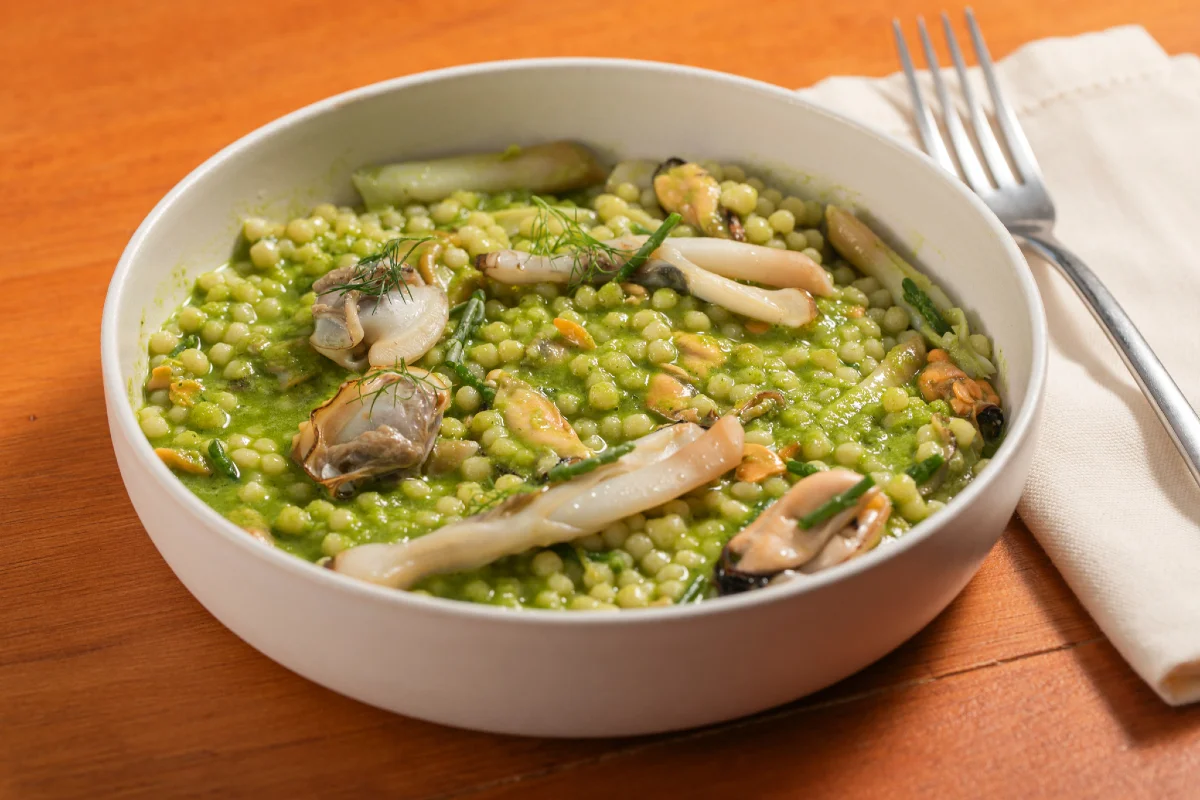
This Sardinian-inspired fregola is cooked risotto-style with shellfish cooking liquor, then finished with mussels, lemon and a vivid salicornia emulsion. It makes a special but practical first course, with the seafood opened separately so its juices can flavour the pasta.
Ingredients
- 320 gmedium fregola
- 300 gcleaned mussels
- 300 gcleaned clams
- 200 gcleaned razor clams
- 200 gcleaned cockles
- 100 gsamphire
- 2 clovesgarlic
- 1lemon, zest
- as neededextra-virgin olive oil
- as neededfine salt
- as neededblack pepper
- 50 gsamphire
- 70 gsunflower oil
- 5 gdill
- 5 gwild fennel
- 1 tablespoonwater
- as neededdill
- as neededwild fennel
Instructions
- 1
Open the shellfish
Warm a splash of extra-virgin olive oil in a frying pan with one unpeeled garlic clove. Add the razor clams and clams, then the cockles. Cover and cook over medium-low heat, stirring occasionally, until the shells open; transfer them to a bowl.
- 2
Strain the juices
Remove the shellfish from their shells. Strain the cooking liquid through a sieve lined with a clean tea towel to catch any grit, and reserve it.
- 3
Cook the mussels
In a second pan, warm another splash of oil with the other unpeeled garlic clove. Add the cleaned mussels, cover and cook over high heat until they open. Transfer them to a bowl, remove the shells, and strain their cooking liquid into the liquid from the other shellfish.
- 4
Blend the emulsion
Blanch 50 g of samphire in boiling water for 30 seconds, drain it and cool it straight away in iced water. Put it in a blender with the dill, wild fennel and 1 tablespoon of the shellfish cooking liquid. Add a splash of iced water and blend, pouring in the sunflower oil in a thin stream until the sauce is smooth, fluid and bright green.
- 5
Toast the fregola
Toast the fregola in a dry saucepan until the grains feel warm to the touch. Begin cooking it like risotto, adding the strained shellfish liquid one ladleful at a time and alternating with hot water to balance the saltiness.
- 6
Finish the pasta
After about 6–7 minutes, add the roughly chopped 100 g of samphire. Continue cooking the fregola, adding liquid as needed, until it has cooked for 12–14 minutes in total; the exact time depends on the grain size. With 1 minute left, stir in 3–4 tablespoons of the samphire emulsion and mix vigorously. Take the pan off the heat and fold in three-quarters of the shellfish.
- 7
Season and serve
Add the lemon zest and 1 tablespoon of the emulsion, then mix gently. Serve the fregola in the centre of each plate, topped with the reserved whole shellfish, a few dill or fresh wild fennel sprigs, black pepper, a drizzle of raw olive oil and a final scattering of lemon zest. Serve immediately.
What is fregola with seafood and samphire?
Fregola is a toasted Sardinian pasta made as small, irregular grains, often cooked in liquid much like a risotto. This version brings together shellfish, lemon and samphire, a salty coastal plant also known as sea asparagus.
The method builds flavour in stages: shellfish juices become the cooking liquid, while a blended samphire sauce adds colour and a fresh, herbal finish. Toasting the fregola first helps the grains keep their shape as they absorb the liquid.
Nutrition and macros by portion
The nutrition label shows one serving as written: 500 calories, 27g protein, 67g carbs, 18g fat.
| Portion | Adjustment | kcal | Protein | Carbs | Fat |
|---|---|---|---|---|---|
| Lighter | Use less finishing oil | 350 kcal | 19g | 47g | 13g |
| This serving | As written | 500 kcal | 27g | 67g | 18g |
| Hungry | Add a larger fregola portion | 750 kcal | 41g | 101g | 27g |
Fregola provides most of the carbohydrates, while the shellfish contribute protein and the sunflower and olive oils supply much of the fat. The shellfish liquor and samphire can also make the dish salty, so taste before seasoning; balance the plate with a generous side of unsalted vegetables or salad.
Shellfish and cooking liquor
Separate batches: the clams, razor clams and cockles open together over medium-low heat, while the mussels are cooked separately over high heat. This keeps the cooking manageable and lets you collect the juices from each pan.
Straining matters: shellfish liquor can contain sand, so pass it through a cloth-lined sieve before using it. Taste it before adding salt, since the liquor and samphire can both be quite salty.
Two kinds of samphire
For the emulsion: blanching 50 g for 30 seconds softens it while keeping its green colour. Cooling it immediately in iced water helps stop the cooking before it goes into the blender.
For the pasta: the remaining 100 g is roughly chopped and added part-way through cooking. This gives the fregola distinct pieces of samphire as well as the blended sauce stirred in at the end.
Risotto-style cooking
Toast first: heat the dry fregola until the grains feel warm to the touch, then start adding liquid. Add the strained shellfish liquor a ladleful at a time, alternating with hot water to moderate its salinity.
Keep checking: the recipe gives a total cooking time of 12–14 minutes, depending on grain size. Add more liquid as needed and taste near the end; the fregola should be cooked through but still hold its shape.
Making the emulsion
Blend the blanched samphire with the herbs and a tablespoon of shellfish liquid, then add iced water. Pour in the sunflower oil gradually while the blender runs to create a fluid, glossy sauce.
Stir in 3–4 tablespoons during the final minute of cooking, then add another tablespoon off the heat. Keep the remaining emulsion for finishing the plates.
Serving the dish
Fold in three-quarters of the shellfish gently so it warms through without breaking up. Arrange the reserved whole shellfish on top for a clear view of what is in the dish.
Serve straight away with lemon zest, black pepper, a little olive oil and fresh dill or wild fennel. A crisp green salad or simply dressed vegetables make a light accompaniment to this substantial first course.
Recipe notes & tips
- Keep the shellfish cooking liquids separate until they have each been strained, then combine them.
- Use iced water to cool the blanched samphire promptly before blending.
- Pour the sunflower oil into the blender slowly to help the emulsion turn smooth and glossy.
- Keep hot water ready so you can add it as the fregola cooks and adjust the overall saltiness.
- Reserve the prettiest whole shellfish for the final plates.
- Taste the cooking liquid before adding any fine salt.
Variations
- Herb swap: use more dill in place of some of the wild fennel if that is what you have.
- Citrus finish: add a little extra lemon zest at the table for a brighter finish.
- Samphire garnish: reserve a few small pieces of the 100 g portion to scatter over the finished plates.
- Shellfish choice: use a different mix of cleaned shellfish while keeping the total quantity similar.
- More herbs: finish with extra fresh dill or wild fennel for a stronger herbal aroma.
Common mistakes to avoid
- Unstrained liquor: grit can spoil the texture, so pass the shellfish juices through a cloth-lined sieve.
- Too much salt: shellfish liquor and samphire are naturally salty, so taste before seasoning.
- Adding all the liquid at once: the fregola cooks more evenly when liquid is added a ladleful at a time.
- Overcooking the shellfish: remove each batch as soon as the shells open so it does not toughen.
- Adding the emulsion too early: stir it in during the final minute as directed to retain its fresh colour and flavour.
How to store
For best texture, serve this dish immediately. Refrigerate leftovers in a covered container for up to 1 day, then reheat gently in a pan with a splash of water; avoid repeated reheating, and discard any shellfish that did not open during cooking.
Frequently asked questions
Can I make the samphire emulsion ahead?
You can blend it shortly before cooking and keep it covered in the fridge. Stir or blend it again briefly before using if it separates.
How do I know when the shellfish are ready?
Cook them until their shells open, following the separate cooking stages in the method. Discard any that remain closed after cooking.
Can I use ordinary pasta instead of fregola?
Fregola is central to the dish’s texture and is cooked by absorbing the shellfish liquid. Another small pasta may work, but its cooking time and liquid needs will differ.
Why alternate shellfish liquor with hot water?
The strained liquor gives the fregola seafood flavour, while hot water helps keep the dish from becoming overly salty. Add both gradually as the grains cook.
What can I serve alongside it?
A simply dressed green salad or plain vegetables complement the rich shellfish and pasta without competing with the lemon and herbs.
Can I leave out the samphire?
You can, but it provides the dish’s distinctive coastal, salty flavour and green emulsion. If omitting it, taste carefully and adjust the seasoning and herbs.
Cook it from the original
This recipe comes from giallozafferano.es. Their page has the author’s own photos, notes and tips — the best place to cook it from.
Open the recipe on giallozafferano.es