
Venison roast
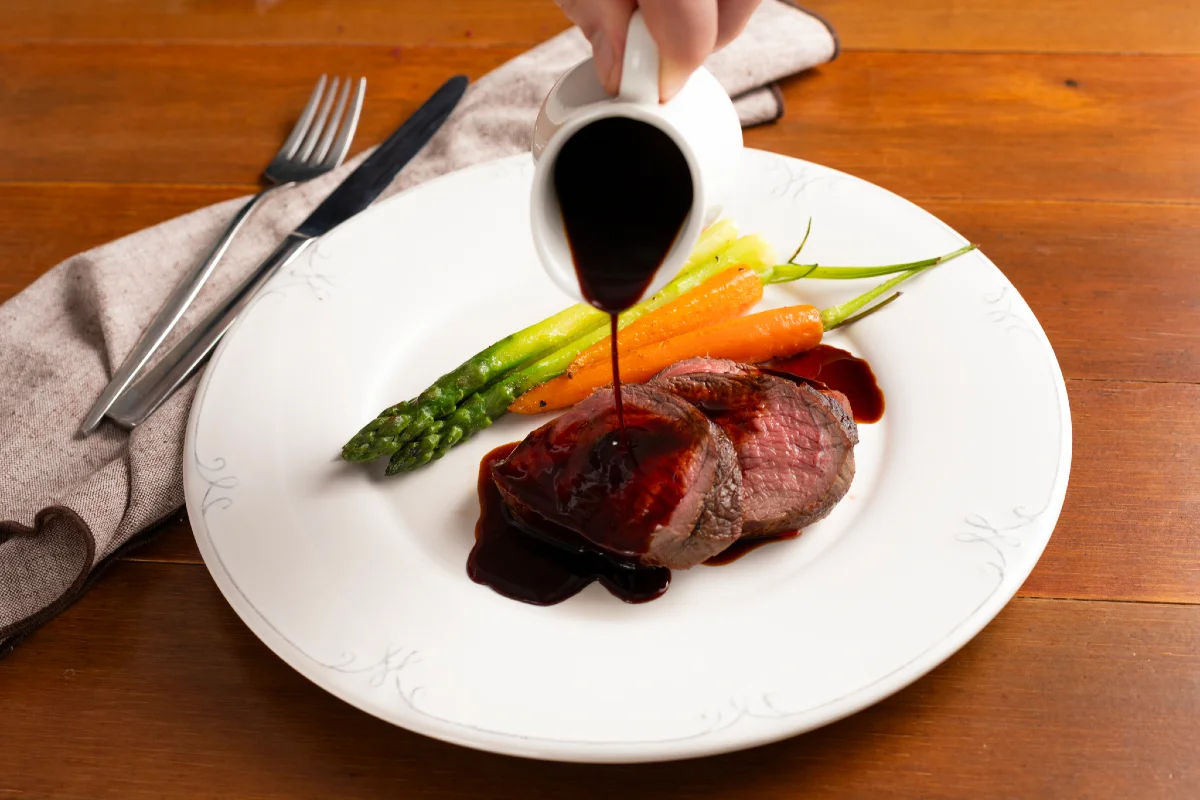
A special-occasion venison roast, seared in butter with herbs and juniper, then served with a reduced red wine sauce, carrots and asparagus. The method combines gentle oven cooking with a final hot sear for a browned exterior.
Ingredients
- 800 gvenison joint
- 200 gbutter
- 2 clovesgarlic
- as neededjuniper berries
- as neededsage
- as neededrosemary
- as neededfine salt
- as neededblack pepper
- 1white onion
- 3 clovesgarlic
- 1 teaspoontomato paste
- as neededjuniper berries
- as neededrosemary
- as neededsage
- as neededbay leaf
- 1 glassred wine
- as neededextra-virgin olive oil
- as neededfine salt
- as neededblack pepper
- 8carrots
- 8asparagus spears
- as neededbutter
- as neededfine salt
- as neededblack pepper
Instructions
- 1
Prepare the venison
Trim away fat and sinew to make a compact, even joint. Tie it with loops along its length, securing the ends with knots, and set aside. Keep the trimmings for the sauce. Heat a little oil in a saucepan and add the meat trimmings.
- 2
Brown the trimmings
Roughly chop the onion and add it to the pan with the garlic. Fry over a high heat for 5–7 minutes, until the meat is nicely browned, then deglaze with the red wine.
- 3
Build the sauce
Stir in the tomato paste, juniper berries, bay leaf, rosemary and sage. Let the wine reduce until the alcohol has evaporated.
- 4
Simmer the sauce
Cover the ingredients with water, season with salt and pepper, and simmer gently for about 30 minutes.
- 5
Start the roast
Meanwhile, heat a frying pan and melt 150 g of butter. Add the venison and season it with salt and pepper.
- 6
Add the aromatics
Add the garlic, sage, rosemary and juniper berries to the pan.
- 7
Roast gently
Once the underside is sealed, turn the joint and season the other side. Baste it continuously with the melted butter until well browned. Transfer it to a tray and cook in a conventional oven at 80°C for 10–15 minutes, until the centre reaches 48°C.
- 8
Reduce the sauce
Strain the sauce through a sieve into a saucepan and reduce it over a medium heat for a further 10–15 minutes. For the vegetables, trim the carrots, leaving about 3 cm of green tops, and peel them.
- 9
Prepare the vegetables
Boil the carrots in salted water for about 10 minutes. Trim the woody ends from the asparagus, peel the stalks and leave the tips intact.
- 10
Cook the vegetables
Boil the asparagus in the salted water for 2–3 minutes. Drain the vegetables and melt some butter in a very hot frying pan.
- 11
Brown and finish
Add the vegetables to the pan and season with salt and pepper. Cook over a high heat for a couple of minutes, then remove the asparagus and brown the carrots for another 2 minutes; set aside. Melt 50 g of butter in the pan, add the roast and brown it over a high heat for 1 minute on each side.
- 12
Slice and plate
Slice the venison and arrange it on plates with the vegetables.
- 13
Add the sauce
Spoon the cooking sauce over the meat and finish with a carrot top before serving.
What is venison roast?
Venison roast is a joint of deer cooked whole and served in slices, often as a centrepiece for a celebratory meal. This version pairs the meat with a red wine sauce and simple vegetables.
The method draws on familiar European roast-cooking techniques: brown the meat, cook it gently, then finish it at high heat. Juniper and herbs complement the savoury flavour of the venison.
Nutrition and macros by portion
The nutrition label shows one serving as written: 760 calories, 40g protein, 25g carbs, 48g fat.
| Portion | Adjustment | kcal | Protein | Carbs | Fat |
|---|---|---|---|---|---|
| Lighter | Use less finishing butter | 532 kcal | 28g | 18g | 34g |
| This serving | As written | 760 kcal | 40g | 25g | 48g |
| Hungry | Add potatoes on the side | 1140 kcal | 60g | 38g | 72g |
Venison supplies most of the protein, while the butter contributes much of the fat and energy. The carrots, onion, tomato paste and wine provide most of the carbohydrates. Serve with extra non-starchy vegetables or a modest portion of potatoes to round out the plate.
Choose and tie the joint
Even shape: trimming the meat and tying it into a compact joint helps it cook more evenly. Keep the trimmings to give the sauce extra flavour.
Juniper and herbs: use the berries, rosemary and sage both in the pan and in the sauce. Their aromatic flavour is central to this dish.
Build a full-flavoured sauce
Brown first: give the meat trimmings and onion time to colour before adding the wine. This creates a more savoury base for the sauce.
Reduce patiently: simmer the stock, then strain and reduce it again as directed. The finished sauce should be concentrated enough to coat the meat lightly.
Baste and check the roast
Butter basting: spoon the hot butter over the joint as it browns, turning it when the underside is sealed. Keep the meat moving in the pan as needed so the butter and aromatics do not burn.
Temperature: use a meat thermometer to check the centre reaches 48°C during the oven stage. The recipe then gives the roast another quick sear in the pan.
Get the vegetables ready
Carrots: leave a short tuft of green tops for presentation, peel them and boil for about 10 minutes before browning.
Asparagus: remove the woody ends and peel the stalks while keeping the tips intact. Boil for only 2–3 minutes, then take them out of the pan before the carrots finish browning.
Serve the roast
Rest and slice: once the final sear is done, slice the joint for plating. The instructions do not specify a resting time, so avoid leaving the meat unattended for long before serving.
On the plate: arrange the carrots and asparagus alongside the venison and spoon over the reduced sauce. The vegetables provide a simple contrast to the rich butter and meat.
Recipe notes & tips
- Tie the joint firmly so it holds its shape as it cooks.
- Keep the trimmings for the sauce rather than discarding them.
- Use a thermometer to check the centre of the venison accurately.
- Strain the sauce before reducing it for a smoother finish.
- Remove the asparagus from the pan before continuing to brown the carrots.
Variations
- Thyme: add a few sprigs alongside the rosemary and sage.
- More vegetables: serve with extra carrots or seasonal greens.
- Shallot sauce: use shallots in place of the white onion.
- Peppery finish: add freshly cracked black pepper just before serving.
- Stock base: replace the water used to cover the sauce ingredients with stock.
Common mistakes to avoid
- Uneven joint: trim and tie the venison into a compact shape for more even cooking.
- Rushed browning: give the trimmings 5–7 minutes to colour before adding the wine.
- Overcooked asparagus: boil it for just 2–3 minutes, then remove it from the pan.
- Guessing doneness: check the centre with a meat thermometer and look for 48°C at the oven stage.
- Burnt butter: keep an eye on the pan while basting and lower the heat if the butter begins to darken too quickly.
How to store
Refrigerate leftover venison, vegetables and sauce in separate airtight containers for up to 3 days. Reheat gently with a little sauce to help keep the meat from drying out.
Frequently asked questions
Can I prepare the sauce in advance?
Yes. Make and reduce the sauce ahead, then refrigerate it and reheat gently while you cook the venison.
How do I know when the venison is ready?
The method specifies a centre temperature of 48°C after the oven stage. Check the thickest part of the joint with a thermometer.
Can I use dried herbs?
Yes. Use dried rosemary or sage if needed, but add them sparingly because their flavour is more concentrated than fresh herbs.
Do I have to tie the roast?
Tying helps keep the meat compact and encourages more even cooking. If it is already a very regular joint, it may hold its shape without tying.
Can I cook the vegetables ahead?
You can boil them shortly before serving, but the method finishes them in a hot pan. That final browning is best done just before plating.
Cook it from the original
This recipe comes from giallozafferano.es. Their page has the author’s own photos, notes and tips — the best place to cook it from.
Open the recipe on giallozafferano.es