
Stewed chickpeas
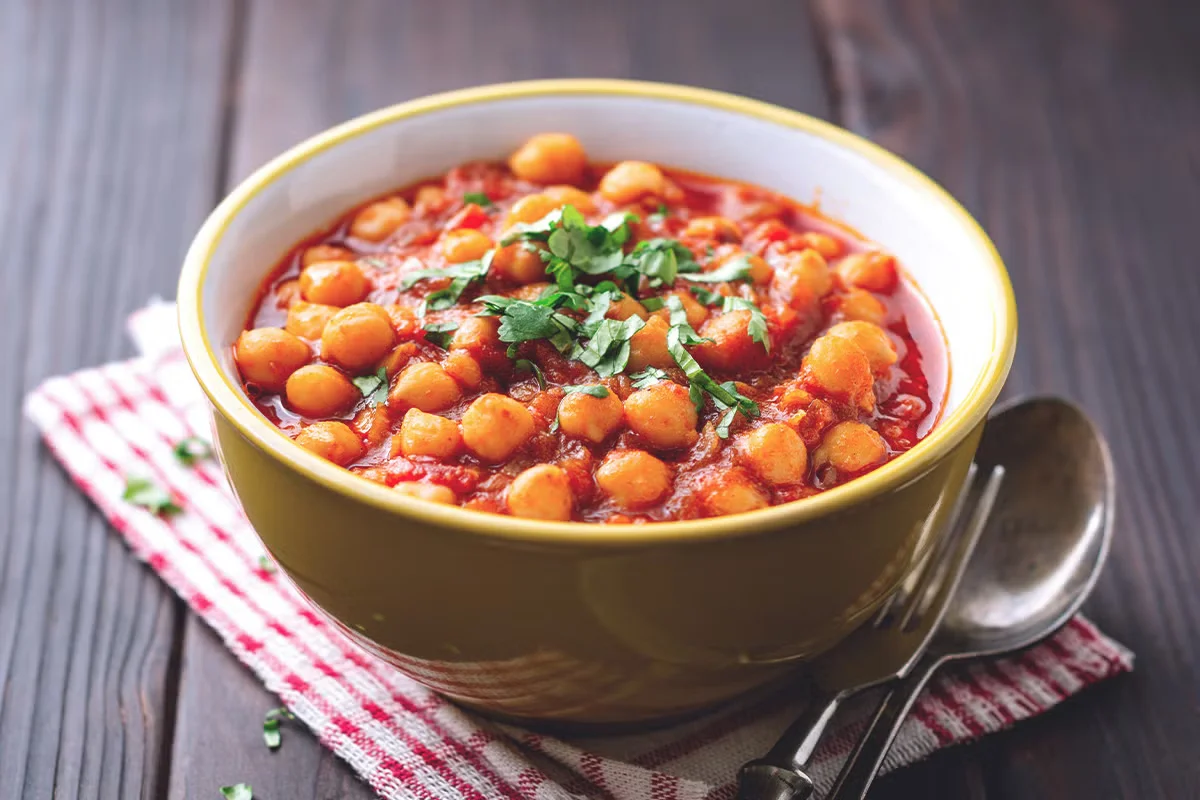
These Italian stewed chickpeas simmer with tomato, rosemary and a finely chopped base of onion, carrot and celery. They make a hearty one-pot meal, though the dried chickpeas need a long soak before cooking.
Ingredients
- 300 gdried chickpeas
- 1 pinchbicarbonate of soda
- 1 sprigrosemary
- 2 clovesgarlic
- 70 gonion
- 70 gcarrot
- 70 gcelery
- 75 ml (5 tablespoons)extra-virgin olive oil
- 300 mltomato pulp
- to tastesalt
- to tasteblack pepper
Instructions
- 1
Soak the chickpeas
Soak the chickpeas in water for about 12 hours, adding a small pinch of bicarbonate of soda.
- 2
Cook until nearly tender
Rinse the chickpeas and cook them until they are almost ready.
- 3
Reserve cooking water
Drain the chickpeas, keeping a little of their cooking water aside.
- 4
Chop and soften vegetables
Peel the onion, carrot and celery, then chop them finely. Soften them in a pot with the olive oil, adding a little chickpea cooking water.
- 5
Add garlic and rosemary
Add the whole garlic cloves and chopped rosemary to the pot.
- 6
Simmer with tomato
Add the chickpeas, salt, black pepper, tomato pulp and a little cooking water. Stir, cover with a lid and cook until the chickpeas are thoroughly tender.
- 7
Serve warm
Serve the chickpeas hot, finished with a drizzle of extra-virgin olive oil.
What are stewed chickpeas?
This is a homely Italian preparation of chickpeas simmered with tomato and aromatic vegetables. Chickpeas have long been part of cooking across the Mediterranean; this version builds flavour with rosemary, garlic and a simple onion, carrot and celery base.
The tomato and reserved cooking water help make a soft, savoury sauce, while the chickpeas stay at the centre of the dish. It can be served as a substantial meal or alongside other dishes.
Nutrition and macros by portion
The nutrition label shows one serving as written: 1830 calories, 69g protein, 225g carbs, 88g fat.
| Portion | Adjustment | kcal | Protein | Carbs | Fat |
|---|---|---|---|---|---|
| Lighter | Use less olive oil | 1281 kcal | 48g | 158g | 62g |
| This serving | As written | 1830 kcal | 69g | 225g | 88g |
| Hungry | Serve with bread | 2745 kcal | 104g | 338g | 132g |
Most of the carbohydrates, fibre and protein come from the dried chickpeas; the olive oil contributes most of the fat, while the tomato and vegetables add further carbohydrates. The estimate is for the stated one-serving quantity, which is a very large portion; serving some with extra vegetables and keeping the oil drizzle modest is a practical way to balance the plate.
Start with dried chickpeas
Soaking: the 12-hour soak softens the dried chickpeas and helps them cook more evenly. The small pinch of bicarbonate is added to the soaking water, not the cooking pot.
Cooking water: keep a little of the chickpea water when draining. Add it gradually during the vegetable and tomato stages to loosen the mixture without making it watery.
Build the flavour base
Vegetables: chop the onion, carrot and celery finely so they soften into the sauce. Let them stew gently with the oil and a little cooking water rather than allowing them to catch.
Aromatics: the garlic cloves go in whole, while the rosemary is chopped. This gives the pot a clear herbal flavour without making the garlic pieces dominate each spoonful.
Check the chickpeas for doneness
First simmer: cook the chickpeas separately until nearly tender before draining them. They finish cooking with the tomato, so they should not be completely soft at this stage.
Final simmer: the recipe gives no fixed cooking time for either stage, as dried chickpeas vary. Taste one before serving; it should be tender through the centre, with no firm or chalky bite.
Keep the sauce balanced
Add the reserved cooking water a little at a time after adding the tomato. The finished sauce should cling to the chickpeas, rather than pooling as a thin liquid or drying out at the bottom of the pot.
Stir gently while the pot simmers so the chickpeas do not break up. A covered pot helps them cook through in the tomato mixture.
How to serve them
Serve the chickpeas hot with the final drizzle of extra-virgin olive oil. They work as a simple meal on their own or with bread to mop up the sauce.
For a fuller plate, pair them with a green salad or cooked vegetables. The recipe also suggests using black chickpeas instead of the usual pale variety; their flavour is described as more intense and herbaceous.
Recipe notes & tips
- Soak the chickpeas for about 12 hours before beginning the cooking stages.
- Keep the chickpea cooking water when draining, as the recipe uses it to soften the vegetables and loosen the stew.
- Chop the onion, carrot and celery finely so they become tender in the sauce.
- Add cooking water in small amounts to control the thickness of the tomato sauce.
- Taste a chickpea near the end to check that it is tender all the way through.
Variations
- Use black chickpeas: swap them for the pale chickpeas for a more intense, herbaceous flavour.
- Make hummus: use cooked chickpeas from the recipe as a starting point for hummus.
- Add to soup: stir cooked chickpeas into a grain and legume soup.
- Serve simply: finish the chickpeas with a drizzle of extra-virgin olive oil, as suggested in the recipe.
Common mistakes to avoid
- Skipping the soak: the recipe calls for about 12 hours, so allow time before cooking.
- Discarding all the cooking water: reserve a little to help soften the vegetables and adjust the sauce.
- Adding too much water: pour it in gradually so the sauce stays thick enough to coat the chickpeas.
- Stopping too soon: simmer until a chickpea is tender in the centre, not just soft on the outside.
- Chopping the rosemary too coarsely: chop it finely so it distributes through the stew.
How to store
Cool leftovers promptly and keep them in a covered container in the fridge for up to 3 days. Reheat gently in a saucepan, adding a splash of water if the sauce has thickened; make sure the chickpeas are piping hot throughout.
Frequently asked questions
Do I have to soak dried chickpeas first?
Yes. This recipe calls for soaking them in water for about 12 hours with a small pinch of bicarbonate of soda.
Can I use tinned chickpeas?
The method is written for dried chickpeas and includes soaking and cooking them. Tinned chickpeas are already cooked, so they would need much less simmering and the method would need adjusting.
How much cooking water should I reserve?
The recipe does not give an exact amount. Keep some aside and add it a little at a time to soften the vegetables and loosen the tomato sauce.
How do I know when the chickpeas are cooked?
They should be tender all the way through, without a firm or chalky centre. Taste one near the end of the final simmer.
Can I use black chickpeas?
Yes. The recipe suggests replacing the pale chickpeas with black ones, which have a more intense, herbaceous flavour.
Why is the total time longer than an hour?
The listed 60 minutes does not include the recipe’s approximately 12-hour chickpea soak. Allow for that soaking time before you cook.
Cook it from the original
This recipe comes from finedininglovers.it. Their page has the author’s own photos, notes and tips — the best place to cook it from.
Open the recipe on finedininglovers.it