
Linguine with seafood
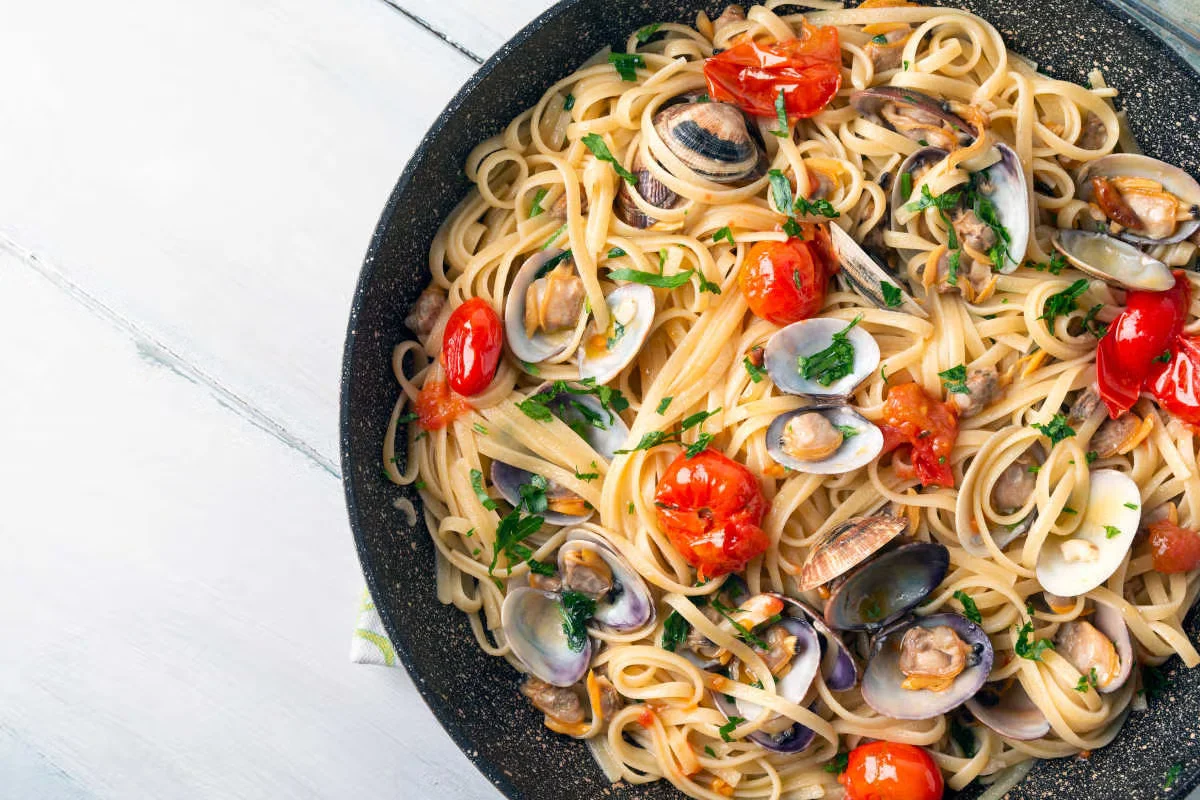
Linguine with seafood brings mussels, clams, prawns, squid, octopus and langoustines together in a tomato and white-wine sauce. It makes an impressive meal, with the shellfish cooking liquor helping the pasta absorb plenty of flavour.
Ingredients
- 400 glinguine
- 500 gmussels
- 500 gclams
- 8prawns
- 1 mediumcuttlefish
- 200 goctopus
- 4langoustines
- 250 gcherry tomatoes
- 2 clovesgarlic
- 30 ml (2 tablespoons)tomato purée
- 150 ml (1 glass)white wine
- 1 bunchparsley
- to tasteextra-virgin olive oil
- 1 teaspoonsalt, for soaking the clams
Instructions
- 1
Purge the clams
A few hours before cooking, put the clams in a bowl of water with 1 teaspoon of salt. Leave them to release any sand for a few hours.
- 2
Prepare the seafood
Clean the cuttlefish and small octopus, then cut them into small pieces. Peel the prawns and remove their intestinal veins with a knife or cocktail stick. Set aside.
- 3
Cook the shellfish
Clean the mussels by removing their beards, then rinse them. Finely chop 1 garlic clove and fry it in a little olive oil in a large frying pan. Add the mussels and clams, stir well and turn the heat up. Pour in 150 ml of white wine and cook for 1 minute. Cover and cook for 2–3 minutes, until the shells begin to open. Take the pan off the heat and remove the shellfish from their shells, leaving 2 or 3 in their shells per person. Set aside. Strain and keep the cooking liquid, filtering out any sand.
- 4
Finish the pasta
In a large frying pan, fry the other chopped garlic clove and the cherry tomatoes in extra-virgin olive oil over a high heat for a few minutes. Add the cuttlefish and octopus pieces and fry for 3–4 minutes. Add the reserved shellfish cooking liquid and tomato purée, then reduce the sauce slightly. Meanwhile, cook the linguine in lightly salted boiling water for 3 minutes less than the packet instructions, so they are very al dente. Drain and add them to the large pan with the cuttlefish and octopus. Add the langoustines and cook for 2 minutes, stirring constantly. Add the prawns, mussels and clams, then cook for 1 minute more, stirring constantly so the linguine finish cooking evenly.
- 5
Garnish and serve
Sprinkle with chopped parsley and divide the pasta and seafood evenly between the plates.
What is linguine with seafood?
This Italian-style pasta dish pairs long, flat linguine with a generous mix of shellfish and other seafood. Its appeal is the contrast between tender pasta, briny shellfish and a light, savoury tomato and wine sauce.
This version builds flavour from the mussels and clams first, then uses their strained cooking liquid to finish the pasta. That gives the sauce a seafood-rich base without needing a separate stock.
Nutrition and macros by portion
The nutrition label shows one serving as written: 2700 calories, 190g protein, 300g carbs, 65g fat.
| Portion | Adjustment | kcal | Protein | Carbs | Fat |
|---|---|---|---|---|---|
| Lighter | Less linguine, more tomatoes | 1890 kcal | 133g | 210g | 46g |
| This serving | As written | 2700 kcal | 190g | 300g | 65g |
| Hungry | Larger pasta portion | 4050 kcal | 285g | 450g | 98g |
The linguine provide most of the carbohydrates, while the olive oil contributes fat and the varied seafood supplies most of the protein. The shellfish, their cooking liquor and added salt can also make the dish high in sodium; balance the plate with unsalted vegetables or salad.
Choosing the seafood
Shellfish: Mussels and clams release a flavourful liquor as they open. Scrub the mussels and purge the clams as directed, then strain the liquid carefully to remove grit.
Prawns and langoustines: The recipe adds these later in the cooking, which helps keep them tender. Remove the prawns’ intestinal veins before cooking.
Cuttlefish and octopus: Cut them into small pieces so they cook evenly during the short frying stage. If buying them whole, clean them before cutting.
Keep the shellfish tender
Opening cue: Cover the mussels and clams for 2–3 minutes and check whether their shells have begun to open. Take them off the heat promptly rather than leaving them to cook on.
Final minute: Add the cooked mussels and clams back with the prawns for just 1 minute. This warms everything through while helping prevent the shellfish from becoming tough.
Use the cooking liquor
Straining the liquid: Pour the shellfish liquor through a fine sieve to catch any sand before adding it to the tomato mixture. Keep it rather than discarding it; it carries much of the dish’s savoury seafood flavour.
Adjusting the sauce: The recipe reduces the liquor slightly before the pasta goes in. If the pan becomes too dry before the linguine are cooked, loosen the sauce with a little reserved pasta water.
Cook the linguine very al dente
Start by cooking the pasta for 3 minutes less than the packet time. It will continue cooking in the pan with the seafood liquor, so draining it early helps it finish with a firm bite.
Stir constantly as the linguine finish in the sauce, helping them cook evenly and pick up the tomato and shellfish flavours.
Timing the final additions
The cuttlefish and octopus go into the tomato pan first and fry for 3–4 minutes. The linguine then cook in the sauce with the langoustines for 2 minutes, followed by the prawns and reserved shellfish for 1 minute.
Have the seafood and drained linguine ready before the final stage begins. These short finishing times are easier to manage when every ingredient is close at hand.
Serving the dish
Divide the pasta and seafood evenly so each plate gets a mix of shellfish, prawns and langoustines. A little chopped parsley adds a fresh finish.
Serve straight away, while the pasta is hot and the seafood is tender. A simple green salad or steamed vegetables make a fresh accompaniment.
Recipe notes & tips
- Purge the clams for a few hours in salted water before cooking.
- Strain the shellfish liquor carefully so sand does not get into the sauce.
- Save a little pasta water before draining in case the sauce needs loosening.
- Keep the shellfish cooking liquid to finish the linguine and deepen the flavour.
- Check the packet time and begin tasting the pasta as it finishes in the pan.
- Remove shellfish from the heat as soon as their shells start to open.
Variations
- Use squid: Replace the cuttlefish with squid cut into rings.
- Change the seafood: Adapt the mix to suit the fish and shellfish available from your fishmonger.
- Add fish: Use firm fish fillets cut into pieces in place of some of the shellfish.
- Adjust the herbs: Add a little extra chopped parsley at the table for a fresher finish.
Common mistakes to avoid
- Overcooking the shellfish: Take the pan off the heat as soon as the shells begin to open.
- Skipping the straining: Filter the shellfish liquor to remove sand before adding it to the sauce.
- Cooking the linguine fully in the water: Drain it 3 minutes before the packet time so it can finish in the pan.
- Letting the sauce dry out: Add a little reserved pasta water if the linguine need more liquid to finish cooking.
- Adding the prawns too early: Stir them in with the reserved mussels and clams for the final minute.
How to store
Refrigerate leftovers promptly in an airtight container and eat within 1 day. Reheat gently in a covered pan until piping hot, adding a splash of water if the pasta seems dry; avoid prolonged reheating, which can toughen the seafood.
Frequently asked questions
Can I use frozen seafood?
Yes, thaw it safely according to the packet instructions and drain it well before cooking. If it has already been cooked, add it near the end just long enough to heat through.
What can I use instead of cuttlefish?
Squid is a suitable alternative; cut it into rings or small pieces. The recipe also suggests using pieces of fish fillet.
Why should I keep the shellfish cooking liquid?
It carries flavour from the mussels and clams and forms the base of the pasta sauce. Strain it first to catch any sand.
What if the pasta is still firm when the sauce has reduced?
Add a little reserved pasta water and keep stirring until the linguine reach the texture you want.
How do I know when the shellfish are ready?
The shells should begin to open after 2–3 minutes covered. Remove the pan from the heat at that point, as the recipe cautions against overcooking them.
Can I prepare any part in advance?
You can purge the clams a few hours ahead as directed. For the best texture, cook and finish the pasta close to serving time.
Cook it from the original
This recipe comes from finedininglovers.fr. Their page has the author’s own photos, notes and tips — the best place to cook it from.
Open the recipe on finedininglovers.fr