
Dairy-Free Cauliflower Macaroni & Cheese
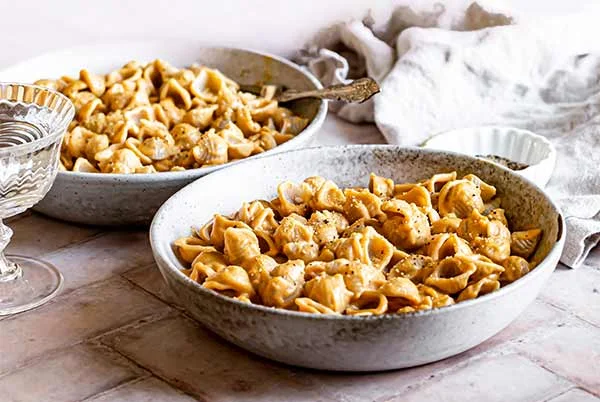
This American-style macaroni and cheese pairs gluten-free pasta with a creamy, dairy-free cauliflower sauce. It is a useful option when you want a comforting pasta dish with a smooth sauce made without dairy.
Ingredients
- 340 g (12 ounces)gluten-free pasta, such as penne, elbows or other short noodles
- 45 ml (3 tablespoons)olive oil
- 15 g (1 tablespoon)minced garlic
- 150 g (1½ cups)chopped cauliflower florets
- 24 g (3 tablespoons)tapioca flour or starch
- 403 ml (one 13.6-ounce can)coconut milk
- 20 g (5 tablespoons)nutritional yeast
- 24 g (2 tablespoons)diced jarred or tinned pimentos
- 25 g (¼ cup)vegan Parmesan cheese, plus more to garnish if desired
- A pinchkosher or fine sea salt
- To tastefreshly ground black pepper
Instructions
- 1
Cook the pasta
Bring a pot of water to the boil and cook the pasta according to the packet directions.
- 2
Make the sauce
Meanwhile, warm the olive oil in a large frying pan over medium heat. Add the garlic and cauliflower and sauté, tossing from time to time so they cook evenly without burning. When the cauliflower is soft, after about 10 minutes, whisk in the tapioca flour to form a roux. Add the coconut milk, nutritional yeast, pimentos, vegan Parmesan, salt and pepper, and whisk to combine. Bring the sauce to the boil, then turn the heat to low. Transfer it to a blender and blend until smooth, then return it to the pan.
- 3
Combine and serve
Drain and rinse the pasta, then add it to the pan. Toss with the sauce and serve, with more vegan Parmesan on top if desired.
What is cauliflower macaroni and cheese?
Macaroni and cheese is a familiar American comfort-food dish of pasta coated in a rich, savoury sauce. This version makes a dairy-free sauce with coconut milk, nutritional yeast and vegan Parmesan, with cauliflower blended in for a smooth finish.
Cauliflower: cooking it until soft before blending helps it disappear into the sauce rather than leaving noticeable pieces. Tapioca starch thickens the mixture, while pimentos add a little colour and savoury flavour.
Nutrition and macros by portion
The nutrition label shows one serving as written: 670 calories, 18g protein, 77g carbs, 36g fat.
| Portion | Adjustment | kcal | Protein | Carbs | Fat |
|---|---|---|---|---|---|
| Lighter | Less oil, more cauliflower | 469 kcal | 13g | 54g | 25g |
| This serving | As written | 670 kcal | 18g | 77g | 36g |
| Hungry | Larger pasta portion | 1005 kcal | 27g | 116g | 54g |
The pasta supplies most of the carbohydrates, while olive oil and coconut milk contribute much of the fat. The nutritional yeast and vegan Parmesan add some protein, alongside a smaller amount from the pasta. Pair a serving with green vegetables or salad for a more varied plate.
Choosing the pasta
Short shapes: penne, elbows and other small pasta shapes are easy to coat and eat with the sauce. Use gluten-free pasta as specified, and follow its packet directions because cooking times can vary.
Rinsing: the method calls for rinsing the drained pasta before adding it to the sauce. Drain it thoroughly so excess water does not thin the finished dish.
Building a smooth sauce
Gentle heat: sauté the garlic and cauliflower over medium heat, tossing occasionally to encourage even cooking and prevent scorching. The cauliflower should be soft before you add the tapioca flour.
Blending: after the sauce comes to the boil and the heat is lowered, blend it until smooth. Return it to the pan before adding the pasta so it is easy to combine.
Getting the texture right
Cauliflower doneness: check that a piece can be pierced easily before moving on to the flour. If it is still firm, continue cooking until tender.
Sauce consistency: the blended sauce should look even, without visible cauliflower pieces. Toss the drained pasta through it while the sauce is warm for an even coating.
Timing the meal
Parallel cooking: start the pasta while the cauliflower cooks, as the recipe directs. Keep an eye on both so the pasta is ready to drain when the sauce is blended.
Serving: combine the pasta and sauce just before eating. The recipe takes 40 minutes in total, including the cauliflower's roughly 10-minute sauté.
What to serve alongside
Fresh contrast: serve with a crisp green salad or simply dressed vegetables to balance the creamy pasta. Keep the seasoning light so it does not compete with the savoury sauce.
Extra vegetables: steamed greens or roasted vegetables make a straightforward accompaniment. A little more vegan Parmesan can be sprinkled over each serving if desired.
Recipe notes & tips
- Use a large frying pan so the cauliflower can be tossed without crowding.
- Keep the garlic moving with the cauliflower to help prevent it from browning too quickly.
- Wait until the cauliflower is soft before whisking in the tapioca flour.
- Blend the sauce until no distinct cauliflower pieces remain.
- Drain the pasta thoroughly after rinsing before adding it to the pan.
- Taste the sauce before serving and adjust the salt and pepper to your preference.
Variations
- Smoky paprika: add a little smoked paprika to the sauce for a warm, smoky note.
- Extra greens: fold in cooked spinach just before serving.
- Herb finish: scatter chopped chives or parsley over the finished pasta.
- More pimentos: add extra diced pimentos for a brighter, sweeter accent.
- Peppery topping: finish with additional freshly ground black pepper.
Common mistakes to avoid
- Undercooked cauliflower: blend only once it is soft, or the sauce may not turn smooth.
- Burnt garlic: toss it with the cauliflower and keep the pan over medium heat.
- Lumpy sauce: whisk in the tapioca flour before adding the liquids, then blend the sauce thoroughly.
- Watery pasta: drain it well after rinsing so it does not dilute the sauce.
- Overcooked pasta: check the packet timing and cook until just tender before combining.
How to store
Refrigerate leftovers in a covered container and use within 3 days. Reheat gently in a pan or microwave, stirring as needed; add a small splash of water if the sauce has thickened.
Frequently asked questions
Can I use regular pasta?
Yes, if you do not need the dish to be gluten-free. Cook it according to its packet directions.
Can I make the sauce without a blender?
A blender is used to make the cauliflower sauce smooth. Without one, mash the cauliflower thoroughly, though the texture may be less even.
What can I use instead of tapioca starch?
The recipe specifies tapioca flour or starch. A different thickener may change the sauce's texture, so follow its own quantity and preparation instructions if substituting.
Can I prepare the sauce ahead?
You can make the sauce ahead and refrigerate it in a covered container. Reheat it gently, stirring, before tossing it with freshly cooked pasta.
How do I know when the cauliflower is ready?
It should be soft enough to pierce easily after about 10 minutes of sautéing. Continue cooking if it still feels firm.
Cook it from the original
This recipe comes from glutenfreeandmore.com. Their page has the author’s own photos, notes and tips — the best place to cook it from.
Open the recipe on glutenfreeandmore.com