
Cockles marinière
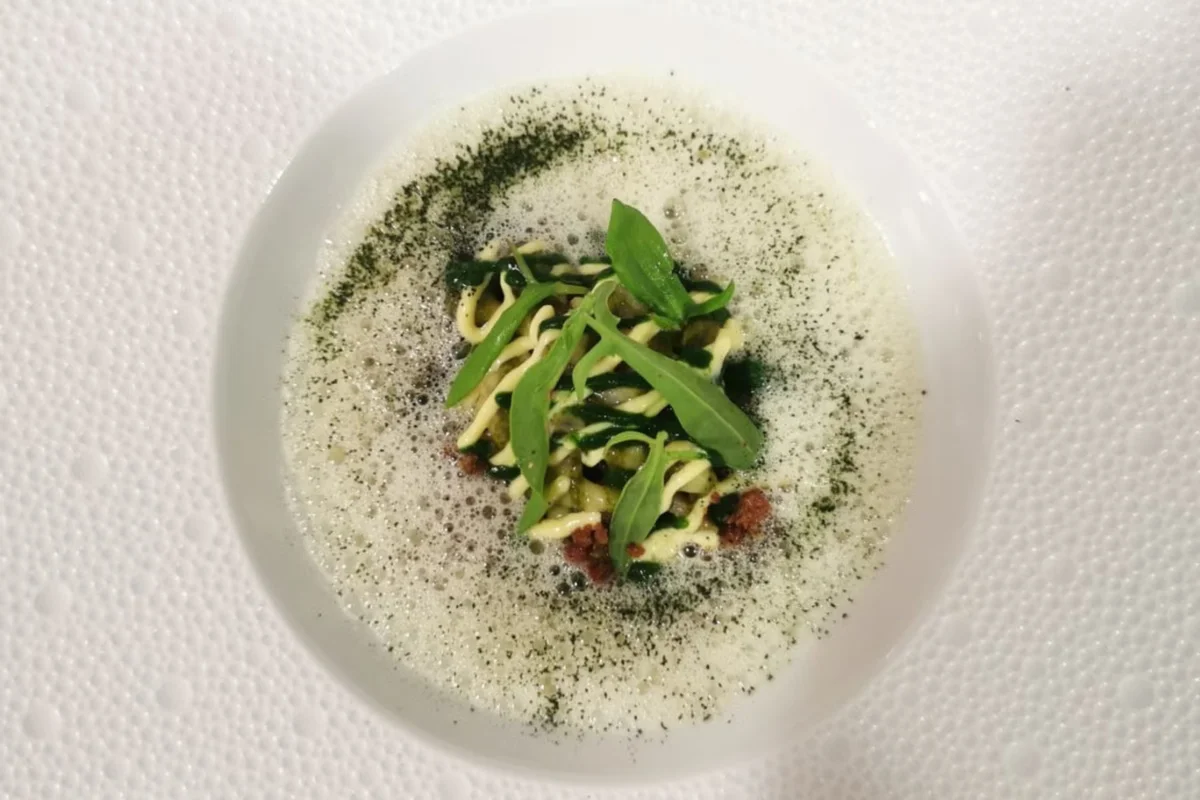
Cockles marinière brings tender shellfish together with a white-wine cream sauce, kombu, parsley and garlic purées, and crisp-edged guanciale. This elaborate plated version is suited to a special meal, with several prepared elements adding distinct flavours and textures.
Ingredients
- 200 gCockles
- 100 mlWhite wine
- 120 mlDouble cream
- 80 gButter
- 100 g, peeled and with the germ removedGarlic
- 50 gDouble cream
- 200 g, stalks removedParsley
- 200 gKombu
- 150 gKombu
- 2Shallots
- 250 mlWhite wine
- 2Egg yolks
- 100 gSalted butter
- 100 gGuanciale
Instructions
- 1
Cook the cockles
Heat a saucepan thoroughly, add the cockles and 100 ml white wine, and cook until they open. Remove the cockles and take the meat from the shells. Strain the cooking liquor, add 120 ml cream and simmer gently for 5 minutes. Whisk in 80 g butter, then keep the sauce warm.
- 2
Make garlic purée
Blanch the garlic in water three times. Put it in a saucepan with 50 g cream and cook over a low heat. Drain the garlic, blend the mixture, then add cream as needed to make a purée. Transfer it to a squeeze bottle.
- 3
Make parsley purée
Bring salted water to the boil, add the parsley and cook for 6 minutes. Drain it and blend, adding cooking water if needed to make a coulis. Transfer it to a squeeze bottle.
- 4
Make kombu purée
Bring salted water to the boil, add 200 g kombu and cook until very tender. Drain it and blend, adding cooking water if needed to make a coulis. Transfer it to a squeeze bottle.
- 5
Cook kombu strips
Cook the remaining 150 g kombu, cut into julienne, in water until al dente. Drain.
- 6
Prepare beurre blanc
Finely slice the shallots and put them in a saucepan with 250 ml white wine. Reduce the liquid by half, then strain it through a fine sieve. Put the egg yolks and strained reduction in a saucepan over a very low heat. Whisk and cook them like a sabayon until thickened, then gradually whisk in the salted butter. Transfer the sauce to a squeeze bottle.
- 7
Cook guanciale
Cut the guanciale into lardons and fry them without browning.
- 8
Assemble the plate
Place the kombu julienne at the bottom of the plate and roll it in butter. Add the guanciale lardons and cockles. Use the squeeze bottles to stripe the purées over the top. Blend the cockle marinière sauce and spoon the resulting foam around the dish.
What is cockles marinière?
Marinière is a French style of cooking shellfish with wine and aromatics; cockles are small, briny clams often cooked this way. This version, shared by chef Ronan Kervarrec, pairs them with kombu and several smooth purées for a more composed restaurant-style plate.
The cooking liquor becomes the base of a cream-and-butter sauce, while kombu adds a savoury sea flavour. Guanciale brings a rich, porky contrast to the shellfish.
Nutrition and macros by portion
The nutrition label shows one serving as written: 3400 calories, 75g protein, 100g carbs, 295g fat.
| Portion | Adjustment | kcal | Protein | Carbs | Fat |
|---|---|---|---|---|---|
| Lighter | Less butter and cream | 2380 kcal | 53g | 70g | 207g |
| This serving | As written | 3400 kcal | 75g | 100g | 295g |
| Hungry | Add bread alongside | 5100 kcal | 113g | 150g | 443g |
The listed ingredients contain carbohydrates mainly from the garlic, shallots and wine, while butter, cream and guanciale contribute most of the fat. Cockles, egg yolks and guanciale provide protein. The ingredient quantities are rich for one listed serving; a practical way to balance the plate is to serve a modest portion alongside vegetables.
Cockles and their cooking liquor
Shellfish: Start with cockles that are fresh and clean. Cook them just until their shells open, then remove the meat and strain the liquor to catch any grit.
Sauce: Cream and butter enrich the strained liquor. Keep the simmer gentle for the stated 5 minutes, then whisk in the butter to finish.
Three purées, three textures
Garlic: Blanching it three times softens its sharpness before it is cooked with cream and blended. Add cream gradually at the blending stage to reach a smooth, spoonable consistency.
Parsley: Cook the leaves for 6 minutes, drain them and blend with only as much cooking water as needed for a coulis.
Kombu: The purée uses the first portion of kombu, cooked until very tender. The separate julienne stays firmer, giving the finished plate a more defined bite.
Getting the beurre blanc right
Reduction: Simmer the sliced shallots with white wine until the liquid has reduced by half, then strain it. This gives the sauce a concentrated wine-and-shallot base without pieces of shallot.
Emulsion: Whisk the yolks and reduction over very low heat until thick like a sabayon, then incorporate the salted butter gradually. A gentle heat and steady whisking help keep the sauce smooth.
Keep an eye on doneness
Cockles: Remove them as soon as they open; prolonged cooking can make the meat tough. Discard any that remain closed after cooking.
Kombu: Cook the purée portion until very tender, but stop cooking the julienne when it is al dente. The two portions are intended to have different textures.
Plan the preparation
The recipe has several separate components, so organise the ingredients and squeeze bottles before cooking. The cockles and their sauce, purées, kombu julienne, beurre blanc and guanciale each have their own preparation.
Make the sauces and purées before assembling the plate, then finish the cockles and guanciale close to serving. The specified total time is 120 minutes.
Serving the dish
Arrange the kombu, guanciale and cockles as directed, then stripe the purées over the top and spoon the blended marinière foam around them. Serve as soon as it is assembled so the cockles and sauces can be enjoyed warm.
For a more substantial meal, serve it with plain bread to catch the sauce, or add a simple side of vegetables without competing with the seaweed and shellfish.
Recipe notes & tips
- Strain the cockle cooking liquor carefully so grit does not end up in the sauce.
- Keep the cockles warm after cooking, but avoid leaving them over heat for long.
- Add cream to the garlic purée a little at a time to control its consistency.
- Save some cooking water when draining the parsley and kombu in case their purées need loosening.
- Whisk the beurre blanc continuously over very low heat as you add the butter.
- Prepare squeeze bottles before plating so the purées are easy to apply.
Variations
- Use mussels: Substitute mussels for the cockles and cook them until their shells open.
- Change the herbs: Use another soft herb for a different-coloured coulis.
- Omit the guanciale: Leave it out for a shellfish-focused plate.
- Adjust the kombu: Use less julienne if you prefer a subtler seaweed flavour.
- Serve with bread: Add plain bread to mop up the cream and wine sauce.
Common mistakes to avoid
- Overcooking cockles: Remove them as soon as they open so they remain tender.
- Skipping the straining: Filter the cooking liquor to remove grit before making the sauce.
- Adding butter too quickly: Whisk it into the beurre blanc gradually to help the sauce emulsify.
- Using high heat for the yolks: Keep the saucepan very low and whisk constantly to avoid scrambling them.
- Making purées too thin: Add cooking water or cream in small amounts until the desired texture is reached.
- Browning the guanciale: Fry the lardons without colouring them, as the method specifies.
How to store
Store leftover cockles and sauces promptly in separate airtight containers in the fridge and use within 1 day. Reheat the cockles gently in the sauce until just hot; avoid boiling, and do not reheat the beurre blanc aggressively as it may split.
Frequently asked questions
How can I tell when the cockles are cooked?
They are ready when their shells open. Remove them promptly, and discard any that stay closed after cooking.
Can I prepare the purées in advance?
Yes. Make them ahead and keep them covered in the fridge, then bring them back to a usable consistency before plating.
What does al dente mean for the kombu?
The julienne should be tender enough to eat but still have a little bite. Drain it once it reaches that texture.
Can I use unsalted butter?
You can, but the beurre blanc will be less seasoned. Taste it before serving and adjust the seasoning if needed.
Can I make the beurre blanc ahead?
It is best made close to serving because it can separate if held too hot or reheated strongly. Keep it gently warm if you need to hold it briefly.
Cook it from the original
This recipe comes from finedininglovers.fr. Their page has the author’s own photos, notes and tips — the best place to cook it from.
Open the recipe on finedininglovers.fr