
Gluten-Free Five-Minute Flatbreads
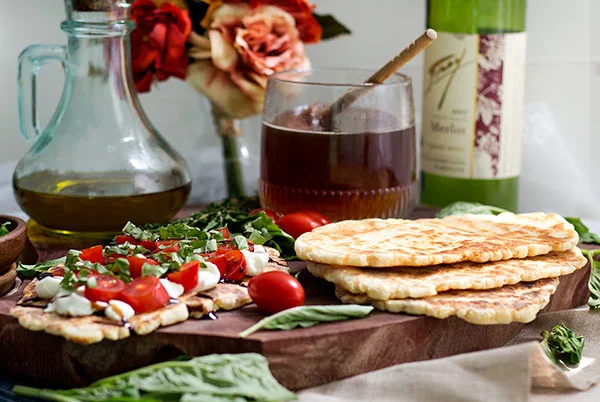
These quick gluten-free flatbreads are made with a simple dough of flour, yoghurt, honey and olive oil, then cooked in a hot skillet. They’re handy for serving warm alongside a meal or adding your favourite toppings.
Ingredients
- 90 g (¾ cup), plus extra for dustinggluten-free flour blend
- 4 g (1 teaspoon)baking powder
- 2.5 g (½ teaspoon)kosher salt or fine sea salt
- 75 g (5 tablespoons)yoghurt
- 21 g (1 tablespoon)honey
- 15 ml (1 tablespoon)olive oil
Instructions
- 1
Heat the skillet
Set a non-stick skillet over medium-high heat and let it get hot. While it heats, prepare the dough.
- 2
Mix and shape
Whisk the flour, baking powder and salt in a medium bowl. Add the yoghurt, honey and olive oil, then mix until a dough forms. Divide it into two equal portions. Lightly flour a work surface and roll each portion into an oval about 20 × 13 cm (8 × 5 inches) and just under 6 mm (¼ inch) thick. Cook each flatbread for about 2 minutes per side, until golden on both sides.
- 3
Serve the flatbreads
Serve them plain or add your favourite toppings.
What are flatbreads?
Flatbreads are breads shaped into thin rounds or ovals and cooked on a hot surface or in an oven. They appear in many food traditions, with ingredients and methods varying from place to place.
This version uses gluten-free flour blend and a quick yoghurt dough, so there’s no proving time. A hot skillet helps the ovals cook through and develop golden patches.
Nutrition and macros by portion
The nutrition label shows one serving as written: 276 calories, 6g protein, 44g carbs, 10g fat.
| Portion | Adjustment | kcal | Protein | Carbs | Fat |
|---|---|---|---|---|---|
| Lighter | Use less oil | 193 kcal | 4g | 31g | 7g |
| This serving | As written | 276 kcal | 6g | 44g | 10g |
| Hungry | Make a larger portion | 414 kcal | 9g | 66g | 15g |
The flour provides most of the carbohydrates, while the olive oil contributes much of the fat; yoghurt adds some protein. For a more balanced plate, serve a flatbread with a protein-rich topping and a portion of vegetables.
Choosing the ingredients
Flour blend: use a gluten-free blend intended for baking. Different blends absorb liquid differently, so the dough may feel a little softer or firmer depending on the one you use.
Yoghurt and honey: yoghurt brings moisture to the dough, while honey adds a little sweetness. Measure the ingredients as listed so the dough is easy to shape.
Olive oil: it enriches the dough and helps keep the flatbreads tender. The recipe uses the oil in the dough rather than for frying.
Shaping the dough
Divide the dough into two equal pieces before rolling so the flatbreads cook at a similar pace. Use only a light dusting of flour on the surface; too much can make the dough harder to bring together.
Aim for ovals about 20 × 13 cm and just under 6 mm thick. Keeping the thickness even helps the middle cook before the outside becomes too dark.
Cooking in the skillet
Let the non-stick skillet heat over medium-high before adding the dough. A properly hot pan gives the flatbreads a chance to brown without needing a long cook.
Cook for about 2 minutes per side, looking for golden colour on both surfaces. If they brown very quickly, lower the heat slightly so the centres have time to cook.
Serving ideas
Serve the flatbreads warm as they are, or use them as a base for your preferred toppings. Their mild flavour works with savoury or sweet additions.
For a meal, pair them with a protein-rich topping and vegetables, or serve alongside a soup or salad. Add toppings shortly before serving to keep the bread from becoming soggy.
Timing and texture
The recipe lists a total time of 10 minutes, with the skillet heating while you mix and shape the dough. Have your surface and rolling pin ready so you can move straight from shaping to cooking.
The finished flatbreads should be golden on both sides and cooked through. If you’re unsure, break into one and check that the centre is no longer doughy.
Recipe notes & tips
- Measure the flour carefully, as different gluten-free blends can vary in weight per cup.
- Mix just until a dough forms rather than working it for a long time.
- Dust the surface lightly so the dough remains easy to roll.
- Roll both portions to a similar thickness for more even cooking.
- Wait for the skillet to heat before cooking the first flatbread.
- Serve soon after cooking for the best texture.
Variations
- Herb topping: scatter chopped fresh herbs over the flatbreads just before serving.
- Savoury finish: add a little grated cheese or your preferred savoury topping after cooking.
- Sweet finish: serve with fruit or a small drizzle of honey.
- Spiced dough: mix a pinch of your favourite dried spice into the flour before adding the wet ingredients.
Common mistakes to avoid
- Cold skillet: the bread may cook unevenly; let the pan heat before adding the dough.
- Too much dusting flour: excess flour can make shaping awkward; use only a light coating.
- Uneven thickness: thin spots may brown too fast; roll each oval as evenly as possible.
- High heat throughout: the outside can darken before the centre cooks; reduce the heat if browning is too rapid.
- Crowding the pan: the flatbreads may not sit flat; cook them one at a time if needed.
How to store
Let leftover flatbreads cool, then store them in an airtight container in the fridge for up to 3 days. Reheat in a dry skillet over medium heat until warmed through; avoid overheating, which can dry them out.
Frequently asked questions
Can I use a different gluten-free flour blend?
Yes, but blends can absorb moisture differently, so the dough may have a different feel. Use a blend suitable for baking and follow the quantities in the recipe.
How thick should I roll the dough?
Roll each oval to just under 6 mm (¼ inch) thick, aiming for an even thickness from edge to edge.
How can I tell when the flatbreads are cooked?
They should be golden on both sides after about 2 minutes per side. If you’re uncertain, check that the centre is no longer doughy.
Can I make the dough ahead?
The recipe is designed to be mixed and cooked straight away. For the best texture, shape and cook the flatbreads soon after making the dough.
What toppings work well?
The recipe leaves toppings up to you. Choose savoury or sweet additions, and add them shortly before serving so the bread does not become soggy.
Can I reheat leftovers?
Yes. Warm them in a dry skillet over medium heat until heated through.
Cook it from the original
This recipe comes from glutenfreeandmore.com. Their page has the author’s own photos, notes and tips — the best place to cook it from.
Open the recipe on glutenfreeandmore.com