
Low-carb spaghetti Bolognese
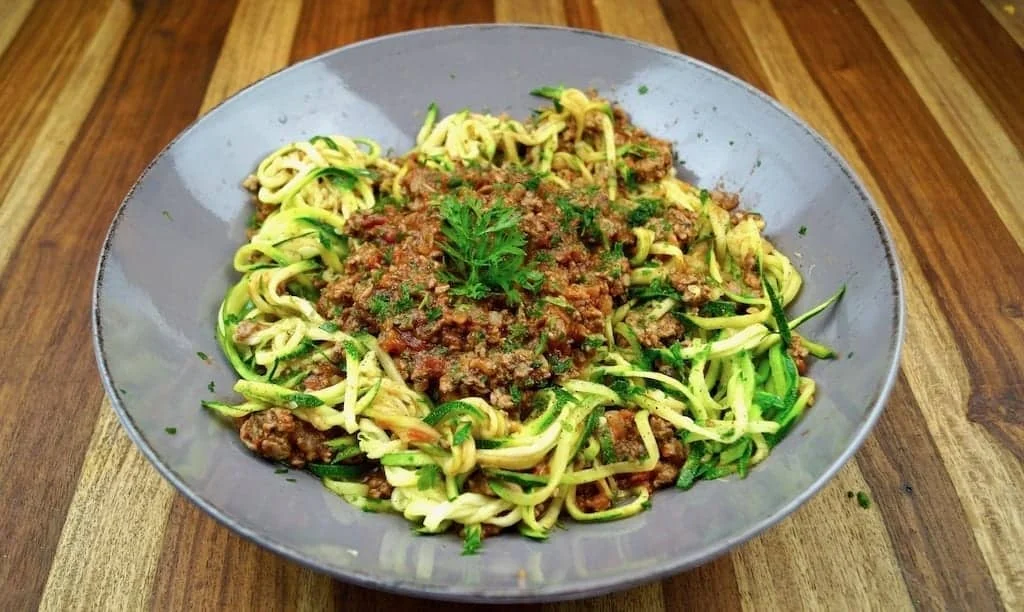
This quick take on spaghetti Bolognese swaps pasta for spiralised courgette and tops it with a simple beef and tomato sauce. It is a handy way to make a hearty-tasting dinner when you want a lighter alternative to spaghetti.
Ingredients
- 400 g (about 2)courgettes
- ½ bunchparsley
- 300 gbeef tartare
- 5 mlolive oil
- 150 gonion
- 250 ml (1 pack)tomato sauce
- ½ clovegarlic
- 1 pinchsalt
- 1 pinchpepper
Instructions
- 1
Cut the courgettes
Use a spiraliser or a knife to cut the courgettes into long, thin strips.
- 2
Prepare the aromatics
Finely chop the onion, garlic and parsley.
- 3
Heat the oil
Add the olive oil to a frying pan.
- 4
Brown the beef
Add the onion, garlic and beef tartare to the pan and fry for 3–4 minutes.
- 5
Simmer the sauce
Add the salt, pepper and tomato sauce, then simmer for a further 2 minutes.
- 6
Finish the dish
Add the courgette strips and bring briefly to the boil. Serve with a little parsley.
What is spaghetti Bolognese?
Spaghetti Bolognese pairs pasta with a meat-and-tomato sauce inspired by ragù alla Bolognese, associated with Bologna in Italy. This version keeps the familiar savoury sauce but uses courgette strips in place of wheat pasta.
The quick-cooking beef and tomato sauce suits a short weeknight meal. Adding the courgettes at the end helps them stay tender rather than becoming too soft.
Nutrition and macros by portion
The nutrition label shows one serving as written: 296 calories, 37g protein, 17g carbs, 9g fat.
| Portion | Adjustment | kcal | Protein | Carbs | Fat |
|---|---|---|---|---|---|
| Lighter | Use less olive oil | 207 kcal | 26g | 12g | 6g |
| This serving | As written | 296 kcal | 37g | 17g | 9g |
| Hungry | Add a larger portion | 444 kcal | 56g | 26g | 14g |
The beef provides most of the protein, while the courgettes and tomato sauce contribute the main carbohydrates. Olive oil and beef account for much of the fat. For a balanced plate, add a side salad or extra non-starchy vegetables.
Why use courgette noodles?
Courgettes make a mild, fresh base that takes well to the beef and tomato sauce. A spiraliser creates noodle-like strands, but a knife can also cut them into thin strips.
Cut the strips evenly so they warm through at roughly the same pace. If the courgettes are especially watery, avoid adding them until the sauce is ready.
Building the sauce
Beef tartare: Its fine texture cooks quickly, making it practical for this 15-minute recipe. Break it up in the pan as it fries so it combines evenly with the onion and garlic.
Tomato sauce: The prepared sauce gives the dish its tomato base with little extra preparation. Once added, the short simmer lets it mingle with the browned beef and aromatics.
Getting the texture right
Brown the beef and soften the onion and garlic during the initial 3–4 minutes, stirring as needed. The meat should be cooked through before the tomato sauce goes in.
Add the courgettes only at the end and heat them briefly. They should be warmed and pliable, not limp or swimming in liquid.
Timing and preparation
Chop the onion, garlic and parsley before heating the pan, then prepare the courgettes while keeping the sauce ingredients close by. That makes it easier to follow the short cooking sequence without overcooking the vegetables.
The sauce needs only another 2 minutes of simmering after the tomato sauce and seasonings are added. Keep the final courgette step brief, as the strands continue to soften in the hot pan.
What to serve with it
Serve the courgette noodles and sauce straight away, with parsley scattered over the top. A green salad or steamed vegetables make a simple accompaniment.
For a more substantial meal, serve with bread or a side of cooked pasta. Keep the courgette strips separate from any pasta until serving if you want them to retain their texture.
Recipe notes & tips
- Have the onion, garlic and parsley chopped before you start cooking.
- Cut the courgette strips as evenly as you can for more consistent cooking.
- Break up the beef in the pan so it browns evenly.
- Taste the sauce before serving and adjust the salt and pepper if needed.
- Add the courgettes at the very end to help them keep their shape.
Variations
- Add chilli: Stir a pinch of chilli flakes into the sauce for a little heat.
- Use fresh tomatoes: Replace the prepared sauce with chopped tomatoes and allow extra time for them to cook down.
- Add mushrooms: Fry sliced mushrooms with the onion for extra savoury flavour.
- Try another mince: Use turkey mince in place of the beef, adjusting the cooking until it is cooked through.
- Finish with cheese: Scatter grated Parmesan over each serving just before eating.
Common mistakes to avoid
- Overcooking the courgettes: Add them last and heat only briefly so they do not turn limp.
- Crowding the pan: Use a pan large enough to hold the beef and vegetables without piling them up.
- Leaving the beef in one lump: Break it up as it cooks so it browns and cooks evenly.
- Adding the courgettes too early: Wait until the sauce is ready to limit the liquid they release.
- Skipping the taste check: Sample the finished sauce and adjust its seasoning before serving.
How to store
Store leftovers in an airtight container in the fridge for up to 2 days. Reheat gently in a pan until piping hot; the courgettes will soften further after storage.
Frequently asked questions
Can I make courgette noodles without a spiraliser?
Yes. Slice the courgettes into long, thin strips with a sharp knife.
How do I stop the courgettes becoming watery?
Add them only at the end and warm them briefly. Serve soon after cooking, as they release more liquid the longer they sit.
Can I prepare the sauce ahead?
Yes. Cook the beef and tomato sauce ahead, chill it promptly and reheat it thoroughly. Prepare and add the courgettes just before serving for a better texture.
Can I use a different type of mince?
Yes, another mince can be used, but cooking time may vary. Cook it through before adding the tomato sauce.
What can I serve alongside this dish?
A green salad or steamed vegetables work well. Bread or pasta can make the meal more filling.
Cook it from the original
This recipe comes from fittastetic.com. Their page has the author’s own photos, notes and tips — the best place to cook it from.
Open the recipe on fittastetic.com