
Gluten-Free Balsamic Pear Pavlova Recipe
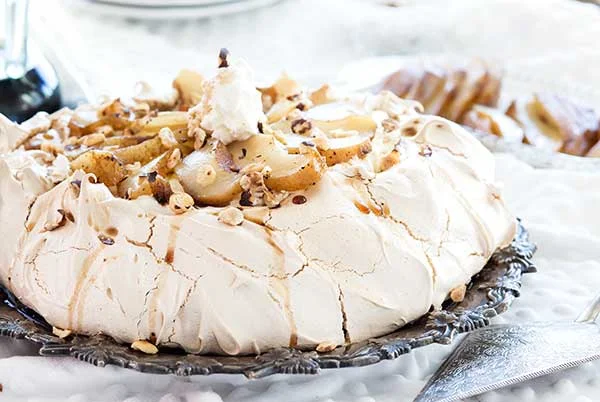
This gluten-free pavlova pairs a crisp-edged meringue with softly whipped cream, balsamic-poached pears and toasted hazelnuts. It makes an impressive dessert for a gathering, with much of the preparation possible ahead of serving.
Ingredients
- 200 g (1 cup)light brown sugar
- 120 ml (1/2 cup)balsamic vinegar
- Juice of 1lemon
- 60 ml (1/4 cup)water
- 2cinnamon sticks
- 1 teaspoonwhole black peppercorns (optional)
- 3firm but ripe Bosc pears
- 4 largefree-range egg whites
- 1/8 teaspoonkosher salt or fine sea salt
- 1/4 teaspooncream of tartar
- 200 g (1 cup)superfine sugar
- 1 teaspoonbalsamic vinegar
- 1 teaspoonpure vanilla extract
- 240 ml (1 cup)double cream
- 2 tablespoonssuperfine sugar
- 30 g (1/4 cup)toasted hazelnuts, chopped
Instructions
- 1
Poach the pears
In a large frying pan over medium-low heat, stir together the brown sugar, 120 ml balsamic vinegar, lemon juice, water, cinnamon sticks and optional peppercorns until the sugar dissolves. Peel, halve and core the pears, then set them core-side down in the liquid. Cover and simmer gently for 15 minutes, turn the pears, cover again and poach for 5 minutes more. Remove and slice the pears into a bowl. Strain the liquid over them, cover with cling film and refrigerate while you prepare the pavlova.
- 2
Prepare the oven
Heat the oven to 150°C (300°F). Use a bowl or pie dish to trace a circle about 20 cm (8 inches) across on baking parchment, then place the parchment marked-side down on a baking tray.
- 3
Whisk the meringue
Put the egg whites, salt and cream of tartar in the bowl of an electric mixer fitted with a whisk. Beat on low until frothy, then increase to high and add the superfine sugar gradually, about 2 tablespoons at a time. Continue beating on high for about 8 minutes, until stiff, glossy peaks form. Beat in 1 teaspoon balsamic vinegar and the vanilla.
- 4
Bake the pavlova
Spread the meringue within the marked circle on the prepared tray and use the back of a spoon to make a well in the centre. Bake for 1 hour 15 minutes, until crisp at the edges and set in the centre. Remove from the oven and leave to cool; when cool enough to handle, gently remove the parchment and cool completely on a wire rack.
- 5
Whip the cream
Just before serving, beat the cream and 2 tablespoons superfine sugar in an electric mixer until stiff peaks form. Stop as soon as the cream reaches this stage to avoid overbeating.
- 6
Assemble and serve
Lift the pears from their poaching liquid with a slotted spoon and pat them dry. Spoon the whipped cream into the pavlova's centre, arrange the pears on top and scatter over the chopped hazelnuts.
What is a pavlova?
Pavlova is a meringue-based dessert closely associated with Australia and New Zealand, where both countries have a strong tradition of making it for celebrations. Its characteristic contrast is a crisp shell around a softer centre, usually finished with cream and fruit.
Here, pears poached with balsamic vinegar, lemon and warm spices bring a sweet-tart topping, while hazelnuts add crunch. The meringue uses no flour, making the recipe naturally gluten-free when the ingredients are suitable.
Nutrition and macros by portion
The nutrition label shows one serving as written: 539 calories, 4g protein, 94g carbs, 17g fat.
| Portion | Adjustment | kcal | Protein | Carbs | Fat |
|---|---|---|---|---|---|
| Lighter | Use less whipped cream | 377 kcal | 3g | 66g | 12g |
| This serving | As written | 539 kcal | 4g | 94g | 17g |
| Hungry | Serve a larger slice | 809 kcal | 6g | 141g | 26g |
The superfine sugar and pears provide most of the carbohydrates, while the cream contributes much of the fat. Egg whites add protein, though this dessert is not a major protein source; serve a slice after a balanced meal or alongside fresh fruit.
Choosing and poaching the pears
Ripe but firm pears: They should be tender enough to take on the poaching liquid without becoming mushy. Bosc pears hold their shape well when cooked.
Gentle heat: Keep the liquid at a quiet simmer rather than a rolling boil, and turn the pears after 15 minutes. The extra 5 minutes on the second side helps them cook evenly.
Building a stable meringue
Clean equipment: Egg whites whip best in a clean bowl without traces of yolk or grease. Begin on low speed so they become frothy before increasing the mixer speed.
Gradual sugar: Add the superfine sugar about 2 tablespoons at a time, then beat for about 8 minutes until the mixture is stiff and glossy. Adding it slowly helps it incorporate into the whites.
Shaping and baking
Marked circle: A 20 cm guide helps form a pavlova of even size. Spread the meringue into the circle and make a shallow well to hold the cream and fruit later.
Doneness: The edges should feel crisp and the centre should be set after 1 hour 15 minutes at 150°C. Cool the shell fully before topping; it will be delicate, so peel away the parchment gently.
Finishing the topping
Whipped cream: Beat it with the sugar just before serving and stop at stiff peaks. Overwhipped cream can turn grainy and lose its smooth texture.
Dry pears: Lift the fruit from the liquid and pat it dry before arranging it on the cream. This helps keep excess poaching syrup from soaking into the meringue.
Timing and serving
Make ahead: The poached pears can be refrigerated while the pavlova is prepared, and the cooled meringue shell can be kept unfilled until serving. Add the cream, fruit and hazelnuts shortly before bringing it to the table.
Serve with: The sweet-tart pears and rich cream suit a simple accompaniment such as fresh berries or sliced citrus. Keep any extra poaching liquid to serve alongside, rather than pouring it over the crisp shell.
Recipe notes & tips
- Separate the eggs while they are cold, then let the whites come to room temperature before whipping.
- Use a clean, dry mixer bowl and whisk to help the egg whites foam properly.
- Keep the pear liquid at a gentle simmer so the fruit stays intact.
- Let the meringue cool completely before lifting it from the parchment.
- Whip the cream just before serving for the best texture.
- Pat the pears dry so their syrup does not soften the pavlova too quickly.
Variations
- Add star anise: Include a star anise in the poaching liquid for an extra warm spice note.
- Use another pear: Choose a similarly firm pear variety if Bosc pears are unavailable.
- Try walnuts: Replace the hazelnuts with chopped toasted walnuts for a different crunch.
- Add citrus zest: Scatter a little finely grated lemon zest over the cream before adding the pears.
- Serve with berries: Add fresh berries around the pears for a brighter fruit topping.
Common mistakes to avoid
- Boiling the pears hard: A rolling boil can break them up; keep the liquid at a gentle simmer.
- Adding sugar too quickly: This can make it harder to incorporate; add it gradually, about 2 tablespoons at a time.
- Underwhipping the meringue: Soft peaks will not hold the pavlova's shape; continue until the peaks are stiff and glossy.
- Removing the shell too soon: Warm meringue is fragile; allow it to cool before peeling away the parchment.
- Overwhipping the cream: It can become grainy; stop beating as soon as stiff peaks form.
- Topping too early: Cream and fruit can soften the shell; assemble shortly before serving.
How to store
Keep leftover assembled pavlova covered in the refrigerator and eat within 1 day; the meringue will soften as it sits. Store the poached pears separately in their liquid in the refrigerator for up to 3 days, and keep an untopped meringue shell in an airtight container at room temperature for up to 2 days. Do not reheat.
Frequently asked questions
Can I make the pavlova ahead?
Yes. Bake the meringue shell and cool it completely, then store it airtight at room temperature. Prepare the pears ahead and refrigerate them, but add the cream and toppings shortly before serving.
How can I tell when the meringue is ready?
Before baking, the beaten meringue should hold stiff, glossy peaks. After baking, its edges should be crisp and the centre set.
Can I use a different type of pear?
Yes, use another firm pear that will hold its shape during poaching. Check it as it cooks, since different varieties may soften at a different rate.
What does the balsamic vinegar do?
It gives the poaching liquid a sweet-tart depth that complements the pears. A small amount is also beaten into the meringue as directed.
Why has my pavlova cracked?
Meringue shells can crack as they cool, and small cracks are normal. Cool it gently and handle it carefully; the cream and fruit will cover the centre.
Is this pavlova gluten-free?
The recipe contains no flour or other obvious gluten-containing ingredient. Check the labels of packaged ingredients, including the vinegar and flavourings, if you need to avoid gluten.
Cook it from the original
This recipe comes from glutenfreeandmore.com. Their page has the author’s own photos, notes and tips — the best place to cook it from.
Open the recipe on glutenfreeandmore.com