
Sautéed red cabbage
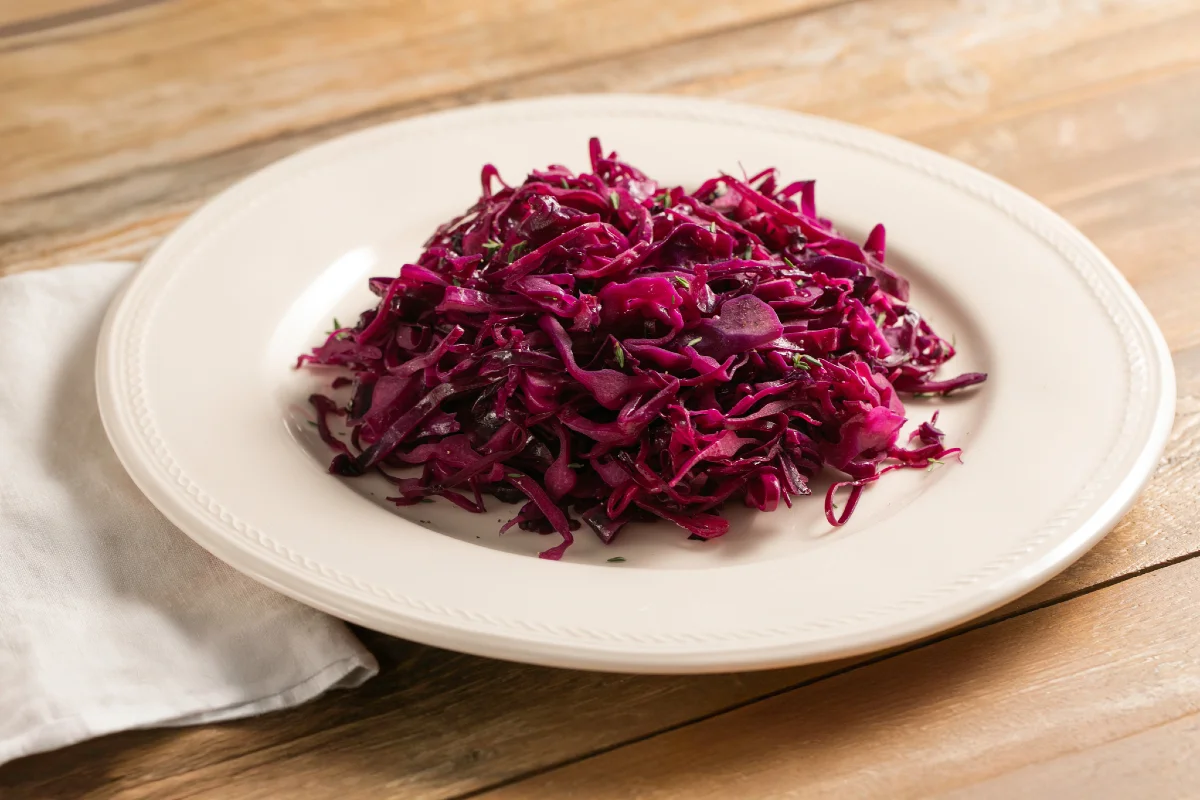
This quick sautéed red cabbage is a tangy, thyme-scented winter side that softens in the pan while keeping some bite. Serve it alongside meat or cured meats for an easy addition to the table.
Ingredients
- 300 gred cabbage
- 1 clovegarlic
- 20 gred wine vinegar
- to tastethyme
- 15 ml (1 tablespoon)extra-virgin olive oil
- to tastefine salt
- to tasteblack pepper
Instructions
- 1
Slice the cabbage
Clean the red cabbage and cut it into thin slices. Heat a little of the oil in a frying pan, then brown the garlic clove with its skin on.
- 2
Sauté the cabbage
Add the cabbage and sauté over medium-high heat for 5 minutes. Once it has softened, turn off the heat and leave it to cool slightly, then drizzle over the red wine vinegar.
- 3
Season and serve
Season with salt and black pepper, then remove the garlic. Finish with a little fresh thyme and serve.
What is sautéed red cabbage?
Red cabbage is a crisp, colourful brassica often used in winter sides across European cooking. This version cooks it briefly in a frying pan, then uses red wine vinegar and thyme to give the softened leaves a sharp, herbal finish.
The method is simple and quick: thin slices cook evenly, while adding the vinegar after the pan is off the heat keeps its flavour bright.
Nutrition and macros by portion
The nutrition label shows one serving as written: 64 calories, 1g protein, 6g carbs, 4g fat.
| Portion | Adjustment | kcal | Protein | Carbs | Fat |
|---|---|---|---|---|---|
| Lighter | Use less olive oil | 45 kcal | 1g | 4g | 3g |
| This serving | As written | 64 kcal | 1g | 6g | 4g |
| Hungry | Make a larger portion | 96 kcal | 2g | 9g | 6g |
The cabbage provides most of the carbohydrates and fibre, while the olive oil contributes most of the fat; the small amount of garlic adds very little protein. Serve a portion with a protein-rich main and potatoes or another grain if you want a more complete plate.
Preparing the cabbage
Thin slices: cut the cabbage as evenly as you can so the pieces soften at roughly the same rate. Remove any tough outer leaves before slicing.
Building flavour in the pan
Garlic: brown the clove in its skin to flavour the oil, then remove it before serving. Keep an eye on it so it colours without burning.
Oil: use the measured olive oil to coat the pan lightly. The cabbage should sauté rather than sit in a pool of oil.
Getting the texture right
Heat: medium-high heat helps the cabbage soften in the short cooking time. Stir or toss it as it cooks so the slices make contact with the pan.
Doneness: after 5 minutes, the cabbage should be softened but still have some bite. Cook it a little longer if you prefer a more tender result.
When to add the vinegar
Timing: turn off the heat and let the cabbage cool slightly before adding the red wine vinegar. This gives the dish a fresh tang without cooking the vinegar away.
Seasoning: taste after adding the vinegar, then adjust the salt and pepper. Add thyme at the end so its aroma stays noticeable.
What to serve it with
Pairings: serve the cabbage with roast or pan-cooked meat, sausages or cured meats. Its acidity also works well alongside richer mains.
For a simple meal, add boiled or roasted potatoes and another vegetable; serve the cabbage warm or at room temperature.
Recipe notes & tips
- Slice the cabbage thinly so it softens within the short cooking time.
- Brown the garlic gently and remove it if it starts to darken too quickly.
- Keep the heat at medium-high and toss the cabbage regularly.
- Add the vinegar only after turning off the heat.
- Taste before serving and adjust the salt, pepper and thyme to your preference.
Variations
- Add caraway: stir in a small pinch for a warm, savoury note.
- Use apple cider vinegar: swap it for the red wine vinegar for a milder tang.
- Add onion: soften thinly sliced onion in the pan before adding the cabbage.
- Finish with parsley: use chopped parsley instead of thyme for a fresher herbal flavour.
- Add apple: sauté thin apple slices with the cabbage for a sweet contrast.
Common mistakes to avoid
- Cutting thick slices: they may not soften evenly in 5 minutes; slice the cabbage thinly.
- Burning the garlic: it can turn bitter; brown it gently and remove it if it colours too fast.
- Crowding the pan: the cabbage may cook unevenly; use a wide frying pan.
- Adding vinegar over high heat: its sharp aroma can dissipate; add it after turning off the heat.
- Overcooking the cabbage: it can lose its bite; check the texture after 5 minutes.
How to store
Refrigerate leftovers in a covered container and use within 3 days. Reheat gently in a frying pan or microwave, or serve at room temperature.
Frequently asked questions
Can I make this ahead?
Yes. Cook it ahead and refrigerate it once cool, then serve it chilled or bring it gently back to temperature. Add a little extra thyme just before serving if needed.
Can I use a different vinegar?
Yes, apple cider vinegar is a suitable swap, though it gives a slightly different flavour. Add it after taking the pan off the heat.
How do I know when the cabbage is done?
After 5 minutes it should be softened but still have some bite. Cook it for a little longer if you prefer it more tender.
Should I remove the garlic?
Yes. The method uses the skinned clove to flavour the oil, then removes it before serving.
Can I use dried thyme?
Yes. Use a small amount, since dried thyme is more concentrated, and add it at the end as you would the fresh thyme.
Cook it from the original
This recipe comes from giallozafferano.es. Their page has the author’s own photos, notes and tips — the best place to cook it from.
Open the recipe on giallozafferano.es