
Agrodolce Pork Tenderloin Recipe
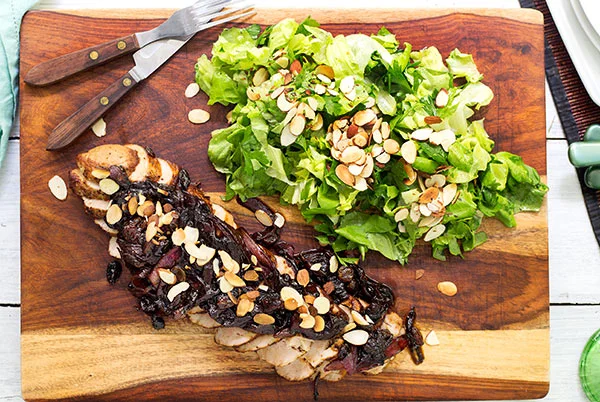
This Italian-inspired agrodolce pork pairs browned tenderloin with a sweet-and-sour sauce of onions, raisins, honey and vinegar. A fresh lettuce and parsley salad with toasted almonds balances the rich, glossy pork.
Ingredients
- 1 (450–680 g)pork tenderloin
- to tastekosher salt or fine sea salt
- to tasteblack pepper
- ½ teaspoongarlic powder
- 1 large or 2 mediumred onions
- 4 tablespoons, dividedolive oil
- 150 ggolden raisins
- 180 ml plus 15 mlMarukan organic rice vinegar
- 30 mlwater
- 85 ghoney
- ½ teaspoonred pepper flakes
- 2 tablespoonscold butter
- 1 headBoston or red leaf lettuce
- 1 cup (about 30 g)Italian flat-leaf parsley
- ½ teaspoonDijon mustard
- ¼ cup (about 25 g)toasted almond slivers
Instructions
- 1
Season the pork
Pat the pork dry with paper towels. Mix 1½ teaspoons salt, ¾ teaspoon pepper and the garlic powder in a small bowl, then sprinkle the mixture over the pork and leave it to sit.
- 2
Cut the onions
Halve each onion from root to stem, peel it and cut it into 16 wedges.
- 3
Brown the pork
Heat 2 tablespoons oil in a large lidded skillet over medium-high heat. Brown the pork on all sides, about 2 minutes per side and 6–8 minutes in total, then transfer it to a plate. Add the onions with a large pinch each of salt and pepper. Cook, stirring occasionally, for about 5 minutes, until tender and beginning to brown.
- 4
Simmer the sauce
Mix 180 ml vinegar with the water, honey and red pepper flakes, then pour it over the browned onions. Stir in the raisins and return the pork to the skillet. Cover, lower the heat to medium and cook for about 12 minutes, turning the pork every few minutes. Check the centre with an instant-read thermometer and cook to 60°C (140°F). Remove the pork from the sauce and let it rest for 5–10 minutes. If the sauce has not reduced and thickened, cook it for a few more minutes, then stir in the butter until melted.
- 5
Toss the salad
While the pork cooks, combine the lettuce and parsley in a bowl. Whisk together 2 tablespoons olive oil, 15 ml vinegar, ½ teaspoon salt, ¼ teaspoon pepper and the Dijon mustard. Pour the dressing over the leaves and toss.
- 6
Slice and serve
Slice the pork and spoon the sauce over it. Sprinkle the almonds over the salad and pork, then serve.
What is agrodolce pork?
Agrodolce means sweet and sour in Italian and describes a style of flavouring rather than one fixed dish. Vinegar supplies the sharp note, while ingredients such as honey and dried fruit add sweetness.
Here, browned pork tenderloin simmers with onions and golden raisins in a honey-vinegar sauce. The crisp, herb-filled salad and toasted almonds add freshness and crunch alongside the tender meat.
Nutrition and macros by portion
The nutrition label shows one serving as written: 623 calories, 39g protein, 52g carbs, 29g fat.
| Portion | Adjustment | kcal | Protein | Carbs | Fat |
|---|---|---|---|---|---|
| Lighter | Use less oil and butter | 436 kcal | 27g | 36g | 20g |
| This serving | As written | 623 kcal | 39g | 52g | 29g |
| Hungry | Serve with extra salad | 935 kcal | 59g | 78g | 44g |
The pork provides most of the protein, while the raisins, honey and onions contribute carbohydrates. Olive oil, butter and almonds supply much of the fat; serve the salad alongside and add extra plain lettuce or other vegetables if you want more fresh produce on the plate.
Choose and season the pork
Tenderloin: this lean, quick-cooking cut suits a short covered simmer. Patting it dry helps the surface brown in the skillet.
Seasoning: salt, pepper and garlic powder go on before browning. Letting the seasoned pork sit while you prepare the onions gives you time to get the other components ready.
Build the sweet-and-sour sauce
Onions: cook them in the same skillet after removing the pork, so they pick up the browned bits. Give them about 5 minutes to soften and start to colour before adding the liquid.
Balance: the vinegar, water, honey, pepper flakes and raisins simmer together with the pork. Once the meat is resting, reduce the sauce further if needed and finish it with cold butter.
Check the pork for doneness
Thermometer: check the thickest part of the tenderloin with an instant-read thermometer and cook it to 60°C (140°F), as directed in the method. Turn the meat every few minutes while it simmers so it cooks evenly.
Resting: take the pork out of the sauce and leave it for 5–10 minutes before slicing. This also gives you a little time to finish thickening the sauce if necessary.
Keep the salad fresh
Leaves: combine the lettuce and parsley while the pork is cooking, but wait to dress them until close to serving. This helps the salad keep its crisp texture.
Dressing: whisk the oil, vinegar, seasoning and Dijon together before tossing them with the leaves. Add the toasted almonds at the end so they stay crisp.
Plan the timing and serving
Timing: prepare the onions while the seasoned pork sits, then make the salad as the pork simmers. The pork’s 5–10-minute rest can overlap with any final reduction of the sauce.
To serve: arrange slices with plenty of the raisin-and-onion sauce and serve the salad alongside. The fresh greens and almonds provide a crisp contrast to the soft fruit and tender meat.
Recipe notes & tips
- Dry the pork thoroughly before it goes into the hot skillet to encourage browning.
- Cut the onion wedges evenly so they soften at a similar rate.
- Turn the pork every few minutes during the covered simmer, as directed.
- Use an instant-read thermometer to check the thickest part of the tenderloin.
- Let the pork rest for 5–10 minutes before slicing.
- Dress the lettuce and parsley shortly before serving to help them stay crisp.
Variations
- Swap the vinegar: use another rice vinegar if Marukan organic rice vinegar is unavailable.
- Adjust the heat: use fewer red pepper flakes for a milder sauce.
- Change the greens: use another crisp lettuce in place of Boston or red leaf lettuce.
- Add herbs: include extra flat-leaf parsley in the salad for a stronger herbal note.
- Skip the almonds: leave them out or serve them separately for a nut-free plate.
Common mistakes to avoid
- Crowding the browning stage: use a skillet large enough for the pork to brown on all sides.
- Adding the sauce too soon: let the onions turn tender and begin to brown first.
- Guessing doneness: check the centre of the pork with an instant-read thermometer.
- Slicing straight away: rest the pork for 5–10 minutes before cutting.
- Over-reducing the sauce: check its thickness while the pork rests and stop once it is reduced and thickened.
- Dressing the salad early: toss it shortly before serving to avoid limp leaves.
How to store
Refrigerate leftover pork and sauce, and the salad separately, in airtight containers for up to 3 days. Reheat the pork gently with its sauce until hot, and serve the salad cold; dressed leaves are best eaten soon after tossing.
Frequently asked questions
Can I use a different vinegar?
Yes, another rice vinegar can stand in for the specified organic rice vinegar. The finished sauce may taste a little different, so taste it before serving.
How do I know when the pork is done?
Check the thickest part with an instant-read thermometer and follow the recipe’s target of 60°C (140°F). Rest the pork for 5–10 minutes before slicing.
Can I make the salad ahead?
You can wash and prepare the lettuce and parsley in advance, but keep them undressed. Whisk the dressing and toss it with the leaves just before serving.
What should I do if the sauce is still thin?
After taking out the pork, simmer the sauce for a few more minutes until reduced and thickened. Stir in the butter once it reaches that consistency.
Can I prepare the pork ahead?
The pork and sauce can be cooked ahead and refrigerated together. Reheat them gently so the tenderloin does not dry out, and prepare the salad fresh.
Cook it from the original
This recipe comes from glutenfreeandmore.com. Their page has the author’s own photos, notes and tips — the best place to cook it from.
Open the recipe on glutenfreeandmore.com