
Salmon gunkan
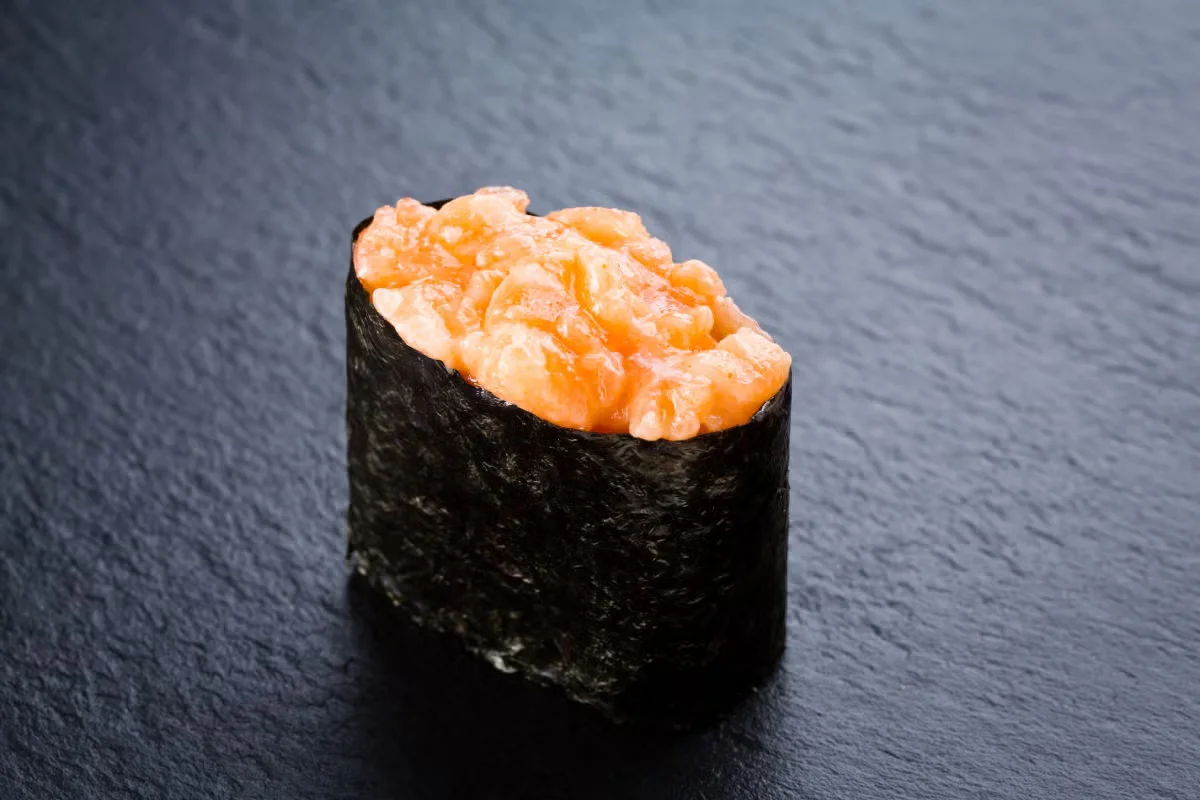
Salmon gunkan is a Japanese sushi made from seasoned rice wrapped in nori and topped with finely cut salmon. Its little seaweed-wrapped shape is ideal for holding a soft topping, and the method keeps the rice light rather than tightly packed.
Ingredients
- 200 gsushi rice
- 200 g, previously frozen for parasite controlsalmon
- 2 sheetsnori
- as neededrice vinegar
- as neededsalt
- to tastesesame seeds
Instructions
- 1
Rinse the rice
Rinse the rice under running water until the water is no longer cloudy. This removes excess surface starch.
- 2
Soak the rice
Leave the rinsed rice to soak for at least 30 minutes. Drain it, put it in a saucepan and cover it completely with water.
- 3
Cook the rice
Bring the water to the boil, then reduce the heat and cook until the grains have absorbed all the water.
- 4
Rest the rice
Turn off the heat and leave the rice covered for a further 10–15 minutes so it can finish cooking in the steam.
- 5
Season the rice
Transfer the rested rice to a large bowl, add one tablespoon of rice vinegar and mix gently.
- 6
Cut the salmon
While the rice cools, cut the salmon into small pieces for the topping.
- 7
Shape the rice
Once the rice has reached room temperature, divide it into eight portions and shape each into a small cylinder.
- 8
Cut the nori
Cut each sheet of nori into four strips, about 2 cm wide.
- 9
Wrap with nori
Take a portion of rice and wrap a strip of nori around it.
- 10
Add the topping
Place the salmon tartare on top of the rice, sprinkle with sesame seeds and serve.
What is salmon gunkan?
Gunkan is a Japanese sushi whose name means “battleship”, referring to the shape made by rice wrapped in a strip of nori. It is thought to have been developed in Tokyo in the 1940s as a way to serve soft toppings that are difficult to place on nigiri.
This version uses finely cut salmon over lightly seasoned rice. The upright nori wrapper holds the topping in place while keeping the rice and fish distinct.
Nutrition and macros by portion
The nutrition label shows one serving as written: 1150 calories, 50g protein, 161g carbs, 29g fat.
| Portion | Adjustment | kcal | Protein | Carbs | Fat |
|---|---|---|---|---|---|
| Lighter | Use less rice | 805 kcal | 35g | 113g | 20g |
| This serving | As written | 1150 kcal | 50g | 161g | 29g |
| Hungry | Make a larger batch | 1725 kcal | 75g | 242g | 44g |
Most of the carbohydrates come from the sushi rice, while salmon provides much of the protein and fat. Rice vinegar, nori and sesame add smaller amounts; serve the gunkan with vegetables or a light soup to round out the plate.
The rice makes the base
Rinsing: wash the rice until the water runs clear to remove excess surface starch. Soaking it for at least 30 minutes helps the grains take up water before cooking.
Cooking: cover the rice with water and simmer after bringing it to the boil, until the water is absorbed. Rest it covered for 10–15 minutes so the steam can finish the job.
Season and shape gently
Vinegar: fold one tablespoon into the cooked rice while it is still warm, taking care not to mash the grains. The listed ingredient amount is otherwise given as needed, so adjust the seasoning to taste.
Shaping: wait until the rice is at room temperature, then form eight loose cylinders. Avoid compressing them; a light shape leaves the rice tender rather than dense.
Wrap the gunkan neatly
Nori: cut the two sheets into four strips each, about 2 cm wide, as directed in the method. Position the shiny side on the outside for a tidy finish.
Seal: wrap a strip around each rice base and use a grain of rice to help stick the ends together. Wet hands with a little water and vinegar to make the rice easier to handle.
Keep the salmon delicate
Cutting: dice the salmon into small pieces while the rice cools, ready to spoon over the top. Keep the pieces small enough to sit comfortably within the nori wrapper.
Serving: add the salmon and sesame just before eating. The method calls for salmon previously frozen for parasite control; use fish intended for raw consumption and handle it safely.
Serve as soon as assembled
Timing: the rice needs at least 30 minutes of soaking, followed by cooking and a 10–15 minute covered rest. Allow additional time for it to cool to room temperature before shaping.
Pairing: serve the gunkan freshly assembled, perhaps with a simple salad or miso soup. Keep accompaniments modest so the salmon and sesame remain the focus.
Recipe notes & tips
- Wipe the board with a damp cloth before shaping to help stop the rice and nori sticking.
- Wet your hands with water mixed with a little vinegar before handling the rice.
- Keep the rice loosely shaped rather than pressing it firmly into cylinders.
- Use a grain of rice to seal the ends of each nori strip.
- Keep the shiny side of the nori facing outwards.
- Prepare the rice a few hours ahead, then assemble the gunkan shortly before serving.
Variations
- Add wasabi: spread a little on the rice before adding the topping for a spicy note.
- Swap the fish: use another suitable raw fish, such as tuna or sea bass, in place of salmon.
- Try smoked salmon: wrap the rice with smoked salmon instead of nori for a different flavour.
- Add cream cheese: spread a little on the rice before adding the salmon for a creamy contrast.
- Use another topping: try fish roe, prawns or vegetables in place of the salmon.
- Make it spicy: mix wasabi with soy sauce and sake, then use a little to season the fish.
Common mistakes to avoid
- Skipping the rinse: excess starch can make the grains clump; rinse until the water is no longer cloudy.
- Shortening the soak: the rice may cook unevenly; leave it for at least 30 minutes.
- Lifting the lid too soon: trapped steam helps finish cooking; keep the pan covered for the 10–15 minute rest.
- Packing the rice tightly: the base can turn dense; shape it gently with damp hands.
- Using oversized salmon pieces: they can spill over the wrapper; cut the topping into small pieces.
- Assembling too early: nori can lose its crispness; add the topping and serve soon after wrapping.
How to store
Serve the assembled gunkan straight away, especially because it contains raw salmon. If you have leftover rice, cool and refrigerate it promptly in a covered container, then use it within a couple of days and bring it to room temperature before shaping.
Frequently asked questions
How many gunkan does this recipe make?
The method divides the rice into eight portions, so it makes eight pieces.
How long should I soak the rice?
Soak it for at least 30 minutes after rinsing, then drain it before cooking.
Can I prepare the rice in advance?
Yes. The rice can be prepared a few hours ahead; shape and assemble the gunkan closer to serving time.
Can I use ordinary fresh salmon?
Use salmon suitable for raw consumption and previously frozen for parasite control, as specified in the recipe.
What can I use instead of nori?
The recipe suggests smoked salmon slices as an alternative wrapper.
Why is my nori wrapper coming loose?
Make sure the strip is snug around the rice and use a grain of rice to stick its ends together.
Cook it from the original
This recipe comes from finedininglovers.it. Their page has the author’s own photos, notes and tips — the best place to cook it from.
Open the recipe on finedininglovers.it