
Ultra-Creamy Dairy-Free Mashed Potatoes
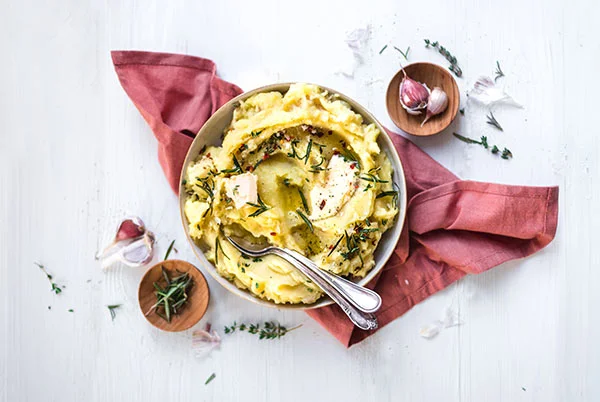
These American-style mashed potatoes get their rich, creamy texture from dairy-free butter and coconut milk, with roasted garlic for a mellow savoury flavour. Crispy rosemary and thyme add a fragrant finish.
Ingredients
- 1 headgarlic
- 20 ml (4 teaspoons), dividedavocado oil or another neutral oil
- 6 largepotatoes, preferably Russet or Yukon
- 120 ml (½ cup), melteddairy-free butter
- 120 ml (½ cup)canned coconut milk
- ½ teaspoon, plus more to tastekosher salt or fine sea salt
- ⅛ teaspoon, plus more to tastefreshly ground black pepper
- 2 sprigsfresh rosemary
- 4–6 sprigsfresh thyme
Instructions
- 1
Roast the garlic
Heat the oven to 200°C (400°F). Remove any loose papery outer layers from the garlic, then slice 0.6–1.3 cm (¼–½ inch) off the top to expose the cloves. Set it on aluminium foil, drizzle with 10 ml (2 teaspoons) of the avocado oil and wrap it fully. Bake for 40 minutes.
- 2
Boil the potatoes
Wash the potatoes well; peeling them first is optional, and leaving the skins on adds flavour. Put them in a pot and cover with water to 5–7.5 cm (2–3 inches) above the potatoes. Salt the water generously and bring it to the boil. Cook for 30 minutes, or until a toothpick slides easily into the centre. Drain, pat them as dry as you can, and return them to the pot.
- 3
Mash with flavour
Cut the potatoes into large chunks. Squeeze the roasted garlic head over the pot so the cloves fall out, then add the melted dairy-free butter, coconut milk, ½ teaspoon salt and ⅛ teaspoon pepper. Mash with a potato masher or fork, or use a hand blender on pulse. Stop as soon as the mixture comes together to avoid a gummy texture; use a fork to break up any remaining large pieces.
- 4
Fry the herbs
Heat the remaining 10 ml (2 teaspoons) avocado oil in a small skillet over medium-high heat. When hot, add the rosemary and thyme sprigs and fry until crisp and fragrant: the thyme takes a couple of seconds per side, while the rosemary needs a little longer. Put the herbs on paper towels to absorb excess oil, then sprinkle with a little salt.
- 5
Finish and serve
Transfer the mashed potatoes to a serving bowl and top with the fried rosemary and thyme. Add another dollop of butter, then season with more salt and pepper to taste.
What are dairy-free mashed potatoes?
Mashed potatoes are a familiar American side dish, made by cooking potatoes until tender and mashing them with rich additions. This version replaces dairy with plant-based butter and canned coconut milk, while roasted garlic deepens the savoury flavour.
The combination works because the potatoes provide a fluffy base, while the butter and coconut milk bring richness. Crispy rosemary and thyme give the soft mash a fragrant, lightly crunchy topping.
Nutrition and macros by portion
The nutrition label shows one serving as written: 324 calories, 6g protein, 28g carbs, 22g fat.
| Portion | Adjustment | kcal | Protein | Carbs | Fat |
|---|---|---|---|---|---|
| Lighter | Less butter and oil | 227 kcal | 4g | 20g | 15g |
| This serving | As written | 324 kcal | 6g | 28g | 22g |
| Hungry | Larger portion | 486 kcal | 9g | 42g | 33g |
The potatoes provide most of the carbohydrates, while the dairy-free butter and avocado oil contribute much of the fat; the coconut milk adds further richness. Potatoes and coconut milk also contribute some protein, but this is mainly a side dish, so serve it with a protein-rich main and vegetables for a more balanced plate.
Choosing the potatoes
Russet potatoes: These are starchy and mash into a light, fluffy texture.
Yukon potatoes: These have a naturally buttery character and make a slightly denser mash. Leaving the skins on is optional; it adds texture and flavour.
Roasting the garlic
Exposed cloves: Cutting the top off the head lets the oil reach the garlic and makes the roasted cloves easy to squeeze out. After 40 minutes in the oven, they should be soft enough to press from their skins.
Gentle flavour: Roasting mellows the garlic, so it blends into the potatoes without the sharper taste of raw cloves.
Keeping the mash creamy
Dry potatoes: Drain them well and pat them dry before returning them to the pot. Removing excess water helps the butter and coconut milk make a rich mash rather than a loose one.
Light mashing: Work just until the mixture comes together. Overworking potatoes can make them gummy, so finish any large pieces gently with a fork.
Frying the herbs
Hot oil: Add the herbs once the oil is hot, then watch them closely; thyme crisps in seconds, while rosemary takes a little longer. Lift them out as soon as they are crisp and fragrant.
Drain well: Paper towels catch excess oil and help the herbs keep their crisp finish. A small sprinkle of salt seasons the topping.
Timing and doneness
Potato check: The stated 30-minute boiling time is a guide; potatoes are ready when a toothpick enters the centre with ease. If they still feel firm, keep cooking until tender.
Garlic timing: The garlic roasts for 40 minutes while the potatoes cook for 30, so start it first as the method directs. Keep the potatoes warm in their pot while you fry the herbs and finish the dish.
What to serve with them
Savoury mains: Serve the mash alongside roasted vegetables, a plant-based roast or a hearty lentil dish. Its creamy texture also works well with dishes that have a savoury sauce or gravy.
Fresh contrast: Add a crisp green salad or steamed greens to bring freshness to the plate. Keep the herbs on top so their crisp texture stands out.
Recipe notes & tips
- Start roasting the garlic before boiling the potatoes so both are ready around the same time.
- Leave the potato skins on if you want extra texture and flavour.
- Pat the drained potatoes dry before adding the butter and coconut milk.
- Use a potato masher or fork, or pulse a hand blender briefly rather than blending continuously.
- Watch the herbs closely in the hot oil, especially the thyme, which crisps quickly.
- Taste the mash before serving and adjust the salt and pepper to your liking.
Variations
- Extra garlic: Roast an additional head and mash its cloves in for a stronger garlic flavour.
- Fresh chives: Scatter chopped chives over the finished potatoes for a fresh onion note.
- Herb swap: Use sage in place of the rosemary or thyme and fry it until crisp.
- Peppery finish: Add extra freshly ground black pepper just before serving.
- Chunkier texture: Mash by hand and leave a few small pieces of potato intact.
Common mistakes to avoid
- Undercooking the potatoes: Wait until a toothpick enters the centre easily before draining.
- Watery mash: Drain thoroughly and pat the potatoes dry before returning them to the pot.
- Over-mashing: Stop once the ingredients are combined, as too much mashing can make the potatoes gummy.
- Burnt herbs: Keep the pan under close watch and remove each herb as soon as it is crisp and fragrant.
- Missing the roasted garlic: Cut the head to expose the cloves, then squeeze them into the pot after roasting.
How to store
Refrigerate leftovers in an airtight container for up to 3 days. Reheat gently in a saucepan or microwave, stirring as needed; if the potatoes seem too firm, mix in a little coconut milk.
Frequently asked questions
Do I need to peel the potatoes?
No. The recipe recommends leaving them unpeeled for extra flavour, but peeling them first is also an option.
Can I use a hand blender?
Yes, use it on pulse and stop as soon as the potatoes come together. A potato masher or fork also works.
How can I tell when the potatoes are cooked?
A toothpick should slide into the centre of a potato easily. If it meets resistance, boil the potatoes longer and check again.
Can I prepare the garlic ahead?
Yes. Roast it ahead and keep it covered in the refrigerator until you are ready to mash the potatoes.
Can I make the mash without coconut milk?
Coconut milk is part of this recipe's creamy texture. You can substitute another unsweetened dairy-free milk, though the result may be less rich.
Can I make this recipe ahead?
You can prepare the mash ahead and refrigerate it, then reheat gently before serving. Fry the herbs close to serving time so they stay crisp.
Cook it from the original
This recipe comes from glutenfreeandmore.com. Their page has the author’s own photos, notes and tips — the best place to cook it from.
Open the recipe on glutenfreeandmore.com